
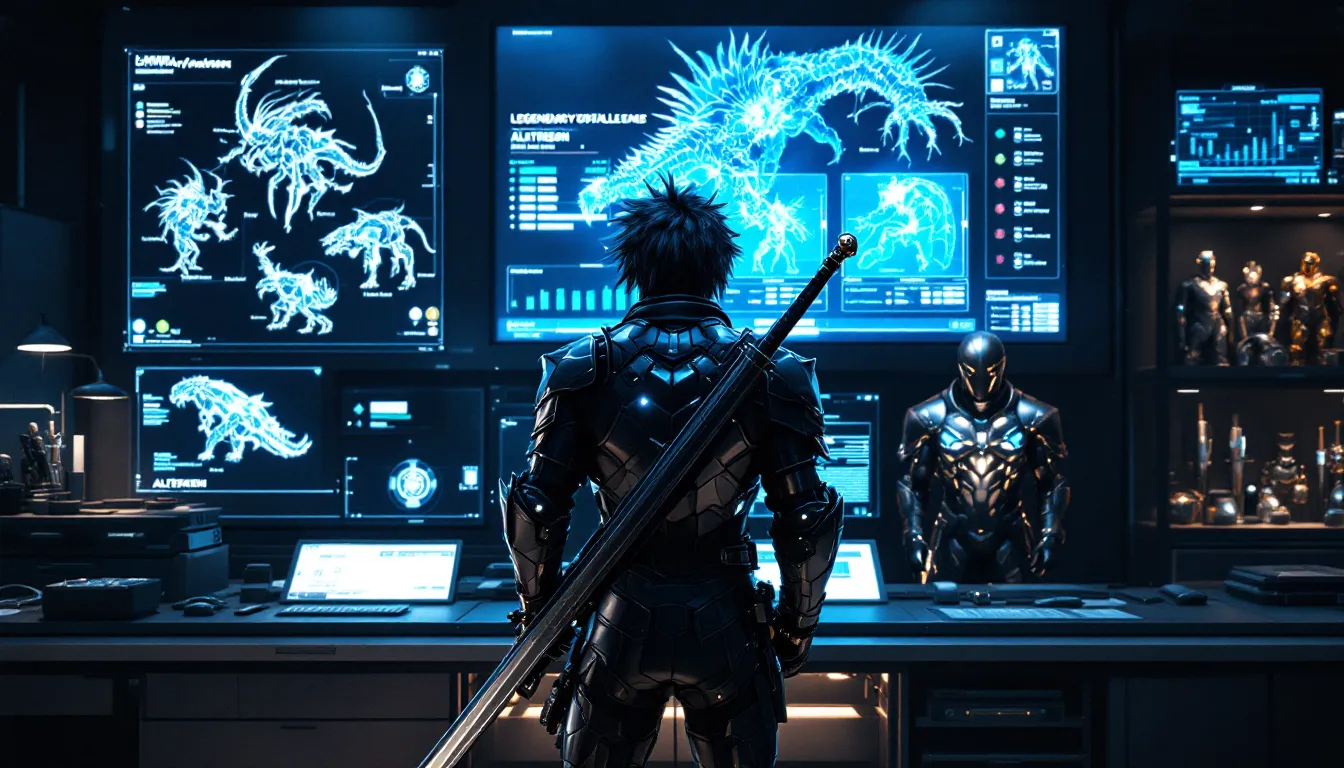
Monster Hunter and Final Fantasy have collided in spectacular fashion over the past decade, creating some of gaming‘s most memorable crossover experiences. These aren’t just cosmetic collaborations, they fundamentally blend two of gaming’s biggest franchises into experiences that reward preparation, strategy, and skill. Whether you’re a veteran hunter tracking Fatalis or a Final Fantasy fan experiencing your first quest, understanding how these worlds merge opens up entirely new gameplay dimensions. The crossovers have evolved significantly since their debut, introducing exclusive mechanics, legendary weapons, and hunts that feel authentically rooted in both universes. This guide breaks down everything from the foundational hunting systems to endgame progression, giving you the knowledge to conquer every challenge these collaborations throw your way.
Table of Contents
ToggleKey Takeaways
- Monster Hunter Final Fantasy crossovers blend two gaming franchises into authentic experiences with exclusive mechanics, legendary weapons, and challenging hunts that reward preparation and strategy.
- The Behemoth Special Assignment is a 30-minute endgame fight with the Ecliptic Meteor mechanic that instantly kills unprepared hunters, making it one of gaming’s most demanding crossover encounters.
- Monster Hunter progression relies on gear optimization and skill mastery rather than traditional leveling, requiring players to craft better equipment, learn monster attack patterns, and build around elemental weaknesses and set bonuses.
- Behemoth hunts and Elder Dragon encounters demand weapon selection based on the monster’s elemental weakness and breakable parts, with loadouts varying significantly between solo and multiplayer strategies.
- Final Fantasy crossover cosmetics like the Regalia armor set and Buster Sword carry prestige value and require completing challenging content, making them meaningful rewards rather than cosmetic handouts.
- Material farming and grinding are essential to Monster Hunter progression, with efficient hunters planning routes around event rotations and drop rates to maximize time investment in gear upgrades.
Understanding Monster Hunter Elements in Final Fantasy Games
History of Monster Hunter and Final Fantasy Collaborations
The first major Monster Hunter collaboration with Final Fantasy launched in Monster Hunter World back in 2018 with the Final Fantasy XV crossover quest. This wasn’t a minor event, it introduced the Behemoth, one of gaming‘s most punishing endgame encounters. The collaboration was so successful that Square Enix and Capcom continued expanding their partnership across multiple titles and platforms.
Following that success, Monster Hunter World: Iceborne brought even more Final Fantasy content, including the Arch-Tempered Behemoth and later the Sapphire Star quest. These events became seasonal staples, with players circling their calendars for release dates. The momentum carried into Monster Hunter Now (the mobile spinoff) and eventually Monster Hunter Rise, which features its own suite of Final Fantasy content tailored to the Switch’s portable gameplay.
What makes these collaborations special is that they’re never halfhearted. Capcom and Square Enix treat crossover quests as major events, complete with story integration and thematic weapon designs. The Behemoth isn’t just a reskinned monster, it moves differently, has unique attack patterns, and demands hunters adapt their strategies entirely.
Core Hunting Mechanics and Gameplay Systems
For those new to Monster Hunter, the core loop is deceptively simple: hunt monsters, gather materials, craft better gear, hunt stronger monsters. The execution, but, demands precision. Every hunt is a skill check. Your armor’s defense, resistance values, and set bonuses determine survivability. Your weapon’s sharpness, elemental alignment, and moveset determine your DPS output. And your positioning, positioning, positioning, that’s what separates carries from dead weight.
The hunting mechanics break down into core systems:
Combat fundamentals revolve around reading tells. Monsters telegraph their attacks seconds before execution. A roar indicates a big combo. A tail swipe has a specific hitbox and recovery window. Master these patterns, and hunts become rhythmic puzzles where openings reveal themselves naturally. Different weapon types, the 14 available arms ranging from Great Sword to Hunting Horn, have vastly different approaches to these openings.
Elemental weaknesses and status effects add layers to strategy. A monster weak to fire takes 30-40% more damage from fire-element weapons. Some monsters are susceptible to paralysis, stun, or sleep. Building your gear around the hunt’s specific monster, rather than slotting in generic “best damage” builds, separates efficient hunters from slow ones.
Part breaking is another crucial system. Severing a tail gives specific rewards. Breaking a back plate drops different carves. This isn’t cosmetic, part breaks determine what materials you receive, which directly impacts your crafting options. Learning which parts are breakable and prioritizing them during hunts is core optimization.
Monster Hunter World and Final Fantasy XV Crossover
Exclusive Quest Details and Rewards
The Behemoth Special Assignment in Monster Hunter World is a 30-minute endurance test designed for 4-player teams, though solo hunters have completed it (with significantly more pain). The quest availability varies: it returned periodically as a limited-time event through 2020, then became permanently available in Iceborne as “The Great Slayer.” Check the current quest board in your version, as event schedules shift between platforms.
Behemoth’s moveset is unlike anything else in the base game. It combines Final Fantasy XIV raid mechanics with Monster Hunter combat. The Ecliptic Meteor attack is the defining mechanic, roughly halfway through the fight, Behemoth charges a comet strike that instantly kills anyone caught in its impact radius. You must either mount the monster to interrupt it or position yourself under one of the arena’s environmental cover spots. Fail this mechanic, and your entire team gets deleted. This single attack has taught more hunters about positioning and communication than any other single encounter.
The material rewards from Behemoth hunts are the real prize. You’ll harvest Behemoth Hide, Behemoth Mane, and Behemoth Gem, all exclusively used for one armor set and one weapon type per class. The fight’s difficulty is steep enough that casual players often skip it, meaning the transmog-only Behemoth gear carries serious prestige in multiplayer lobbies.
Noctis Equipment and Special Gear
The Regalia armor set and Buster Sword (or Sword of the Father, depending on which Final Fantasy title’s era you prefer) are the crossover’s iconic rewards. The Regalia armor design is stunning, it directly replicates Noctis’s coat from Final Fantasy XV, complete with the black leather aesthetic. Stats-wise, it’s a solid mid-game set if you craft it early, though endgame armor powercreep makes it less optimal for late hunts. Its real value is cosmetic: a legendary armor transmog that proves you’ve conquered the Behemoth.
The Buster Sword comes in multiple weapon class variations. The Greatsword version deals solid damage but doesn’t min-max like specialized final-tier weapons. The real appeal? Using Cloud’s iconic weapon to hunt Fatalis or Alatreon feels incredible. Cosmetics matter in Monster Hunter because you’ll spend 50+ hours staring at your character’s gear. Many hunters prioritize “cool” over “optimal”, and Final Fantasy crossover equipment is definitively cool.
The armor and weapons scale differently depending on when you acquire them. Getting the Regalia armor as early as possible is feasible: the Buster Sword requires completing the Behemoth fight, which is genuinely challenging for fresh hunters. Plan your progression accordingly if these cosmetics matter to you.
Final Fantasy XIV Monster Hunter Integration
Raids, Dungeons, and Limited-Time Events
Monster Hunter Now, the mobile title, features regular Final Fantasy XIV collaborative content. These aren’t “raids” in the traditional sense, they’re special hunts with Final Fantasy XIV monsters added to the rotation. The Rathalos and Kushala Daora are permanent additions to the game, their hunts triggering through normal expedition mechanics. The events are perpetually available, though they occasionally rotate out, making them perfect for players picking up the mobile game later.
For mainline Monster Hunter titles, Final Fantasy collaborations typically come as limited-time quests. These events last 2-4 weeks per season cycle, then return the following year. Missing an event doesn’t permanently lock you out, patience is required, but content eventually rotates back. This differs from some live-service games that never re-run events. Square Enix and Capcom treat their crossovers as too valuable to permanently gate.
The challenge scaling on Final Fantasy crossover quests sits higher than base game hunts. A beginner shouldn’t jump into endgame Final Fantasy collaboration quests without solid gear and weapon mastery. Most guides recommend HR 50+ (High Rank 50) before attempting challenging Final Fantasy events, though individual quest difficulty varies.
Unique Armor Sets and Weapon Designs
Final Fantasy XIV collaboration armor rarely matches the iconic character designs that FF XV’s Regalia captures. Instead, Eorzea-themed gear reflects that universe’s aesthetic: heavier plate armor, fantasy-inspired helms, and weapon designs that feel more sword-and-sorcery than modern-noir.
The Armor of Light set (if FF XIV crossover gear is called this, specifics vary by title and update) provides decent mid-game stats but again, the draw is transmog potential. Pairing Final Fantasy XIV armor with a Fire Emblem weapon skin, or mixing cosmetics from different crossovers, is how dedicated hunters customize their look.
Weapon designs from Final Fantasy collaborations tend toward “oversized sword” aesthetics. Hunter weapons in Monster Hunter already fit that archetype, so the crossover weapons blend in better than you’d expect. They don’t look out of place hunting Teostra or Nergigante, they feel like they belong in that world. That’s the hallmark of successful crossover design: integration rather than alienation.
Monster Types and Hunting Strategies
Identifying Elder Dragons and Apex Monsters
Elder Dragons are the franchise’s most dangerous monsters. They’re categorized separately from regular creatures, with Fatalis, Alatreon, and Nergigante occupying the top tier. These monsters have significantly larger health pools, more punishing movesets, and unique mechanics regular hunts don’t require. Alatreon, specifically, demands players match its elemental shifts, if you’re running fire element and it switches to dragon element, your damage tanks hard. That’s not an oversight: that’s intentional punishment for inflexibility.
Apex monsters (a mechanic introduced in Monster Hunter Rise) are powered-up versions of regular monsters with glowing features and altered attack patterns. They’re genuinely harder than their standard variants, higher damage output, new moves, and tighter tells. An Apex Rathalos hunt isn’t just “Rathalos but stronger.” The monster’s entire behavioral tree shifts. It uses moves it normally wouldn’t, and its positioning feels more aggressive.
The Final Fantasy crossover’s Behemoth operates on Elder Dragon rules even though not being classified as one in-universe. Its health pool matches Fatalis. Its damage output is equivalent to tempered endgame threats. Its mechanics (the Ecliptic Meteor) are more demanding than most Elder Dragon attacks. Treat Behemoth with the respect you’d show Alatreon.
Best Weapons and Loadouts for Each Hunt
Weapon selection depends entirely on three factors: the monster’s elemental weakness, the monster’s breakable parts, and your playstyle comfort.
For Behemoth specifically:
- Greatsword builds stack fire element and focus on positioning before the meteor attack. You can’t spam light attacks and expect success, this is a positioning fight. Stay away from the comet’s radius, mount the monster when you see the meteor charging, and punish openings when the attack completes.
- Sword and Shield builds use mobility. The shield isn’t for blocking (chip damage through shields still hurts): it’s for repositioning quickly. Behemoth’s tail swipes have massive horizontal range. A mobile weapon letting you dodge that range is mechanically superior to tanking it.
- Dual Blades sacrifice defense for DPS. You’re committing to dodge-frame windows and status application (paralysis drains Behemoth’s resources). This playstyle requires perfect fight knowledge.
- Hammer and Hunting Horn aim for head breaks and status application. Stun-locking a monster denies it turn phases, which is especially valuable when you’re racing against the meteor timer.
The meta build for Behemoth depends on your group composition. A premade team knows the fight and can optimize for DPS checks. A pickup group of randoms needs defensive gear and clear communication. Build around your audience, not a theoretical optimum.
For endgame Elder Dragon hunts in general, the approach shifts:
- Fatalis hunts demand dragon element weapons and wind resist stacking. Fatalis’s wind pressure damage is absurd. Layered armor transmog becomes relevant here, you can look like anything while stacking the stats you need.
- Alatreon hunts require elemental commitment. You’re locked into one element per hunt. Hybrid elemental builds don’t work: specialization is mandatory.
- Nergigante hunts benefit from elderseal weapons, which suppress its regeneration. This isn’t optional, elderseal breaks Nergigante’s entire HP recovery loop, fundamentally changing the hunt’s difficulty.
For Final Fantasy crossover quests specifically, match their element weakness and stun-lock when possible. Most FF crossovers feature non-Elder Dragons with exploitable mechanics.
Progression Systems and Crafting Guide
Building Your Hunter and Skill Tree Development
Character progression in Monster Hunter operates on a gear-based system rather than traditional leveling. Your “level” is your armor and weapon stats, not an XP bar. This means a fresh hunter can theoretically jump into endgame content if they have endgame gear crafted, though they’ll get absolutely destroyed because gear isn’t a substitute for mechanical skill.
The skill system is where depth emerges. Armor pieces have slots that accommodate decorations (jewels). Each decoration grants a skill point toward a specific ability (Attack Boost, Critical Eye, Weakness Exploit, etc.). Reaching level 1 of a skill provides a minor bonus. Level 3 is typically the target threshold: level 5+ requires legendary builds optimized by the community. Reaching Attack Boost 7 gives +21 raw damage. That’s meaningful. Reaching Attack Boost 1 gives +3 raw damage. That’s negligible.
The meta builds you see on community sites (Reddit’s r/MonsterHunter, forums, YouTube guides) are optimization puzzles solved by dedicated theory-crafters. A fresh player doesn’t need to understand why Weakness Exploit 3 + Critical Eye 7 + Attack Boost 4 is the optimal damage configuration. You need to understand that slotting in random skills haphazardly wastes potential. Save optimization for your hundredth hunt, not your first.
Set bonuses are another progression layer. Two pieces of the same armor grant a partial bonus (maybe “Attack Boost +1”). Four pieces grant the full bonus, often something powerful like “Critical Status” (your status effects crit). Building around set bonuses is more forgiving than chasing individual decoration perfection.
For Fresh Hunters:
- Armor that looks cool > armor with perfect skills (at first)
- Prioritize defense and elemental resistance over offensive stats
- Upgrade your weapons regularly: sharpness matters more than raw damage at low ranks
- Once you reach High Rank or Master Rank, then start optimizing skill setups
Materials, Crafting, and Gear Upgrades
Monster materials are everything. Break Rathalos’ back plate? You get Rathalos Back Plate. Severe its tail? You get Rathalos Tail. Mine ore deposits during expeditions? You get Iron Ore. These materials feed the crafting system.
Crafting has a forging path and an upgrade path. Forging creates new equipment from scratch, requires specific materials plus zenny (currency). Upgrading takes existing equipment and improves its stats or rarity tier, requires fewer materials but the same zenny. Early game, you’ll forge constantly as new tiers unlock. Late game, you’ll upgrade selectively, focusing on weapons that fit your optimal builds.
The rarity system ranges from 1 (early iron gear) to 10+ (endgame legendaries). Rarity isn’t strictly power, it indicates tier. You won’t find rarity 8 weapons before reaching Master Rank. If you see a player wearing rarity 10 gear in multiplayer, they’ve killed Fatalis or completed the hardest content.
Material farming routes become your second job at endgame. Need 10 Rathalos Gems to upgrade a weapon? Each hunt gives 1, maybe 2 if you’re lucky. That’s 5-10 hunts of repeating the same Rathalos fight. Efficient farmers know which monsters respawn gems frequently (Rathalos), which areas have abundant ore (Ancient Forest north zone), and which expeditions guarantee specific drops.
Final Fantasy crossover gear follows this same crafting pipeline. The Buster Sword requires Behemoth Gems and unique materials only available from Behemoth hunts. Plan material gathering around your target gear. If you want the Regalia armor set fully upgraded, you’re committing to multiple Behemoth runs.
Upgrade paths branch. A weapon at rarity 3 might upgrade into a rarity 5 weapon (via two upgrades) or branch into an entirely different weapon line. The upgrade tree visualization is helpful here, consult in-game menus or community wikis to plan your progression. Don’t accidentally upgrade into a dead-end branch that doesn’t lead to your target weapon.
Tips for Maximizing Your Hunting Experience
Solo Versus Multiplayer Hunting Strategies
Solo hunts are fundamentally different from multiplayer. The monster’s health doesn’t scale with party size in some games (Monster Hunter World), making solo hunts mathematically harder, you’re doing 25% of the damage a 4-player team would. Conversely, you’re only dodging one monster’s attacks instead of coordinating around three other hunters. Solo hunts reward patience, positioning, and learning patterns.
Multiplayer hunts introduce coordination challenges. The Behemoth’s Ecliptic Meteor needs one player to mount the monster while three others scatter. Miscommunicate and someone dies. Health pools are significantly higher, a solo monster at 2000 health becomes 3000+ health with four players. The numerical advantage usually favors groups, but only if everyone knows the fight.
For endgame content like Fatalis, most players recommend learning solo first. Get the mechanics down, understand the attack patterns, then join multiplayer groups. Showing up to an endgame quest underlearned doesn’t just hurt you, it can cause the entire group’s failure.
Scaling differences matter across platforms:
- PC Monster Hunter World scales aggressively for multiplayer. A 4-player Behemoth hunt has massive health pools requiring coordination.
- Console versions (PS4, Xbox) have identical scaling.
- Monster Hunter Rise (Switch) has multiplayer scaling that’s tighter, making 2-player hunts feel more balanced.
- Monster Hunter Now (mobile) is entirely single-player with no multiplayer option.
Pick your platform based on your preferred hunt style. Prefer solo? Rise is friendly. Want multiplayer emphasis? World’s PC or console versions have the largest communities.
Farming Routes and Efficient Resource Gathering
Efficient farming isn’t glamorous, it’s repetitive, methodical hunting. But it’s the difference between upgrading a weapon in 5 hunts versus 15 hunts.
Ores and bones don’t require monster hunts. Gather in expedition zones during free roam. The Ancient Forest has abundant iron ore in the northern area (camp 1, head north). The Coral Highlands has bone deposits scattered throughout. Expeditions cost stamina but no fail conditions, you gather until depleted, return to camp, and repeat. This is passive resource gathering.
Specific monster materials require hunted. Rathalos gems are rare (10-15% drop rate), meaning you hunt Rathalos 5-10 times for each gem needed. Fatalis materials are similarly scarce. Behemoth drops are reasonable but require the hunt’s difficulty. There’s no shortcut, grinding these materials is expected.
Contextual farming optimizes your time. If you need both Rathalos materials AND iron ore, do a Rathalos hunt in Ancient Forest (gather ore during the battle area’s expedition phase post-hunt). If you need multiple monster materials, combine quests. A 4-player Group hunt of Great Jivy yields more materials per time spent than solo hunting.
Seasonal events rotate materials. During Behemoth events, prioritize farming Behemoth materials since the window is limited. When events end, you’ll need to wait a full year for the next rotation. Plan accordingly if specific cosmetics matter to you. References from gaming sites like RPG Site often include event rotation schedules: bookmark relevant guides.
The most efficient farmers maintain a spreadsheet:
- Target item needed
- Drop rate percentage
- Hunts required
- Expected time per hunt
- Total time commitment
Then they execute, repeating hunts until the counter hits zero. It’s not fun, but it’s how endgame hunters operate. Accept the grind or accept that your weapon won’t be fully upgraded. Both are valid approaches.
Conclusion
Monster Hunter’s crossover with Final Fantasy represents the best of both franchises, blending Final Fantasy’s iconic characters and settings with Monster Hunter’s precision combat systems. Whether you’re hunting the Behemoth for Noctis’s cosmetics or chasing Elder Dragons with Final Fantasy XIV armor transmog, these collaborations offer meaningful content that respects your time investment.
The real takeaway: Monster Hunter isn’t about rushing to endgame. It’s about mastering one weapon type, learning monster tells, and gradually upgrading gear as you climb the difficulty ladder. Final Fantasy crossover content fits naturally into that progression, offering cosmetic rewards that feel earned rather than handed over.
Start with the armor and weapons that excite you visually, the Buster Sword, the Regalia set, the thematic FF collaborations. Then put the work in. Learn your weapon’s moveset cold. Study the monster’s attack patterns. Understand when you have 10-second windows for DPS phases versus when you need to focus purely on survival. The hunts will demand patience, but the payoff, clearing that impossible-seeming monster and harvesting its materials, is why Monster Hunter endures as gaming’s premier challenge.
As you progress through the ranks and eventually face the collaborations’ toughest hunts, you’ll realize the grind wasn’t about the loot. It was about the journey of becoming a skilled hunter. The Final Fantasy crossovers, at their best, amplify that core experience by surrounding challenging hunts with beloved characters and settings. That’s the magic these collaborations capture.