
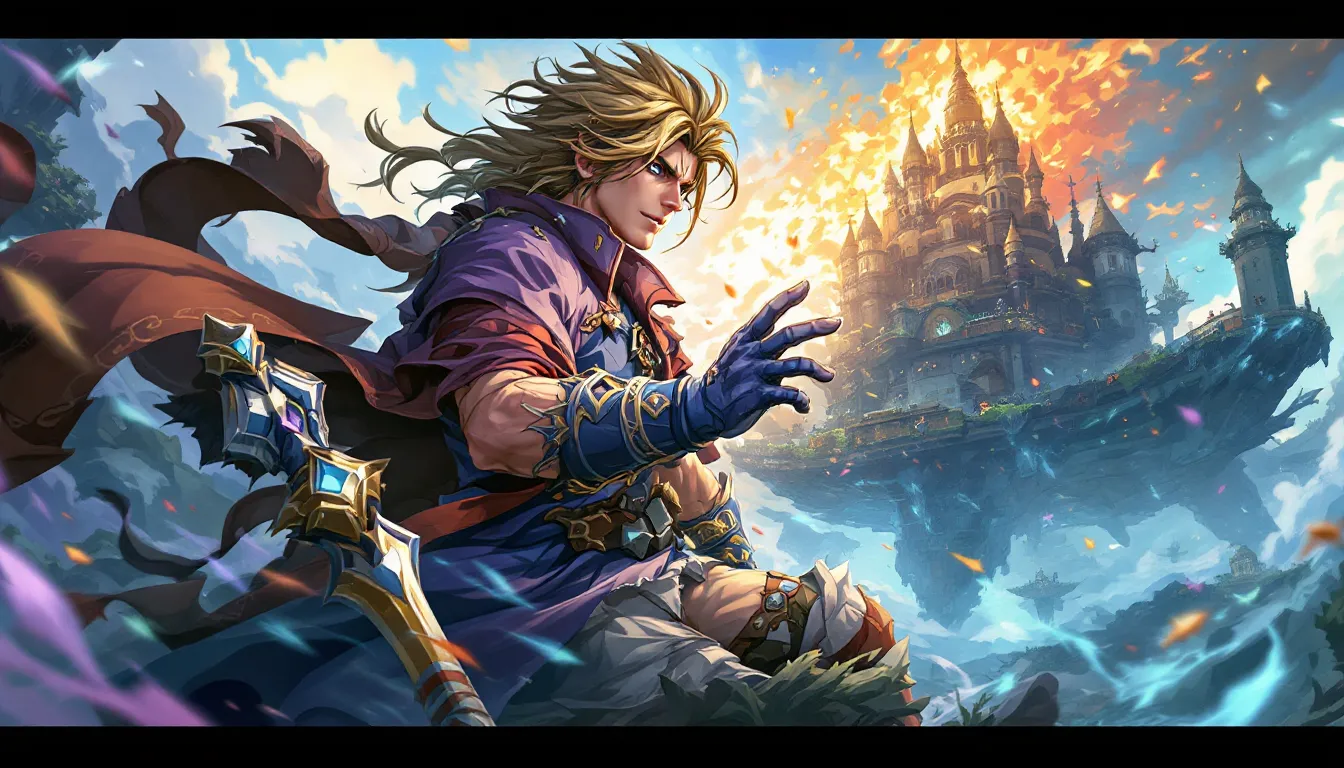
Bartz Klauser isn’t the chosen one. He’s not royalty, not a fugitive with a dark past, and definitely not someone with destiny written in his bloodline. Instead, he’s just a drifter, a traveling adventurer who stumbles into the world’s greatest crisis seemingly by accident. Yet this unassuming wanderer becomes the heart and driving force of Final Fantasy V’s epic tale of crystal shards, interdimensional rifts, and saving two worlds at once. What makes Bartz exceptional isn’t his lineage or predetermined fate: it’s his adaptability, his unwavering optimism, and his genuine care for those around him. In a franchise packed with brooding anti-heroes and tormented prophets, Bartz stands out as a protagonist who chooses to be a hero, moment by moment. Whether you’re revisiting FF5 for the hundredth time or discovering it through modern re-releases, understanding Bartz’s character, abilities, and arc is essential to appreciating why this 1992 classic still resonates with gamers across all platforms today.
Table of Contents
ToggleKey Takeaways
- Bartz Final Fantasy protagonist stands out as a relatable hero defined by adaptability and genuine optimism rather than tragic backstories or predetermined destiny.
- The job system flexibility mirrors Bartz’s character—he excels by adapting to situations, making Ranger + Dual-Wield and Spellblade setups some of the most powerful endgame builds.
- Bartz’s relationships with party members feel earned and authentic, creating a genuine found family dynamic that reinforces his appeal across 30+ years of gaming.
- From wanderer to world savior, Bartz’s character arc emphasizes choosing connection over isolation, a universal theme that resonates more deeply than angst-driven FF protagonists.
- Bartz Final Fantasy legacy persists in modern speedrunning communities and remakes, where his mechanical flexibility continues to inspire creative problem-solving and new optimization strategies.
- Unlike protagonists burdened by revenge or hidden powers, Bartz’s straightforward motivation—helping people he cares about—proves that simplicity and goodness remain compelling and timeless in gaming.
Who Is Bartz Klauser?
Background And Origins
Bartz Klauser enters Final Fantasy V as a man with no destination, no master plan, and no grudge against the world. He’s traveling on his chocobo through the floating continent when he witnesses a meteor crash, an event that sets the entire story in motion. Unlike many FF protagonists, Bartz doesn’t have a tragic backstory driving his motivations. His father Dorgann was an adventurer, and that adventuring spirit runs in Bartz’s blood, but the game doesn’t burden him with survivor’s guilt or revenge. He’s essentially a clean slate, which becomes his greatest strength.
What defines Bartz early on is his personality: he’s cheerful, loyal, and adaptable. He cracks jokes in the face of danger and can befriend virtually anyone within hours. This isn’t naïveté, Bartz reads situations well and knows when to be serious, but rather a genuine optimism that infectious to his party and to players. He grew up on the floating continent, isolated from the wider world, which explains his wide-eyed wonder when exploring new lands and meeting diverse characters. By the time FF5 begins, he’s already been adventuring for some time, honing combat skills and developing a traveler’s mindset.
Role In The Party
Bartz’s role in the party is, paradoxically, both central and humble. He’s the protagonist, yet he never dominates the narrative or overshadow his companions. The game splits its focus equally among Bartz, Lenna, Galuf, and Faris, making the party feel like a genuine ensemble rather than a mercenary crew following a single leader.
In combat, Bartz serves as a jack-of-all-trades. He can wield any job class the game offers, making him the most versatile character on the roster. He’s not the strongest pure physical damage dealer (that’s Lenna’s domain with certain setups), and he’s not the game’s best mage, but his flexibility allows him to adapt to any battle scenario. This design philosophy mirrors his character perfectly: Bartz doesn’t have one fixed identity: he evolves based on what his friends need and what the situation demands. Whether he’s tanking as a Knight, dealing damage as a Dragoon, or supporting as a White Mage, Bartz can do it all convincingly.
Bartz’s Unique Job System Abilities
The Mimic Job And Dual-Wielding Potential
Bartz’s access to the Mimic Job is arguably the most broken ability in Final Fantasy V. Obtained late in the game, Mimic allows Bartz to replicate the last action taken by any party member, including their abilities, spells, and even their damage output. The mechanics are straightforward: if Lenna used White Magic Cure IV, Bartz using Mimic would cast Cure IV with identical potency. If Faris dealt 9,999 damage with a physical attack (the damage cap), Bartz could mirror that number.
For speedrunners and optimization enthusiasts, Mimic trivializes difficulty scaling in endgame content. Pairing Mimic with high-damage abilities creates exponential value per turn. Chain a Spellblade ability (like Rapid Fire or Runic), use Mimic, and Bartz doubles the effect. The strategy shifts from “what’s the best job for this fight” to “how many copies of the strongest action can I trigger.”
Dual-wielding with Bartz opens even more possibilities. Equipping weapons in both hands reduces his damage by roughly 25% per hit but doubles the physical attack count, effectively increasing overall DPS for many weapons. Pair this with the Ranger Job for abilities like Rapid Fire (four attacks in one turn), and Bartz becomes an unstoppable damage dealer. A classic endgame build runs Ranger as the main job with Dual-Wield as the secondary ability, allowing four guaranteed hits with two weapons, some of the highest physical DPS in the game.
Optimal Job Combinations For Combat
Building Bartz for maximum effectiveness requires understanding how FF5’s job system layers abilities. Here are the most effective setups:
Spellblade + Dual-Wield (Physical + Magic Hybrid)
- Equip Spellblade as the main job and Dual-Wield as the secondary ability
- Spellblade attacks imbue weapons with elemental or status effects
- Cast offensive spells before combat to apply elemental property to both weapons
- Synergizes with weapons like the Chicken Knife or Rune Blade
- Effective for mid-to-late game content: less viable against enemies with elemental immunities
Ranger + Dual-Wield (Raw DPS)
- Main job: Ranger (grants Rapid Fire ability)
- Secondary: Dual-Wield (mandatory for two-weapon scaling)
- Rapid Fire + Dual-Wield = 4 physical attacks per turn with two weapons
- Best against bosses without physical immunity
- Less effective in random encounters where overkill wastes turns
Mystic Knight + Spellblade Abilities (Elemental Scaling)
- Mystic Knight’s Spellblade command applies spell effects to physical attacks
- Combine with the Red Mage job for additional spell availability
- Allows casting support spells while still dealing hybrid damage
- Excellent for long boss fights where sustained damage matters more than burst
Knight + Blue Mage (Tank + Utility)
- Knight reduces damage taken and can cover allies
- Blue Mage learns abilities from enemies, adding flexibility
- Bartz becomes the party’s defensive pillar while retaining offensive options
- Useful for challenge runs where survival matters more than speed
Chemist + Ability Slot (Healing + Damage Amplification)
- Chemist can use items to deal massive damage or heal strategically
- Extremely underrated for boss fights where timing matters
- Item combinations like Antidote + Toad create status effects that amplify total damage output
The best job combination eventually depends on the specific boss and your party composition. A balanced approach, Spellblade as the primary with flexible secondary abilities, handles most content without specialization.
Character Development And Story Arc
From Wanderer To World Savior
Bartz’s character arc is deceptively simple yet emotionally resonant. He begins as a lone wanderer, self-reliant, content with his solitary travels, and genuinely uninterested in “getting involved” with larger world events. When he stumbles upon the meteor crash, his immediate instinct is to help, but it’s a situational compassion, not a grand calling. He doesn’t prophesy the end of two worlds: he just sees people in danger and acts.
As the story unfolds, Bartz gradually transforms from someone who avoids commitment into someone willing to sacrifice everything for people he cares about. This transition isn’t dramatic or sudden. There’s no “power awakens within him” moment or revelation of his true bloodline. Instead, it’s gradual: helping Lenna leads to protecting Galuf, which leads to recovering Faris, which leads to gathering allies against the threat of Exdeath and his Void.
By the game’s climax, Bartz has internalized the weight of his companions’ struggles. Galuf’s death shakes him profoundly because Bartz has learned that relationships matter more than his independence. Lenna’s dedication to saving her world becomes his world too. The final confrontation with Exdeath isn’t about Bartz proving his destiny, it’s about him refusing to let his friends suffer while he stands aside.
Motivations And Personality Growth
Bartz’s core motivation is straightforward: he wants to help people he cares about. This simplicity is intentional and powerful. Final Fantasy V could have made Bartz hunt revenge, defend his homeland, or reclaim a stolen power. Instead, his motivation remains personal and relatable. He gets stronger because his friends need him to be strong. He risks his life because the alternative, watching others suffer, is unbearable.
His personality growth is equally understated. Bartz doesn’t “mature” by losing his sense of humor or becoming a brooding warrior. Instead, he deepens. His jokes become more contextual. His optimism becomes more tested and so more meaningful when he maintains it. He starts the game asking “why me?” (or rather, not asking at all, just accepting circumstances) and ends it knowing exactly why he’s standing in front of an interdimensional rift ready to fight: because the people he loves are counting on him.
What makes Bartz’s development stand out against other FF protagonists is its grounded nature. Cloud’s journey involves discovering hidden memories and latent powers. Squall’s arc centers on emotional walls and inner demons. Tidus’s story revolves around a shocking truth about his existence. Bartz’s growth is about choosing connection over isolation, and that choice resonates because it’s universal. Every player has felt the pull between staying safe and stepping up for others. Bartz models what happens when you choose courage.
Bartz’s Relationships With Other Party Members
Key Interactions And Dynamics
Bartz’s relationships define Final Fantasy V as much as his abilities do. He meets Lenna almost immediately when she crashes after her mysterious escape, and from their first interaction, there’s chemistry, not romantic tension (though that exists as subtext), but genuine mutual respect. Lenna is poised and dutiful where Bartz is free-spirited and spontaneous. She brings responsibility: he brings levity. Their dynamic works because neither tries to change the other: they complement instead.
Galuf’s introduction brings paternal warmth to the party. The elderly knight from the other world becomes a mentor figure and moral anchor. Bartz respects Galuf’s experience but isn’t intimidated by it, rare for a protagonist. When Galuf suggests a course of action, Bartz listens not because Galuf is authority but because Galuf has consistently proven wise. This respect deepens into something familial, and when Galuf sacrifices himself mid-story, Bartz’s grief is visceral because their bond was earned through adventure, not predestined.
Faris’s integration into the party is perhaps the most interesting. Initially antagonistic (she’s a pirate, after all), Faris clashes with Bartz’s optimism with her cynicism. Yet Bartz never judges her or demands she conform. He accepts her as she is, gruff, independent, skilled in combat. Over time, Faris’s walls crack not because Bartz pursues her friendship aggressively, but because his genuine decency proves infectious. By the endgame, Faris would follow Bartz into Exdeath’s Void without hesitation, not because he commanded it, but because he’s earned it through consistency.
Friendship And Rivalry Throughout The Game
Final Fantasy V avoids forced drama among party members. The four adventurers don’t spend chapters at odds or harboring resentment. Instead, their bond strengthens gradually through shared trauma and triumph. This speaks to Bartz’s character, he’s the kind of person who disarms tension rather than creates it.
There’s a subtle competitive element between Bartz and Faris, particularly about combat. Faris is objectively strong, but Bartz’s adaptability and willingness to try unconventional strategies sometimes give him an edge in planning encounters. This friendly rivalry keeps their dynamic fresh without descending into party infighting. They challenge each other to be better, which is the hallmark of genuine comradery in adventure gaming.
Bartz also serves as the group’s emotional regulator. When Lenna doubts whether her sacrifice is worthwhile, Bartz reminds her that they’re in this together. When Galuf falls and the party is devastated, Bartz channels that grief into determination rather than despair. He doesn’t gaslight or minimize their feelings: he acknowledges the weight and helps them carry it. This makes him feel like a real leader, not through command, but through emotional intelligence.
The dynamic shifts when Ranking Final Fantasy Games: is considered: Bartz’s role in FF5 often positions the game itself as a fan favorite, and that reputation partly comes from how well-written his relationships are. The party feels less like a combat unit assembled for convenience and more like a genuine found family. Bartz is the glue holding them together, and that dynamic is why players develop real attachment to these characters across a 30-40 hour experience.
Builds And Strategy Guides For Maximum Effectiveness
Best Equipment And Ability Setups
Equipping Bartz properly separates casual playthroughs from optimized runs. Here’s what actually works:
Weapons:
- Dual-Wield Setup: Pair high-damage weapons like Excalibur and Chicken Knife or Rune Blade for elemental scaling. The Chicken Knife’s 1.5x damage modifier stacks multiplicatively with dual-wielding, making it one of the strongest physical options even though its gimmicky name.
- Spellblade Setup: Use weapons with element-specific properties. A Fire Sword + Ice Rod pairing lets Bartz alternate elements based on enemy weaknesses while leveraging Spellblade’s spell-casting mechanic.
- Single-Handed (Off-Tank): Pair a strong sword with a shield for defense-focused builds. The Holy Shield provides elemental protection and passive healing, crucial for tanking heavy hitters.
Armor:
- Crystal Gauntlets and Crystal Armor provide solid physical defense and elemental resistance. For endgame, prioritize Gaia Gear (grants Immunity to most status effects) and Aegis Shield (the game’s best defensive option).
- Robe of Lords offers balanced defense with magic boost. If Bartz is serving as a hybrid damage dealer, this is ideal.
- Hermes Sandals grant Haste at the start of combat, equivalent to a free turn every 8 turns, insanely valuable.
Ability Slots (Secondary Jobs):
Each character can equip one ability from a secondary job. For Bartz:
- Dual-Wield (Freelancer ability): Mandatory for physical DPS builds. Increases attack frequency by ~100% while reducing per-hit damage, netting ~75% overall damage boost.
- Spellblade (Mystic Knight ability): Turns physical attacks into hybrid damage by imbuing them with spells.
- Rapid Fire (Ranger ability): Four consecutive attacks instead of one. Pairs perfectly with Dual-Wield for burst damage.
- Mana Shield (Blue Mage ability): Converts damage into MP depletion, incredibly strong against high-damage bosses if Bartz is built around MP generation.
Boss Battle Strategies Featuring Bartz
Exdeath (First Encounter):
Exdeath’s high magic defense and physical vulnerability make this a straightforward damage race. Equip Bartz with Ranger + Dual-Wield and spam Rapid Fire with a strong physical weapon. His Mystic Sword attack ignores some defense, so Bartz’s consistent output beats him before AoE magic becomes catastrophic. Support from Lenna’s healing keeps Bartz alive through Exdeath’s heavy spells.
Neo Exdeath:
This final boss has four separate bodies with individual HP pools and attack patterns. Each body casts specific spells, making element-based approaches valuable. Use Bartz with Spellblade + Dual-Wield setup: cast Fire or Lightning to imbue weapons, then attack the weakness-aligned body. Rotating elements ensures consistent damage while adapting to which body represents the current threat.
Atma Weapon (Superboss):
This optional boss deals massive physical damage and has extreme physical defense. Bartz should equip a tanking setup: Knight as main job with Healing as secondary ability (from White Mage). Use defensive abilities like Guard and Cover to minimize damage while Lenna and other party members handle damage. Attempting a pure-damage approach with Bartz guarantees his death before dealing meaningful damage.
Omnibattles (GBA/Advance Remake):
These late-game optional fights require Bartz to adapt mid-battle. Have three loadouts prepared: physical DPS (Ranger + Dual-Wield), magical damage (Red Mage + Spellblade), and support (Cleric + healing ability). Use the job change system liberally to match enemy patterns. Bartz’s flexibility makes him the perfect pivot point when enemy strategies shift.
Specific to Final Fantasy 14 Mods: Transform Your Eorzea Adventure, modern FF remakes emphasize build flexibility, a design philosophy that traces back to FF5’s job system and Bartz’s adaptability as a character. The core lesson: Bartz is most effective when you’re willing to experiment with unconventional builds rather than sticking to one rigid strategy.
Bartz’s Legacy In The Final Fantasy Franchise
Appearances In Spin-Offs And Crossovers
Bartz has appeared in virtually every major Final Fantasy crossover title, and his inclusion always feels right. In Dissidia Final Fantasy and Dissidia 012, Bartz represents FF5 with his classic optimistic demeanor intact. His gameplay mirrors his character: adaptable, capable of mirroring opponent abilities, and rewarding players who understand positioning and job-switching mechanics. The game’s developers nailed his moveset because it reflects his core identity, adaptability through multiple disciplines.
Final Fantasy Brave Exvius (mobile) features Bartz as a rare pull with strong physical damage potential, maintaining his reputation as a damage dealer. Pictlogica Final Fantasy includes him with job-specific variations, letting players experience Bartz in different combat roles. These appearances might seem minor, but they ensure the character remains relevant across platforms and genres.
Final Fantasy XIV’s Duty Finder roulettes briefly featured FF5 throwback content where players encounter references to Bartz and his journey. While FFXIV doesn’t directly feature Bartz as a playable character, the Final Fantasy franchise’s interconnected nature means adventurers on the Source regularly reference the classics, and Bartz’s legend persists.
Bartz also appears in Final Fantasy Record Keeper, where players actually draw his relics and ability pieces to strengthen their squads. His importance to the overall FF legacy is cemented by his presence across mobile, console, and live-service platforms.
Cultural Impact And Fan Reception
Bartz’s cultural impact is often understated because FF5 was less culturally dominant in the West than FF6 or FF7 during their original releases. But, among dedicated FF fans and speedrunners, Bartz is revered. His approachable character and flexible job system created the blueprint for what many fans consider the “perfect” FF protagonist, capable, adaptable, and genuinely likable without being saccharine.
In speedrunning communities, FF5 Any% and 100% runs center entirely on Bartz’s optimization potential. IGN’s coverage of Final Fantasy speedruns frequently highlights FF5 runs specifically because Bartz’s adaptability allows for creative problem-solving that non-players find fascinating to watch. A single-handed Spellblade exploit or a Mimic-based sequence break wouldn’t be as engaging if the protagonist weren’t as compelling as Bartz.
Fan communities celebrate Bartz for his positivity in a franchise increasingly dominated by angst-ridden protagonists. Cloud’s guilt, Squall’s walls, Tidus’s insecurity, these are compelling, but Bartz’s straightforward goodness feels refreshing by comparison. Fan art consistently portrays him with his characteristic smile, adventuring spirit intact, often paired with the other FF5 party members in “the family found” context that resonates powerfully.
On Metacritic’s Final Fantasy rankings, FF5 consistently scores well in user ratings, with Bartz frequently cited as a highlight. Comments like “Bartz is underrated” or “Finally, a protagonist I could actually like” appear regularly, indicating that players recognize his worth even if mainstream discourse occasionally overlooks him.
More importantly, Bartz established that FF protagonists didn’t need tragic backstories or shocking revelations to be compelling. His legacy is one of accessibility, the game letting players understand and connect with him without elaborate exposition. That simplicity transformed Final Fantasy’s approach to character writing going forward.
Why Bartz Remains A Fan Favorite In 2026
In 2026, Bartz’s relevance hasn’t diminished even though gaming evolving dramatically since 1992. Several factors keep him vital in FF discourse.
Timeless Character Design: Bartz’s optimistic, adaptable personality transcends era-specific storytelling trends. He’s not tied to 1990s aesthetics or narrative conventions that feel dated today. A player experiencing FF5 for the first time via modern ports (available on PC, PlayStation, Nintendo Switch, and mobile) responds to Bartz with the same warmth that original players felt in 1992. That’s remarkable.
Job System Remains Revolutionary: The job system Bartz explores is still one of gaming’s most robust class-switching mechanics. Modern games like Final Fantasy XIV borrow heavily from FF5’s philosophy. The idea that characters aren’t locked into roles and can seamlessly transition between playstyles originated here. Bartz is the vessel through which players experience this revolutionary system, making him fundamental to understanding modern FF design.
Accessibility Through Remakes: Modern versions of FF5 (Pixel Remaster on PC/Switch, the GBA port, and the iOS/Android versions) make Bartz’s story accessible to younger players who might never have experienced the original. Each version introduces new audiences to his character, and positive reception from Gen Z and younger millennial gamers indicates the character design holds up.
Meta-Gaming And Speedrunning: As mentioned earlier, FF5 speedruns remain popular because Bartz’s flexibility allows creative solutions. The game isn’t solved: new optimizations are discovered regularly. In 2026, discovering a new World of Final Fantasy Tips: Unlock Secrets strategy or exploit keeps players engaged with Bartz’s potential in ways that linear protagonists simply can’t match.
Representation Of Goodness: In an industry sometimes dominated by anti-heroes and morally complex protagonists, Bartz represents genuine heroism without naiveté. He’s strong but kind, capable but humble, heroic but still relatable. That balance is increasingly rare and appreciated by players seeking characters with integrity.
Community Persistence: Fan communities maintain Bartz’s relevance through art, fiction, speedrun commentary, and discussion. Reddit threads, Discord servers, and forums dedicated to FF5 keep him in active rotation. The character has a devoted base that consistently argues for his place in FF’s top tier, and that vocal fandom ensures new players discover him.
Conclusion
Bartz Klauser is more than just the protagonist of Final Fantasy V. He’s a study in character design, simple on the surface, layered beneath. He’s a wanderer who becomes essential, an optimist who earns his hopefulness through genuine connection, and an adventurer whose adaptability extends both mechanically and narratively. His job system flexibility mirrors his emotional flexibility, making him a character whose mechanics reinforce personality in ways few RPG protagonists achieve.
Whether you’re revisiting FF5 after decades or playing it for the first time in 2026, Bartz rewards engagement. His relationships feel earned. His growth feels natural. His abilities feel powerful. And his heart, that unwavering commitment to his friends, remains the emotional core that makes the entire experience resonate.
In a franchise that’s shaped gaming itself, Bartz represents the golden age where mechanics, story, character, and design philosophy aligned perfectly. He’s not the most famous FF protagonist, but he’s one of the most complete, and that completeness is why, more than 30 years later, gamers still care about a traveler who crashed into a meteor and changed the course of two worlds. That’s the kind of legacy that transcends generations.