
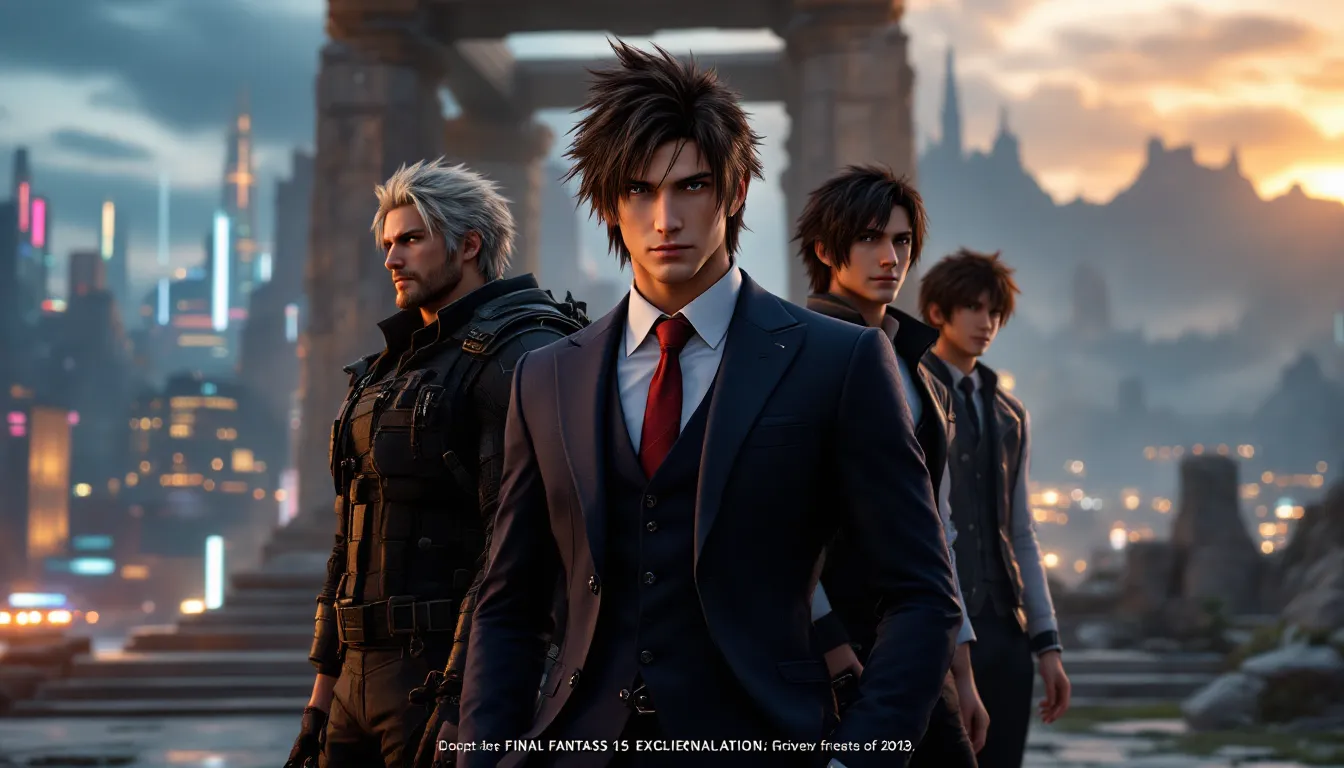
Final Fantasy 15 arrived in 2016 as one of the most anticipated RPGs in franchise history, carrying the weight of over a decade of development hell and a complete creative overhaul. What launched as “Final Fantasy Versus XIII” had been transformed into something entirely different, a bold departure from the series’ turn-based roots into real-time, action-driven combat. Nearly a decade later, the question lingers: does Final Fantasy 15 hold up, or has it aged into obscurity? This Final Fantasy 15 review examines whether Noctis’s journey across the open world of Eos remains compelling in 2026, cutting through nostalgia to deliver honest assessment of what actually works and what falters. For newcomers curious about diving in and veterans wondering if a return trip is worth the time, we’ve got the breakdown.
Table of Contents
ToggleKey Takeaways
- Final Fantasy 15’s emotional core lies in the genuine friendship between Noctis and his three companions, delivering authentic character development and meaningful banter that drives the narrative impact.
- The real-time action combat system feels engaging when mastered through proper Warp positioning and ability rotations, though camera issues during fights occasionally obscure enemy positions and hinder responsive gameplay.
- Final Fantasy 15 review reveals that the main story pacing suffers from a dramatic shift in the final act, transitioning abruptly from a 70+ hour open-world adventure to linear storytelling that can feel jarring.
- The game’s open-world design encourages organic exploration with hidden dungeons and optional activities like fishing and cooking that feel genuinely rewarding rather than mandatory grinding.
- Supplementary content including the Kingsglaive film, Brotherhood anime, and DLC episodes significantly enhance story completeness, making the base game alone feel narratively fragmented without external context.
- Final Fantasy 15 best suits players who value character-driven storytelling, have 100+ hours to invest, and don’t mind 30fps gameplay, though it disappoints those seeking standalone narrative coherence or densely-populated open worlds.
Game Overview And Setting
Final Fantasy 15 drops players into the world of Eos, a sprawling landscape where the technological and magical coexist in ways that feel distinctly Final Fantasy yet refreshingly grounded compared to the series’ more abstract settings. The story follows Noctis Lucis Caelum, the crown prince of Lucis, embarking on a road trip with his best friends Gladiolus, Ignis, and Prompto as the kingdom falls under siege and the world succumbs to darkness.
The setup is deceptively simple: a road trip that becomes an odyssey of self-discovery and responsibility. The narrative frame, traveling across a dying world with your closest companions, carries surprising weight once the story’s full scope unfolds. The game launches on PlayStation 4 and Xbox One, with later ports to Nintendo Switch and PC (Steam) offering access to broader audiences, though performance varies significantly across platforms.
Eos itself presents a world somewhere between post-apocalyptic and high fantasy. Neon-lit cities clash with ruined kingdoms, gas stations dot the landscape alongside ancient temples, and the overall aesthetic refuses to play it safe. This tonal ambiguity is deliberate and, mostly, works in the game’s favor. The world feels lived-in because it’s messy, not everything coheres perfectly, but that roughness gives Eos character most polished fantasy worlds lack.
Story And Characters
Main Character Development
Noctis isn’t your typical protagonist in the traditional sense. He’s not inherently heroic or charismatic at the outset: he’s petulant, self-absorbed, and reluctant about his role as the Chosen One. This makes him far more interesting than if he’d started as the enlightened warrior-king type.
The bond between Noctis and his trio of friends forms the emotional core of the experience. Gladiolus serves as the pragmatic warrior and voice of reason. Ignis functions as the strategist and (after a pivotal story moment) becomes the heart of the group’s resilience. Prompto, the photographer among them, provides levity while carrying hidden depths related to his origins. These four feel like actual friends, not archetypal companions assembled for narrative convenience. Their banter during drives is genuine enough that many players found themselves genuinely invested in their fates.
That said, the main story progression leans heavily on late-game revelations that can feel sudden if you’re not engaged with the extended universe. Players who skipped the Kingsglaive film, Brotherhood anime series, and Comrades multiplayer content might struggle to piece together why certain story beats carry weight. The game can be experienced standalone, but you’ll definitely miss context.
Narrative Structure And Pacing
This is where Final Fantasy 15’s story falters most noticeably. The first 60-70% of the game follows a meandering open-world structure where the main quest feels optional. You can spend 80+ hours doing side quests, hunting monsters, and fishing before progressing the core story, and many players did exactly that.
The final act kicks into high gear with a linear, story-focused sprint that can feel jarring. Characters make massive leaps in understanding, and the pacing whiplash from “roaming Eos at your leisure” to “locked into cutscenes and scripted sequences” is palpable. Compared to how other major RPGs handle narrative flow, this structure feels unpolished even by 2026 standards.
The ending itself remains divisive. Some find the bittersweet conclusion emotionally resonant and perfectly suited to a story about accepting adulthood and legacy. Others see it as anticlimactic or unearned given how late major revelations arrive. Multiple playthroughs and DLC episodes clarify intent, but the base game’s narrative coherence relies too heavily on supplementary content, a flaw that hasn’t improved with age.
Gameplay Mechanics And Combat System
Real-Time Battle System
Final Fantasy 15’s pivot to real-time, action-focused combat represents the franchise’s most dramatic mechanical shift since the series began. Gone are the days of turn-based decision-making: combat is now fluid, chaotic, and demands active participation rather than menu navigation.
Noctis can warp around the battlefield using his Warping ability, chaining attacks together for increased damage multipliers, and switching between four different weapon types (sword, spear, greatsword, and firearms) on the fly. The mechanics sound straightforward until enemies start utilizing their own abilities, forcing you to dodge, defend, and reposition constantly. Boss encounters, especially later-game challenges, demand genuine mechanical skill, this isn’t an idle game where buffs carry you to victory.
Directional defending lets you mitigate incoming damage by holding the guard button at precise moments, similar to parry systems in action games. Master this, and combat becomes a rhythm of offense and defense rather than a frantic button-mash. Ignore it, and you’ll burn through potions rapidly against tougher encounters.
The camera during fights can be problematic, occasionally obscuring enemy positions or locking onto the wrong target. This was partially addressed in patches, but the fundamental issue, a camera system designed more for exploration than combat, never fully resolves. In a game where dodging matters as much as it does here, a reliable camera is essential, and FF15’s falls short of that standard.
Ability Progression And Customization
Noctis gains access to a wide ability tree, unlocking new Techniques (special moves), passive bonuses, and stat improvements through AP (ability points) earned during combat. The customization layer feels substantial, you’re not locked into a specific playstyle, and experimentation is rewarded.
Ascension nodes allow you to enhance everything from dodge frequency to magic potency. You can optimize Noctis for sustained damage, burst periods, or defensive play depending on how many AP you’ve accumulated. With a level cap at 120, reaching endgame requires serious engagement, and the progression curve stays reasonably well-balanced.
Magic works differently than traditional FF entries. Rather than learning spells through leveling or materia, Noctis collects raw elemental deposits and crafts spells on the fly. An Fire spell with multiple ingredients becomes a devastating area-of-effect nuke rather than a simple flame burst. This system encourages experimenting with different elemental combinations, though the interface for crafting spells feels clunky compared to more streamlined modern RPGs.
Summoning, calling in god-like entities for powerful attacks, is tied to a meter that fills during combat. Summons arrive in stunning cinematic moments and devastate enemies, but they’re unreliable in tough fights where you actually need them most due to the meter mechanics. It’s a spectacular system that feels more spectacle than substance when analyzing effectiveness.
Open World Design And Exploration
World Environment And Side Activities
Eos is a world that actively encourages aimless wandering. Unlike many open-world games where side quests feel like checkbox tasks, Final Fantasy 15’s optional content often carries personality and genuine storytelling moments. Hunts assigned by a bulletin board system scale in difficulty and reward players with currency and items. Contract the bounty hunter Navyth or the Tipster, and you’re given progressively tougher creatures to track down.
Fishing deserves specific mention because it’s somehow genuinely relaxing in a way most gaming activities aren’t. Ig sits by water, music shifts to a peaceful track, and you simply catch fish. Some players logged 20+ hours fishing because it felt like actual leisure within the game world. Cooking together at campsites strengthens bonds between Noctis and his friends while providing stat buffs for upcoming battles. These aren’t grinding mechanics, they’re rhythms that break up combat.
But, the open world does show its age in 2026. Eos lacks the environmental storytelling density of more recent open-world titles. Towns feel static, NPCs repeat the same dialogue lines, and vast stretches of landscape feel empty even though being traversable. Fast travel via chocobos or vehicles feels restrictive compared to modern open-world standards, and the draw distance on certain platforms means environments pop into existence as you approach them, breaking immersion.
Daytime and nighttime cycles create tangible differences, powerful creatures emerge at night, forcing strategic decisions about when to travel. This environmental design choice aged well and remains engaging, though it’s not innovative by 2026 standards.
Dungeons And Secret Locations
Dungeons range from linear, story-critical gauntlets to sprawling optional caverns filled with treasure and rare enemies. The Insomnia dungeons (late-game additions and DLC content) represent peak FF15 dungeon design, challenging, atmospheric, and visually distinct from each other. Contrast this with early-game caves that feel samey and recycled.
Hidden locations scattered across Eos reward exploration with rare weapons, powerful items, and lore fragments. A literal dungeon buried beneath a city, a meteor crater housing ancient relics, or a hidden vault guarding legendary weapons, these discoveries feel earned when you stumble upon them organically. The secrets don’t broadcast themselves through map markers: they exist as rumor and intuition, encouraging the kind of exploration modern open worlds often discourage through excessive quest guidance.
That said, some secret dungeons are locked behind difficulty spikes that feel unfair without proper leveling or gear. A few legendary weapons demand specific tactics or knowledge that the game doesn’t adequately communicate, leading to frustrating deaths against enemies that significantly outclass your party through no fault of your own strategic planning. It’s a balance issue that patches attempted to address but never fully resolved.
Graphics, Performance, And Technical Polish
Visual Quality Across Platforms
Final Fantasy 15 arrives as a technically ambitious game that performs spectacularly on some platforms and struggles on others. The PlayStation 4 and Xbox One versions (the base releases) delivered impressive visuals for 2016, detailed character models, lush environments, and lighting that makes daytime explorations feel genuinely sunny while night descends into foreboding darkness. Character animations, especially during cutscenes, showcase motion capture that makes interactions feel natural and lived-in.
The Nintendo Switch port is a technical marvel in terms of making the game playable on portable hardware, but it does so by significantly scaling back environmental detail, draw distance, and shadow quality. Handheld mode looks serviceable but noticeably downgraded compared to docked play, and docked performance on Switch occasionally dips below 30fps during hectic scenes.
PC version improvements via Steam release (2018) and subsequent updates pushed visual fidelity beyond console versions, allowing higher frame rates and resolution options for players with capable hardware. But, the PC port arrived with stuttering issues that persisted for months even though patches. Even in 2026, certain hardware configurations report occasional performance hiccups.
Console versions received various “Royal Edition” updates and patches throughout the game’s post-launch lifecycle, making later purchases substantially different from the 2016 launch build. The accumulated improvements are significant enough that anyone playing in 2026 benefits from years of optimization and fixes the original release desperately needed.
Frame Rate And Load Times
Final Fantasy 15 targets 30fps on PlayStation 4 and Xbox One, a frame rate that feels sluggish when examining combat-heavy gameplay. Fast-paced action games benefit immensely from higher frame rates, and FF15’s 30fps target becomes noticeable during rapid dodging or warping sequences where visual clarity directly impacts player reaction time.
The PC version supports 60fps and even 120fps on high-end systems, making combat feel substantially more responsive. For players accustomed to modern action game frame rates, returning to 30fps feels like playing through molasses. It’s not game-breaking, but it’s a noticeable limitation when enemies demand precise positioning and timing.
Load times on PlayStation 4 and Xbox One hover around 15-20 seconds for entering areas or battles, acceptable by 2016 standards but slow by 2026 expectations. Fast-travel sequences trigger load screens that interrupt flow. The PlayStation 5 and Xbox Series X versions weren’t developed as true next-gen releases: the games run the PS4/Xbox One versions with minor improvements, so load times didn’t improve as dramatically as they could have.
The Switch version suffers most egregiously here, with load times stretching to 30+ seconds in portable mode. It’s the tradeoff for portability, but it’s worth noting if you’re considering the handheld version as your primary way to experience the game in 2026.
DLC Content And Post-Launch Support
Final Fantasy 15’s post-launch support strategy was unconventional and, in retrospect, somewhat confusing. Rather than traditional expansion passes, Square Enix released episodic DLC episodes featuring alternative viewpoints and expanded lore.
Episode Gladiolus, Episode Prompto, and Episode Ignis shift perspective away from Noctis, exploring crucial story moments his companions experienced while separated. Episode Ignis proved particularly beloved, showing Ignis’s perspective during a game-changing late-story sequence and providing mechanical variety through his unique abilities. These episodes aren’t filler, they meaningfully expand understanding of the main narrative.
The Comrades multiplayer component launched as free DLC, allowing players to control original characters and undertake co-op hunts. It’s serviceable but never felt essential. Players could ignore it entirely and lose nothing from their single-player experience.
Later DLC added additional weapons, quests, and a Rinoa DLC episode (a crossover with Final Fantasy 8) that felt disconnected from the base game’s narrative but provided mechanical novelty. By 2026, most of this DLC is bundled into complete editions or available à la carte, making the distinction less critical for new players.
The critical frustration: crucial story context required viewing external media (Kingsglaive film, Brotherhood anime) or playing DLC episodes. A complete understanding of FF15’s narrative demands engagement beyond the base game, which is a design problem that never fully resolved. For players wanting a self-contained RPG experience, the base game feels incomplete even with all DLC included. Players who tackled every supplementary piece, but, reported significantly more narrative satisfaction, which speaks to the quality of the expanded universe content even if the integration felt fragmented.
Strengths That Define The Experience
The friendship between Noctis, Gladiolus, Ignis, and Prompto stands as Final Fantasy 15’s greatest achievement. Their chemistry feels authentic, banter during drives never gets old, and the emotional crescendos involving their relationships land with genuine impact. Watching a group of best friends navigate impossible circumstances while maintaining camaraderie creates a narrative thread that lesser games fail to achieve.
Combat, when it clicks, feels genuinely engaging. Mastering Warp positioning, learning enemy attack patterns, and executing proper ability rotations creates satisfying moment-to-moment gameplay. Boss fights against unique creatures like Ardyn or the Daemon Princes demand mechanical precision and strategy. The system rewards player skill without punishing casual experimentation, striking a balance many action-RPGs struggle with.
The world invites exploration in ways that feel organic rather than compulsory. Stumbling upon a hidden dungeon, discovering a rare weapon tucked in a forgotten corner, or encountering powerful enemies that force tactical retreat creates emergent storytelling. Eos doesn’t hold your hand, and that restraint, unusual in modern open-world games, respects player agency.
Asynchronous gameplay rhythms allow you to bounce between story-critical segments, hunting contracts, fishing, cooking, and dormant exploration without feeling forced into a single playstyle. You’re not railroaded through predetermined pacing: you generate your own adventure. For players who appreciate agency in game progression, this stands as a major selling point.
Beyond structural design, Final Fantasy 15 presents genuinely moving character arcs. The journey from cocky prince to mature leader happens gradually through both cutscenes and environmental storytelling. Certain late-game revelations recontextualize earlier moments with startling emotional weight. The ranking of Final Fantasy games often places XV higher when accounting for these character-driven moments, especially among players who experienced the full narrative including DLC.
Notable Weaknesses And Limitations
The narrative structure remains the most consistent complaint. The main story feels secondary for 70+ hours, then abruptly becomes the focus through aggressive linearity. This whiplash disrupts pacing and creates the sensation that two different games were stitched together. Players who grew attached to the open-world portion frequently reported feeling unsatisfied with how quickly the final act concludes.
Camera issues during combat persist even after patches. When surrounded by multiple enemies, the camera frequently locks onto positions that obscure enemy attacks or your own positioning. This feels especially problematic for a game demanding precise dodging mechanics. Contrast this against titles like Dark Souls or Elden Ring, where camera reliability is paramount, and FF15 falls noticeably short.
The reliance on supplementary content (films, anime, DLC episodes) for narrative completeness remains frustrating. A $60 game shouldn’t require watching a separate film for story context. Many players felt blindsided discovering crucial lore existed outside the base game. This design choice, made during development hell, was never satisfyingly resolved.
Empty stretches of the open world feel lifeless compared to contemporary RPGs. Towns lack dynamic NPCs, environmental interactions feel limited, and traveling between points of interest often means crossing barren landscape. Modern open-world standards set by games like The Witcher 3 or Baldur’s Gate 3 make Eos feel sparse in 2026.
Magic feels underutilized even though the crafting system. Creating powerful spells requires farming materials, and the payoff, area-of-effect explosions, while visually satisfying, never feels as tactically essential as direct weapon attacks. Many players abandoned magic entirely after early-game experimentation, suggesting the system didn’t integrate seamlessly into optimal playstyles.
Late-game difficulty spikes create frustrating power walls. Certain endgame dungeons house enemies that deal disproportionate damage relative to your level gains, demanding specific gear or tactics the game doesn’t clearly communicate. It’s a balance issue where difficulty feels arbitrary rather than challenging in a fair way. Players grinding for hours only to face enemies ignoring their level-ups experience genuine frustration with game design, not satisfying challenge.
Also worth noting: Final Fantasy 14 mods have created entire communities extending the lifespan of older entries, highlighting how some RPGs benefit from player modification tools that FF15 never received robust support for on console platforms.
Final Verdict: Who Should Play Final Fantasy 15?
Final Fantasy 15 remains worth playing in 2026, but not universally. The answer depends entirely on what you prioritize in RPGs.
Play it if you: value character-driven narratives and appreciate slow-burn storytelling. If you love exploring at your own pace and aren’t bothered by empty world stretches, FF15 rewards patience. Action combat appeals to you more than turn-based mechanics. You’re willing to engage with the extended universe (films, anime, DLC) to feel the full narrative impact. You have 100+ hours to invest, this game demands time.
Reconsider if you: demand narrative coherence without supplementary content. Can’t tolerate 30fps gameplay or experience motion sickness from less-responsive frame rates. Expect camera systems to be invisible and reliable during fast-paced action. Want self-contained storytelling: FF15 fundamentally fails here. Prefer densely-populated open worlds with dynamic environmental storytelling, Eos feels sparse compared to modern competitors. Need consistent difficulty balancing: power spikes and valleys exist throughout.
In absolute terms, Final Fantasy 15 presents a solid 7.5-8 out of 10 experience, engaging enough to warrant playtime, flawed enough that it doesn’t universally excel. It’s ambitious in ways that sometimes work brilliantly and sometimes create friction. Reviews aggregated on Metacritic average around 81 for the original release, with user scores higher (usually 8.0+), suggesting players found more value than critics, possibly because the extended content addressed criticism over time.
Compare this against other major RPGs: it’s not as narratively tight as Final Fantasy 7 Remake, not as mechanically polished as Elden Ring, not as content-dense as The Witcher 3. Yet it occupies a unique space, a game that prioritizes companionship and emotional narrative alongside mechanical engagement. That combination has aged better than many expected, especially as player sentiment shifted away from it being the “worst numbered FF” toward appreciation for its unique vision.
For completionists, Final Fantasy franchise historians, and players drawn to character-focused storytelling, FF15 absolutely earns your time in 2026. For casual RPG players seeking a weekend experience, it demands too much commitment. Gaming sources like IGN have written extensively about FF15 since launch, and revisit pieces often reflect this same sentiment: it’s a flawed masterwork that improves significantly when engaged completely.
Conclusion
Final Fantasy 15 sits at a fascinating intersection: a game that disappointed some at launch but has gradually earned respect through community appreciation, post-launch support, and perspective allowing distance from hype. It’s neither the franchise disaster some feared nor the masterpiece devotees proclaimed.
The core experience, a road trip across a dying world with your best friends, remains emotionally resonant. The action combat delivers satisfying gameplay when the camera cooperates. The open-world structure encourages exploration in ways modern gaming increasingly discourages. Yet narrative fragmentation, technical compromises, and pacing issues prevent it from reaching transcendent status.
Ten years post-launch, FF15 has become the game it likely would’ve been with another year of development. The accumulated patches, DLC episodes, and Royal Edition refinements create a substantially better product than the 2016 release. If you’ve been hesitant about jumping in, the 2026 version represents the definitive way to experience it, all rough edges sanded smooth, all story threads available without hunting for supplementary media.
For gaming enthusiasts with the time and patience to invest, Final Fantasy 15 offers experiences worth having. It’s a game that will make you laugh at dialogue, strategize during boss encounters, and feel genuine emotion as its story concludes. That’s more than most games achieve, flaws and all. Whether it claims a spot in your backlog depends on where you stand with ambitious, character-driven adventures, but if that’s your style, Noctis’s journey across Eos deserves at least one playthrough.