
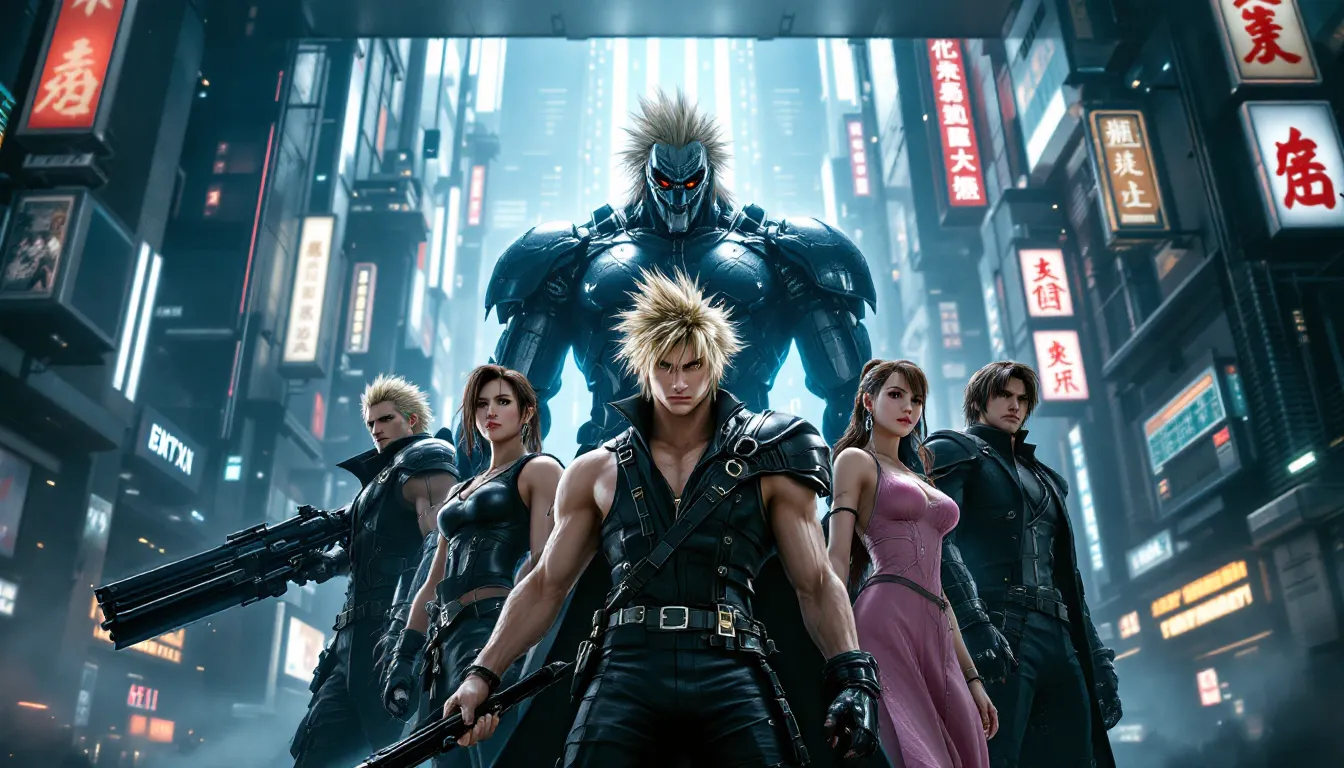
Final Fantasy 7 characters have captivated gamers for nearly three decades, and their appeal hasn’t faded one bit in 2026. Whether you’re playing through the original 1997 classic, the groundbreaking Final Fantasy 7 Remake, Rebirth, or diving into extended universe titles like Crisis Core, these heroes and villains form the backbone of one of gaming‘s most iconic narratives. From Cloud Strife’s internal struggle to Sephiroth’s incomprehensible ambitions, each character brings depth, personality, and combat utility that shape how you experience the game. This guide breaks down every significant character in the Final Fantasy 7 saga, their roles, abilities, development arcs, and why they still matter. Whether you’re a longtime fan revisiting Midgar or a newcomer jumping in with the Remake, understanding these characters will deepen your appreciation for the story and help you optimize your party composition in battle.
Table of Contents
ToggleKey Takeaways
- Final Fantasy 7 characters remain culturally relevant in 2026 because their narratives explore timeless themes like identity, choice, and consequence that resonate across generations and platforms.
- Each Final Fantasy 7 character features a distinct playstyle and narrative arc—from Cloud’s hybrid DPS-tank role to Tifa’s skill-based martial arts and Aerith’s magical healing—making multiple team compositions strategically viable.
- The Remake and Rebirth significantly expanded character development through expanded scenes, internal monologues, and perspective-shifting gameplay that deepens emotional investment beyond the original 1997 game.
- Final Fantasy 7 characters succeed because story and mechanics align perfectly—Cloud’s weapon flexibility mirrors his identity questions, while Barret’s area control reinforces his leadership role.
- Platform proliferation across PS5, PC, Nintendo Switch, and mobile ensures these characters are more accessible than ever, allowing new audiences to discover the franchise’s beloved cast.
- Non-playable characters like Sephiroth, Aerith, and the Turks possess moral complexity and nuanced motivations that make them memorable beyond being obstacles or plot devices.
The Core Playable Characters
Cloud Strife: The Reluctant Hero
Cloud is the entry point into Final Fantasy 7, and his character arc remains one of gaming‘s best-written journeys. He starts the game as a confident ex-SOLDIER operative, but that confidence masks deep psychological fragmentation. Cloud’s identity crisis, shaped by traumatic memories, Jenova’s influence, and his manufactured past, drives much of the narrative tension. As a character, Cloud represents the struggle between who we think we are and who we actually are.
In combat, Cloud functions as your primary DPS and tank hybrid. His Limit Break system allows him to build up gauge during combat and unleash devastating attacks. The Remake and Rebirth versions expanded his weapon variety significantly: he can now wield different weapons that unlock entirely different movesets and Limit Breaks. His Cloud Strife abilities scale with physical damage, materia slots, and weapon choice, making him adaptable across difficulty settings from Normal to Hard. Platform availability is universal, Cloud appears identically across PS5, PC (via Steam), and PlayStation 4 versions.
Tifa Lockhart: The Martial Arts Master
Tifa represents one of gaming’s best martial arts combatants, period. Her fighting style is grounded in hand-to-hand combat, relying on speed, precision, and building her Limit Break gauge through consecutive hits. Unlike Cloud’s sword-based approach, Tifa’s strength lies in rapid combo attacks and sustainable DPS. She’s mechanically rewarding to play because her damage output scales directly with player input, the better your timing, the more damage you deal.
Her connection to Cloud runs deep, childhood friends separated by tragedy, reunited by circumstance. In the Remake era (2020 onward), her character received significant screentime and development, shifting her from supporting role to co-protagonist. Tifa’s personal quest connects directly to Midgar’s destruction and her motivations for joining Avalanche. Her ability pool emphasizes physical damage and healing utility through her Limit Break, making her a legitimate healer alternative when materia is equipped properly. She excels on all platforms where Final Fantasy 7 titles are available, though her playstyle feels most fluid on PS5 and PC where frame rates remain consistent.
Barret Wallace: The Leader With Purpose
Barret is the idealistic eco-terrorist with a conscience. His character arc questions whether the ends justify the means, Avalanche is fighting Shinra to save the planet, but their methods kill innocent people. Barret’s internal conflict between his revolutionary ideals and his role as a father to Marlene creates emotional stakes beyond the plot. He’s the moral compass of the party, though not always the wisest.
Combat-wise, Barret fills the heavy physical DPS slot with heavy weapon proficiency. His Limit Breaks deal massive damage in AOE patterns, making him invaluable against multiple enemies. He’s slower than Cloud or Tifa but hits harder and can equip artillery-style weapons that cover wide areas. His abilities align with physical power materia and strength-scaling stats. The Remake made Barret significantly more complex mechanistically, his charge-up attacks and area denial tactics add tactical depth. His availability is consistent across PS5, PS4, and PC versions.
Aerith Gainsborough: The Last Cetra
Aerith is the last surviving member of the Cetra, an ancient civilization with innate magical abilities. Her role transcends typical party dynamics, she’s the character whose choices ripple through the entire narrative. No character in Final Fantasy 7 carries more narrative weight or emotional impact than Aerith, especially given events that unfold in the original game.
In combat, Aerith is your primary magic-based healer and support unit. Her Limit Breaks focus on group healing and resurrection, making her irreplaceable in longer boss fights. Unlike Tifa’s physical-focused gameplay, Aerith’s strength comes from materia slot optimization and magical scaling. Her Healing magic and Revive abilities keep the party functional during challenging encounters. The Remake and Rebirth versions gave her additional offensive magic capabilities, allowing her to contribute real DPS while maintaining healing responsibilities. She’s available across all platforms, though her playstyle remains mechanically similar regardless of hardware.
Red XIII: The Beast With Wisdom
Red XIII, also known as Nanaki, is Cosmo Canyon’s guardian and a character whose species isn’t human but whose emotional depth rivals anyone in the party. He’s wise, contemplative, and grapples with understanding his father’s legacy. Red XIII brings a different perspective to the group’s moral conflicts, his long lifespan allows him to contextualize humanity’s mistakes within a broader timeline.
Gameplay-wise, Red XIII excels as a physical DPS unit with balanced offense and support capabilities. His Limit Break system emphasizes rapid attacks and sustained damage output, similar to Tifa but with different mechanics. He can equip armor and weapons designed for four-legged combat, giving him unique animation sets. The Remake enhanced Red XIII’s combat animations, making his attacks feel more visceral and impactful. His availability expanded in the Remake era, he wasn’t playable in early Remake segments, but Rebirth integrated him more thoroughly. For platform-specific players, Red XIII’s mechanics work smoothly across PS5, PS4, and PC.
Yuffie Kisaragi: The Spirited Ninja
Yuffie is the youngest playable character, a ninja from Wutai with an attitude problem and genuine growth potential. She joins late in the original game, but her character development, from self-centered treasure hunter to genuinely committed ally, makes her arc satisfying. She’s sarcastic, impulsive, and often comic relief, but her character arc in Crisis Core and the Remake demonstrates serious depth beneath the humor.
Combat-wise, Yuffie functions as a physical DPS unit with ninja-specific mechanics. Her throwing weapon system gives her range attacks while maintaining melee capability. Her Limit Break abilities emphasize speed and rapid hits, making her DPS timing-sensitive but rewarding for skilled players. In the Remake, Yuffie received an entirely new episode that delved into her Wutai heritage and personal motivations. Her playstyle scales well across difficulty settings because her mechanics reward quick reflexes and pattern recognition. Platform availability varies slightly, Yuffie’s episode on PS5 showcases her combat at higher framerates, though she’s mechanically consistent across PS4 and PC.
Cait Sith: The Android Gambler
Cait Sith is Shinra’s spy embedded in the party, riding a mechanical moogle into battle. His character presents a fascinating question: can a machine develop genuine personality and moral agency? Even though being created by Reeve (a Shinra employee), Cait Sith develops authentic relationships with the party and genuine conflict over his loyalty obligations.
In combat, Cait Sith functions as a support and healing unit with slot machine-based mechanics. His Limit Breaks incorporate RNG elements, you spin a slot machine to determine the attack’s effect. This makes him mechanically unpredictable but potentially game-changing when lucky. His healing output scales with his support materia setup, making him a legitimate alternative to Aerith in some builds. The Remake toned down the RNG dependency, making his abilities more consistent while maintaining the slot machine flavor. His availability is universal across all platforms where Final Fantasy 7 exists, though some players find his mechanics frustrating due to luck dependency.
Vincent Valentine: The Crimson Gunner
Vincent is the mysterious gunman hidden in a coffin, a Turk with a tragic past and Jenova cells running through his veins. His character arc explores themes of redemption, self-worth, and whether someone can escape their past. Vincent carries guilt for actions taken under Shinra’s control, and his journey toward self-forgiveness defines his narrative role.
Gameplay-wise, Vincent is a physical DPS unit with unique mechanics centered around his gun proficiency. His Limit Breaks transform him into various creatures, Galian Beast, Hellmasker, Chaos, and others, each providing different stat boosts and attack patterns. This transformation mechanic makes Vincent mechanically distinct from other party members. Building his gun-based equipment and materia setup requires different optimization than Cloud’s sword approach. The Remake introduced Vincent as a playable character, significantly expanding his screentime and combat depth compared to the original. He’s available across PS5, PS4, and PC, with his transformation animations looking particularly impressive on PS5’s hardware.
Cid Highwind: The Pilot With A Dream
Cid is the Highwind’s captain, a chain-smoking pilot with dreams of space exploration. His character arc involves pursuing his passion even though Shinra’s exploitation and the personal cost of his ambitions. Cid’s relationship with Shera, his co-pilot, adds emotional nuance to his otherwise gruff exterior. He represents the dreamer willing to sacrifice everything for their goals.
Combat-wise, Cid fills a unique physical DPS niche using spear-based weapons. His spear proficiency allows for longer-range physical attacks compared to Cloud or Tifa. His Limit Breaks emphasize area control and weapon-specific techniques. The jump mechanic in some Final Fantasy 7 adaptations (particularly older titles) makes Cid feel distinct mechanistically. In the Remake era, Cid received expanded character development and playability sections that weren’t present in the 1997 original. His availability spans across all major platforms, though his combat animations benefit from PS5’s frame stability.
Significant Non-Playable Characters
Sephiroth: The Ultimate Antagonist
Sephiroth is the antagonist, and arguably one of gaming’s most iconic villains. His complexity lies in what he isn’t, he’s not a one-dimensional evil force, but rather a being convinced of his own righteousness. Sephiroth believes himself superior, destined to reclaim what he thinks is rightfully his. His motivation isn’t destroying the world out of malice: it’s because he genuinely doesn’t view himself as human and doesn’t recognize human concerns as valid.
Whatever makes Sephiroth devastating in combat is his omniscient awareness and reality-warping abilities. He’s not bound by normal gameplay rules. In the Remake and Rebirth, his presence is more insidious, he exists outside normal continuity, influencing events across timelines. The original 1997 game presents him as a tragic figure, a failed experiment gaining impossible power. The Remake reframes his threat as metaphysical, making him more terrifying because he’s not just strong: he’s incomprehensible. His character represents ambition unchecked by empathy or understanding of consequence.
Jenova: The Extraterrestrial Threat
Jenova is the alien being that infected the planet eons ago, imprisoned by the Cetra and forgotten by humanity. She exists as cells, fragments, and parasitic influence throughout the narrative. Jenova isn’t a character with personality or motivation, she’s a force that corrupts everything she touches. Her mere existence threatens all life on the planet.
Jenova’s role in Final Fantasy 7 extends beyond being a monster to fight: she’s the biological catalyst that enables Sephiroth’s existence and powers. Sephiroth isn’t entirely self-directed: he’s partially Jenova’s consciousness operating through his body. Understanding their relationship is crucial to understanding the game’s central conflict. Her presence throughout the story, from Nibelheim’s tragedy to the final confrontation, reminds players that there are threats beyond human ambition or political conflict. She represents existential danger, the unknown consuming the known.
The Turks: Shinra’s Elite Team
The Turks are Shinra’s executive police force, and they’re far more complex than typical antagonists. They’re trained professionals doing their job, but the game consistently shows them questioning their employer’s morality. Reno, Rude, Elena, and Tseng develop as characters throughout the narrative, revealing depths beneath their professional facades.
Their role in the party’s journey isn’t simple opposition, they’re obstacles, yes, but also potential allies depending on circumstances. In the Remake, the Turks received significantly more development and characterization. They transition from faceless enemies to actual people struggling with ethics and loyalty. Their battles feel personal because you understand their perspective, even when fighting them directly. They represent the moral gray zone, people complicit in Shinra’s evil through employment, but not necessarily evil themselves. This complexity makes them more memorable than straightforward villains.
Supporting Characters and Their Impact
Zack Fair: A Legacy That Defines Cloud
Zack Fair is Cloud’s tragic predecessor, the true first-class SOLDIER whose death directly causes Cloud’s psychological fragmentation. Though deceased before the main game begins, Zack’s presence haunts the narrative. He’s cheerful, optimistic, and genuinely heroic, everything Cloud isn’t at the game’s start. Crisis Core: Final Fantasy VII Reunion made Zack a full protagonist, allowing modern gamers to experience his story firsthand across PS5 and modern platforms.
Zack’s impact on Cloud cannot be overstated, Cloud’s false memories are literally Zack’s memories. Understanding Zack’s story is essential to understanding Cloud’s character arc. Their relationship exemplifies how one person’s choices ripple through others’ lives. Zack represents the road not taken, the hero Cloud could have been if circumstances were different. His character raises uncomfortable questions about identity, memory, and whether inherited trauma counts as authentic experience.
In gameplay terms, Zack’s Crisis Core appearance features completely different mechanics from main series Final Fantasy 7 titles. His paced-based combat system, materia integration, and mission structure differentiate it from Cloud’s sword-focused gameplay. For modern players experiencing Crisis Core Reunion, the revised combat feels more aligned with contemporary action RPG expectations while maintaining the original’s core structure. Platform-wise, Crisis Core Reunion is available on PS5, PS4, Switch, PC, and even Mobile, making Zack’s story more accessible than ever.
Tifa’s Connection to The Past
Tifa’s story intertwines with Nibelheim’s tragedy and Cloud’s fractured psyche. She and Cloud grew up together, separated by events both never fully processed. Tifa’s role extends beyond party member to emotional anchor, she’s the character who, consciously or unconsciously, helps Cloud reconstruct his genuine identity by anchoring him to shared memories.
Her personal quest involves confronting her father’s death, Sephiroth’s role in Nibelheim’s destruction, and her complicated feelings toward Cloud. The Remake expanded this significantly, making Tifa’s internal journey as complex as Cloud’s. Her connection to the past provides narrative grounding that prevents the story from becoming entirely abstract or metaphysical. She represents continuity, history, and the importance of genuine connection in a world where reality itself becomes questionable. Her character development arc, particularly in Rebirth, demonstrates how trauma shapes people’s choices and how healing requires confronting painful truths.
Character Development and Evolution
How The Remake Reimagined Classic Characters
The 2020 Final Fantasy 7 Remake fundamentally reimagined how players interact with these characters. Rather than simple visual upgrades, Square Enix expanded character development, added internal monologues, and created entirely new scenarios that explored character motivations in unprecedented depth. Cloud receives introspective moments that showcase his confusion and self-doubt. Barret’s relationship with Marlene expands significantly. Aerith’s mysterious nature becomes more prominent and unsettling. Tifa’s emotional vulnerability becomes central rather than peripheral.
The Remake’s character-focused approach includes what are called “Intermission” chapters where you play as supporting characters like Yuffie, gaining perspective from outside Cloud’s viewpoint. This narrative technique reveals information and emotions that Cloud never experiences directly. It’s a sophisticated approach that modern gamers appreciated, character development through gameplay perspective shifts rather than exposition dumps.
Rebirth, the 2024 sequel, continued this evolution. It expanded the party roster, developed secondary characters like the Turks and Avalanche members, and deepened character relationships through extended downtime sequences and character-specific sidequests. The pacing allows genuine character moments between action sequences, making these people feel like actual companions rather than stats in your party menu.
The materia system and ability trees were redesigned to reflect character personality rather than just mechanical necessity. Cloud’s weapons now fundamentally change his fighting style, abilities, and Limit Break options. Equipment choices feel like expressing character preference, not just optimizing DPS. This design philosophy makes character development visible through gameplay mechanics, you don’t just feel your party growing stronger: you see their personalities expressed through how they fight and interact.
Relationship Dynamics and Party Chemistry
Cloud and Tifa: Childhood Friends and More
Cloud and Tifa’s dynamic is foundational to the narrative. Their shared history creates emotional stakes that purely political conflicts cannot match. The Remake made their relationship’s complexity explicit, childhood trauma, separation, reunion, and the question of romantic connection all play out through both dialogue and gameplay. Their dynamic reveals character growth because how they interact changes as Cloud’s psychological state shifts.
Their relationship forces an uncomfortable question that the narrative never fully answers: can Cloud’s love for Tifa be authentic if his genuine memories are fragmented and replaced? The Remake leans into this ambiguity rather than resolving it cleanly. Their bond becomes about genuine human connection even though metaphysical uncertainty, a theme that permeates Final Fantasy 7’s entire narrative.
Gameplay-wise, Cloud and Tifa function as complementary party members. Cloud handles heavy physical damage and tank responsibilities while Tifa provides sustained DPS and healing through Limit Breaks. They work naturally together, and the game often positions them as paired units during combat encounters. Their character relationship supports mechanical synergy, the narrative reinforces what the game system rewards.
Cloud and Aerith: A Complicated Connection
Cloud and Aerith’s dynamic operates on different levels than Cloud and Tifa’s relationship. There’s romantic tension, certainly, but there’s also something more abstract, Aerith recognizes that Cloud isn’t entirely himself, and she loves him even though or because of that fragmentation. Aerith sees Cloud’s authentic self beneath false memories, offering connection that transcends normal romantic dynamics.
Their relationship carries tragic weight because players understand that Aerith is living on limited time (especially if they’ve played the original). The Remake plays with this knowledge, adding layers to their interactions because the audience anticipates events Aerith doesn’t explicitly acknowledge. Her character becomes more complex when you understand she might know her own fate but refuses to be defined by it.
Combat-wise, Aerith and Cloud don’t have the mechanical synergy that Cloud and Tifa share. Aerith functions as a magical healer while Cloud is a physical attacker. They cover different party roles, meaning their gameplay relationship is less about combination and more about balanced party composition. Yet the game structures encounters so that Aerith’s healing keeps Cloud alive for extended physical offense, they’re interdependent even though their mechanical differences.
Building A Cohesive Team
The beauty of Final Fantasy 7’s party system is that multiple viable team compositions exist. You could run Cloud, Tifa, and Barret as a pure physical damage squad, or replace one with Aerith for healing support and magical damage. Red XIII adds status effect mitigation and balanced DPS. Yuffie brings speed-focused mechanics. Vincent and Cid provide unique damage profiles. Cait Sith offers unconventional support.
Optimal party composition depends on difficulty setting, specific boss mechanics, and personal playstyle preference. On Normal difficulty, any combination works fine because the game’s balance is generous. On Hard or higher difficulties (particularly in the Remake where Hard mode is genuinely challenging), you want intentional synergy. Cloud benefits from teammates who can heal, allowing him to prioritize damage output. Aerith needs physical damage dealers to carry her weight while she supports. Barret scales better in longer fights where his Limit Break gauge fully charges multiple times.
The Remake’s party menu system and materia slot optimization make team-building more strategic. Different characters have different materia slot quantities and types, affecting how you distribute healing, offense, and defensive materia. This mechanical design choice forces consideration of each character’s strengths and weaknesses. Character variety in party composition isn’t just narrative texture: it’s strategically meaningful in ways that impact your actual experience. Final Fantasy 7 characters exist within an interconnected system where your team decisions matter.
Choosing Your Favorite: What Makes Each Character Memorable
Every Final Fantasy 7 character appeals to different player preferences, and that’s intentional design. Some players gravitate toward Cloud’s internal complexity and identity crisis. Others prefer Tifa’s grounded martial arts mastery and emotional authenticity. Barret’s principled idealism attracts players who value moral conviction. Aerith’s mystery and gentle strength appeal to those seeking emotional depth. Red XIII’s wisdom and alien perspective offer refreshing narrative positioning. Yuffie’s humor and growth appeal to players enjoying character arcs defined by maturation. Cait Sith’s RNG-based mechanics attract players who enjoy unpredictability and humor. Vincent’s mysterious gunman archetype appeals to players favoring noir aesthetics and tragic heroes. Cid’s aviation dreams attract players who value passion and determination.
The character you connect with often reflects which narratives resonate with your own experiences. Someone dealing with identity questions might relate to Cloud. Someone valuing loyalty might relate to Tifa. The game succeeds because it offers multiple entry points for connection. Ranking Final Fantasy Games often places Final Fantasy 7 highly largely due to character writing and party diversity.
Memorable moments don’t require being the protagonist. Barret’s scenes with Marlene create emotional stakes about fatherhood and legacy. Aerith’s tragic arc raises questions about choice and destiny. Red XIII’s reflections on mortality and family create philosophical weight. Yuffie’s development from self-centered treasure hunter to committed ally feels earned and genuine. These characters matter not because they’re powerful or central to the plot, but because they’re written with depth that player understand their motivations.
Their memorability also stems from how their mechanics match their narrative themes. Cloud’s weapon flexibility mirrors his identity questions. Tifa’s skill-based damage scaling reflects her reliance on personal training rather than external augmentation. Barret’s area control emphasizes his role as group leader and protector. Aerith’s healing reflects her caretaker nature. These aren’t coincidences, they’re thoughtful design that reinforces character identity through gameplay. When story and mechanics align this closely, characters transcend being party members and become personalities you genuinely invest in.
Why Final Fantasy 7 Characters Still Matter in 2026
In 2026, Final Fantasy 7 characters matter because they’ve endured three decades of evolution without losing their core appeal. The original 1997 game captured something essential about character development, real people with real flaws navigating impossible circumstances. Modern adaptations like Remake and Rebirth have expanded that foundation rather than replacing it. Cloud’s identity crisis resonates just as powerfully today as it did nearly 30 years ago because existential questions about identity and authenticity remain relevant.
The extended universe of Final Fantasy 7 content means these characters appear across multiple media formats. Crisis Core Reunion brought Zack’s story to modern consoles. Remake and Rebirth reimagined the original’s core cast. Spin-offs like Dirge of Cerberus and Advent Children films expanded character stories. This sustained attention ensures that Final Fantasy 7 characters remain culturally present in gaming conversations. You can experience these characters on PS5 with cutting-edge graphics, on Switch with portable convenience, on PC with unlocked framerates, or on mobile with Crisis Core and other titles.
Gamers in 2026 appreciate character depth more than they did in 1997, and Final Fantasy 7’s cast delivers that depth. These characters feature complex motivations, moral ambiguity, and internal conflict that modern narrative design prizes. Sephiroth isn’t simply evil: he’s convinced of his righteousness. Aerith isn’t a simple love interest: she’s a full character with agency and mystery. Barret isn’t a one-dimensional eco-terrorist: he’s wrestling with the costs of his idealism. This sophistication appeals to modern audiences expecting nuance.
The metacommentary in Remake and Rebirth adds another layer of relevance. These games explore how adaptation, legacy, and expectation shape narratives. They raise questions about whether remakes betray originals or honor them. This self-aware approach resonates with 2026’s gaming culture, where franchise fatigue coexists with nostalgia. Final Fantasy 7 characters matter because their stories keep asking questions about identity, choice, and whether change represents progress or corruption. These aren’t answers the games provide, they’re questions they explore alongside players.
From a practical gaming perspective, these characters remain mechanically relevant. The Remake and Rebirth feature balanced team compositions where multiple character combinations prove viable even on the highest difficulty settings. No character feels obsolete or purely cosmetic. This mechanical respect for character diversity ensures players engage with different personalities rather than defaulting to one optimal setup. Whether you prefer World of Final Fantasy or the darker tone of the main Remake, character-driven gameplay remains central.
Platform proliferation means these characters are more accessible than ever. Final Fantasy 7 Nintendo Switch versions let you experience these stories portably. PC versions support high framerates and modding communities that create entirely new character interactions. The spread across multiple platforms and formats ensures that Final Fantasy 7 characters reach broader audiences than they ever have. Someone discovering these characters for the first time in 2026 finds a fully realized cast with decades of storytelling supporting their depth.
Conclusion
Final Fantasy 7 characters define one of gaming’s greatest narratives, and their relevance hasn’t diminished with time, it’s evolved. From Cloud’s journey toward authentic selfhood to Sephiroth’s incomprehensible ambition, these characters explore themes about identity, choice, and consequence that resonate regardless of when you encounter them. The Remake and Rebirth demonstrate that these stories aren’t artifacts needing preservation: they’re living narratives capable of deepening with reinterpretation.
Whatever draws you to Final Fantasy 7, whether it’s Tifa’s martial arts mastery, Aerith’s mysterious wisdom, Barret’s idealistic leadership, or Sephiroth’s incomprehensible threat, the character writing rewards engagement. These personalities aren’t stat-boxes in a menu: they’re people with genuine depth, conflicting motivations, and capacity for growth. The best gaming experiences happen when story and mechanics align, and Final Fantasy 7 achieves that balance consistently across its cast.
Whether you’re playing the original 1997 classic, the 2020 Remake, 2024’s Rebirth, or Crisis Core Reunion, you’re encountering characters designed with respect for player intelligence and emotional engagement. That thoughtful character development, combined with mechanically distinct playstyles and accessible platforms, ensures Final Fantasy 7 characters will continue mattering in 2026 and beyond. These are stories and personalities worth experiencing, regardless of your experience level or platform preference.