
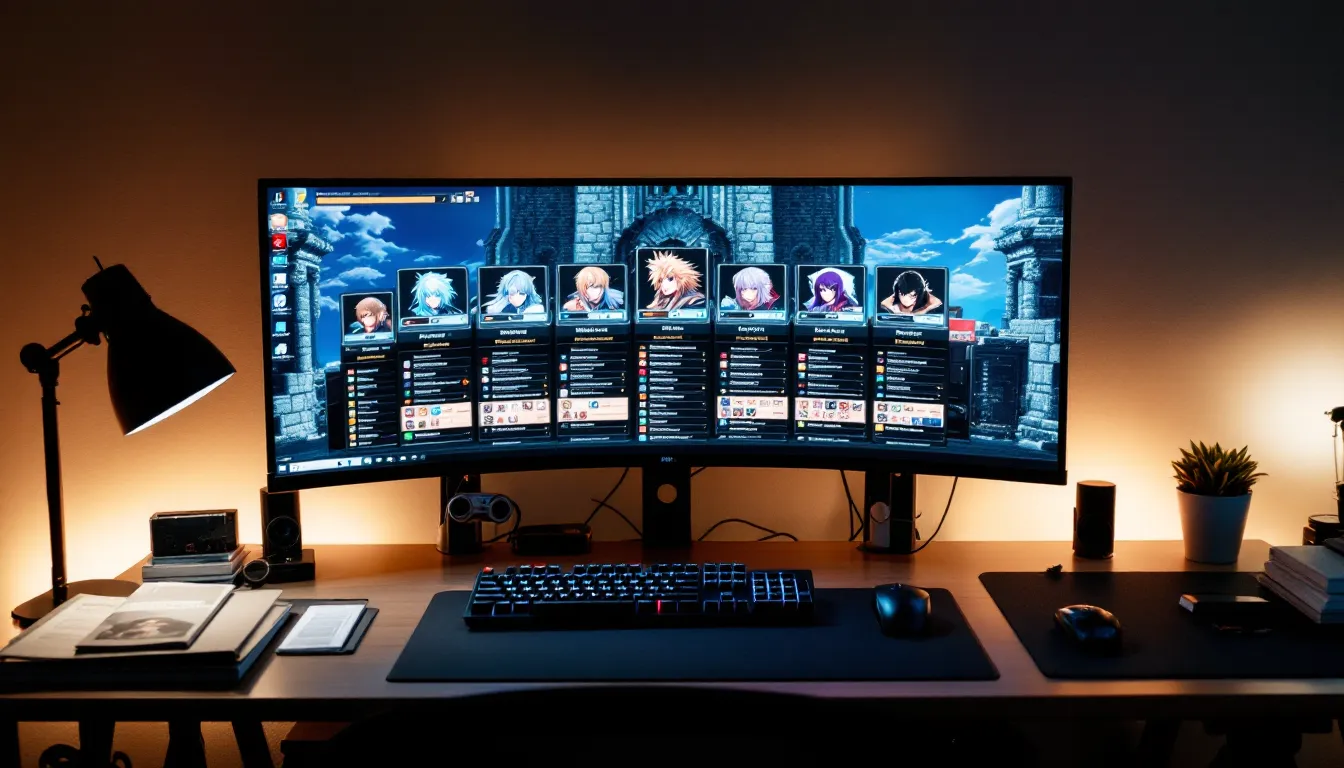
Final Fantasy III DS brought Yoshitaka Amano’s stunning reimagining of a cult classic to Nintendo’s handheld, and it remains one of the most beloved entries in the series nearly two decades later. The game’s job system, challenging dungeons, and gorgeous sprite-based visuals still hold up today. For players who missed it during the DS era, or who want to revisit it, emulation offers a way to experience this gem without hunting down increasingly expensive cartridges. But before you fire up an emulator, there’s important ground to cover: what you’re actually doing, what’s legal, and how to make sure the game runs smoothly. This guide breaks down everything you need to know about playing Final Fantasy III DS on an emulator in 2026, from setup to strategy.
Table of Contents
ToggleKey Takeaways
- Final Fantasy III DS remains one of the most rewarding turn-based RPGs available, featuring a 22-job system that encourages strategic party composition and synergy over brute-force gameplay.
- Playing Final Fantasy III DS ROM through emulators like melonDS or DeSmuME requires minimal technical setup—just the emulator software, BIOS files, and a modern PC to achieve smooth 60 FPS performance.
- The legal status of ROM files exists in a copyright gray area; while emulation itself is generally legal, ROM distribution violates copyright law in most countries, though individual players rarely face legal consequences.
- Early job strategy is critical: commit to four core jobs for your party in the first 10 hours rather than job-hopping, as stat growth directly depends on your active class and determines boss fight difficulty.
- Graphics and audio configuration matters—use native 384×512 resolution with nearest texture filtering for pixel-perfect sprite visuals, and set audio to 44100 Hz for authentic Final Fantasy III DS presentation.
- The game’s difficulty curve respects player skill without being unfair, offering a complete, well-paced experience that respects your time—increasingly rare in modern RPGs dominated by live-service and monetization models.
What Is Final Fantasy III DS and Why It Matters to RPG Fans
Final Fantasy III DS (2006 in Japan, 2008 in North America) is a complete 3D remake of the original 1990 Famicom title. It’s not a remake in the lazy sense, it’s a full reconstruction with modernized mechanics, an expanded narrative, and some of the finest art direction of the DS era.
The game centers around four orphans who discover they’re Chosen Warriors destined to save a dying world. What makes Final Fantasy III stand out is its legendary job system, which lets players switch between 22 different classes (Warrior, White Mage, Black Mage, Dragoon, Ninja, and dozens more). Each job has its own skill trees, stat growths, and ability sets. Grinding through jobs to find synergies between them is where the real depth lies.
The DS version upgraded the entire experience compared to the original. Amano’s character designs replaced the generic sprites of ’90, the soundtrack was orchestrated, and the story received significant expansion with supporting characters and cutscenes that gave emotional weight to an otherwise cryptic tale. Visually, it holds its own against other DS RPGs thanks to detailed sprite work and atmospheric dungeon design.
Why does it still matter? In an era where Final Fantasy has splintered into live-service games, MMOs, and action-heavy remakes, Final Fantasy III DS represents something increasingly rare: a pure, turn-based tactical experience designed for accessibility and challenge in equal measure. Speedrunners love it, completionists spend 100+ hours grinding jobs, and casual players appreciate that you can’t brute-force your way through tough bosses, you actually need to think about party composition.
Understanding ROM Files and Legal Considerations
What Exactly Is a ROM File?
A ROM (Read-Only Memory) file is a digital copy of a game’s data extracted from a cartridge. Think of it like a digital photograph of the game card itself, it contains everything: the code, graphics, music, and save data structure.
When you download a Final Fantasy III DS ROM, you’re getting a file (usually around 128-200 MB for the DS version) that an emulator can read and run. The ROM itself is inert, it’s just data. It’s the emulator’s job to translate that data into something your PC, Mac, or Linux machine understands.
Legal Gray Areas and Copyright Concerns
Here’s where things get tricky. Square Enix owns Final Fantasy III, and technically, distributing ROM files without permission violates copyright law in most countries. Even if you personally own a physical cartridge, downloading a ROM is legally ambiguous. Some argue that creating a backup of media you own falls under fair use: copyright holders and courts often disagree.
The reality: ROM distribution sites operate in legal gray zones, often hosted outside countries with strict IP enforcement. Square Enix has historically been aggressive about protecting their IP, issuing takedowns against ROM sites, emulator projects, and fan games. Playing a ROM isn’t likely to land you in court as an individual, but the practice exists in a copyright gray area.
Emulators themselves, the software that runs ROMs, are generally legal. Emulation for preservation and research is considered legitimate by many technologists and archivists. Nintendo and other publishers occasionally challenge specific emulators, but emulation as a concept has been ruled legal in various court cases.
Legitimate Alternatives to ROMs
If you want to play Final Fantasy III DS legally without ROM risk, options exist:
- Physical cartridge + original DS hardware: Hunt for used copies on eBay, Facebook Marketplace, or local game stores. Expect to pay $40-$80 depending on condition.
- Virtual Console or eShop: Unfortunately, Square Enix delisted Final Fantasy III DS from the Nintendo eShop years ago, so this route is closed.
- Subscription services: Neither Nintendo Switch Online nor emulation-heavy services currently offer Final Fantasy III DS.
- DS Emulation on Switch: Homebrew projects exist but require technical knowledge and void warranties.
For those pursuing emulation, understand the copyright risks. This guide assumes you’re aware of the legal landscape and makes an informed choice. The focus here is on technical setup and gameplay, not legal advice.
Emulation Options for Playing Final Fantasy III DS
Top DS Emulators for Different Platforms
Several DS emulators are actively maintained and capable of running Final Fantasy III DS near-flawlessly.
DeSmuME (Windows, Mac, Linux)
- The oldest and most stable option. DeSmuME is open-source and free, with consistent updates. It’s the go-to for accuracy, the developers focus on precise hardware emulation.
- Performance is solid on modern machines. You can run Final Fantasy III DS at full speed on almost any CPU from the last decade.
- Interface is somewhat dated, but straightforward. Configuration isn’t painful once you get past initial setup.
melonDS (Windows, Mac, Linux)
- The modern alternative to DeSmuME. It’s newer, faster, and has a cleaner UI.
- Accuracy is comparable, though it’s still being refined. Most games, including Final Fantasy III DS, run without issues.
- Better performance scaling on lower-end machines.
DraStic (Android, older versions only)
- The primary Android emulator before the developer stopped updating it. If you’re on older Android devices, DraStic can still run Final Fantasy III DS.
- Unfortunately, it’s no longer actively developed and removed from the Play Store. Not recommended for new setups.
Citra (Windows, Mac, Linux)
- Actually a 3DS emulator, not a DS emulator, but it can technically run DS games in backwards-compatibility mode.
- Overkill for Final Fantasy III DS since it’s not a 3DS title, but worth mentioning if you have other 3DS games to play.
For 2026 setups, melonDS is the best modern choice for most players due to speed and ease of use, while DeSmuME remains the benchmark for accuracy and compatibility.
System Requirements and Performance Optimization
Final Fantasy III DS isn’t demanding by 2026 standards, but emulation adds overhead.
Minimum Requirements:
- CPU: Intel i5 / AMD Ryzen 5 or equivalent (from 2015 or later)
- RAM: 4 GB
- GPU: Integrated graphics (Intel UHD, AMD Radeon)
Recommended for Smooth Emulation:
- CPU: Intel i7 / AMD Ryzen 7 (2018 or newer)
- RAM: 8 GB
- GPU: Dedicated graphics (NVIDIA GTX 1050 or better, AMD RX 580 or better)
- Storage: SSD (faster ROM loading, smoother save access)
You don’t need a gaming PC to run Final Fantasy III DS smoothly. Most laptops from the last 5 years will handle it without issue. The emulator isn’t GPU-intensive: CPU performance matters most.
Performance Tips:
- Enable JIT (Just-In-Time) compilation if your emulator supports it, it dramatically improves speed.
- Run the emulator at native resolution (384×512 for each screen) before upscaling. Forcing higher resolutions increases CPU load.
- Close background applications, especially browser tabs and Discord. These eat RAM and CPU cycles.
- Update your emulator regularly. DeSmuME and melonDS receive regular optimizations.
Setting Up Your Emulation Environment
Installing and Configuring Your Chosen Emulator
Here’s a step-by-step walkthrough using melonDS, the recommended emulator for 2026:
- Download melonDS from the official GitHub page (melonDS.kuribo64.net). Choose the version for your OS (Windows, macOS, Linux).
- Extract the archive to a folder (e.g.,
C:EmulatorsmelonDS). - Launch melonDS.exe (or the macOS/Linux equivalent).
- Configure BIOS: melonDS requires ARM7 and ARM9 BIOS files from genuine DS hardware. This is the trickiest step. You need to locate or legally dump BIOS files from your own DS if you own one. Alternatively, some emulator packages include these files. Without BIOS, melonDS won’t boot games.
- Load your ROM: Go to File > Open ROM and select your Final Fantasy III DS ROM file. The emulator will launch the game.
- Save the configuration: melonDS auto-saves your last ROM location, but go to Config > Save Settings to lock in your preferences.
For DeSmuME, the process is nearly identical, though the UI labels differ slightly.
If you encounter “BIOS not found” errors, the emulator is looking for DS firmware files. Legally dumping these requires a genuine DS and specialized hardware. As a practical workaround, some pre-configured emulator packages include these files bundled, research your specific emulator version to see if BIOS files are included.
Graphics and Audio Settings for Optimal Experience
Final Fantasy III DS’s presentation is a big draw, so configuring graphics properly matters.
Graphics Settings in melonDS:
- Resolution scaling: Set to 1x (native, 384×512) or 2x (768×1024) for crisp visuals. Going beyond 2x adds little benefit for Final Fantasy III’s 2D sprites.
- Texture filtering: Leave as Nearest for pixel-perfect 2D graphics. Using Linear softens the image, which isn’t ideal for sprite-based games.
- VSYNC: Enable it to prevent screen tearing. Disable if you get stuttering, it depends on your refresh rate and GPU.
- Render 3D layers: Leave enabled. Final Fantasy III uses minimal 3D, but maps and effects rely on this.
Audio Settings:
- Sample rate: Set to 44100 Hz (standard). Higher rates increase CPU usage without audible benefit.
- Audio interpolation: Set to Linear or Cubic for smoother sound. Nearest can sound tinny.
- Volume: Adjust in-game or in emulator settings. Some ROMs have slightly low audio levels.
These settings will give you crisp visuals and clean audio that matches the original DS experience. Experiment within these ranges: every GPU behaves differently, and finding your sweet spot might require a few tweaks.
After configuring, save your settings in the emulator’s preferences menu. They’ll persist across sessions.
Tips and Tricks for Playing Final Fantasy III DS
Early Game Strategy and Job System Basics
Final Fantasy III DS opens with minimal guidance on the job system, and early mistakes can make the game harder than necessary.
The game starts you as Onion Knights, a jack-of-all-trades, master-of-none class. Don’t stay here long. Within the first few dungeons, unlock new jobs and switch immediately.
Early job progression:
- Warrior: Tank class. High HP and defense. Use this for your main party character early on.
- White Mage: Your healer. Essential from the start. One or two in your party at all times.
- Black Mage: Offensive magic. Deals solid damage to groups of enemies.
- Monk: Physical attacker with high hit rates. Great for counterattacking and dealing pure damage.
The job system has a catch: your stat growth depends on your active job. If you’re a Warrior, you gain extra HP and strength. As a Black Mage, you gain Magic Power and Intelligence. Switching jobs often seems flexible but actually spreads your growth thin, leaving your characters underpowered.
Smart early strategy: Pick 4 core jobs for your party of 4 and stick with them until you hit a major story progression (usually every 2-3 hours). This ensures your stats scale optimally. Later, after stat-capping, you can job-hop without penalty.
The main four for early-mid game:
- Warrior (physical tank)
- White Mage (healer)
- Black Mage (offense magic)
- Monk or Thief (additional DPS)
Avoid spreading one character across multiple jobs in the first 10 hours. You’ll be undergeared and underleveled against bosses designed with typical party compositions in mind.
Essential Grinding Locations and Experience Farming
Final Fantasy III DS isn’t a grindfest if you’re strategic, but certain story walls require level management.
You don’t need to grind early. The first dungeons (Altar Cave, Ur, Kazus) give enough XP naturally. Problems arise around Bahamut’s Lair (around 15 hours in) and the Floating Continent (20+ hours), where enemy stats spike.
If you hit a wall, these spots offer efficient grinding:
- Around Cid’s Island (mid-game): Encounter Coeurls and Adamantoise-type enemies. These give solid XP and dropped items for equipment upgrades.
- Eastern Continent coastal areas (late mid-game): Enemies here are 2-3 levels above average, giving roughly 20% faster XP than story dungeons.
- Demon World (very late game): Endgame grinding spot. Only access this if you’re intentionally power-leveling.
Grinding tips:
- Use Exp-boosting formations. Some jobs (Scholar) have abilities that increase party XP gain.
- Chain encounters. Fight 5-10 battles in the same area without healing/resting. This increases drops and XP slightly.
- Grind only before major boss fights. You’ll naturally level during story progression: artificial grinding wastes time.
Honestly, if you’re following optimal job strategies and keeping equipment upgraded, you rarely need dedicated grinding. The game is balanced for players who engage with its systems.
Boss Fights and Difficult Encounters
Final Fantasy III DS has several notorious boss walls. Here’s how to tackle them:
Bahamut (15 hours in):
- This fight is the first “you must optimize” boss.
- Use Dragoons (a job you unlock before this) with their Dragon Tamer ability to summon powerful dragons.
- Equip Sage or Scholar classes with healing magic. Bahamut hits hard, and weak heals won’t cut it.
- Keep your party’s level around 25-30. If you’re significantly lower, grind a bit first.
- Have elemental resistances if possible. Equip fire-resistant gear: Bahamut uses fire attacks heavily.
The Cloud of Darkness (final boss, 35+ hours in):
- This is the ultimate skill-check fight. Brute force doesn’t work.
- The boss has multiple phases and shifts between strong single-target and AoE attacks.
- Equip job abilities strategically: Use Ninja for evasion, Dragoon for high DPS, White Mage for healing, and one flexible slot for either Scholar (buffs) or Dark Knight (high offense).
- Buff before the fight starts. Use abilities like Scholar’s Protect and Shell to reduce damage taken.
- Manage status effects. Cloud of Darkness uses Silence, Paralysis, and Slow. Have Esuna ready or equip items that grant Silence immunity.
- Expect the fight to last 5-10 minutes. It’s long, but survivable if you’re patient.
Mid-game spikes:
- Garuda (around hour 10): Uses wind-heavy attacks. Ice resistance helps.
- Amon (around hour 18): Summons adds. Kill them first, then focus the boss.
These bosses aren’t unbeatable. They reward job synergy and strategic thinking over raw stats. If you’re stuck, it’s usually because your job composition is suboptimal, not because you’re underleveled.
Common Issues and Troubleshooting
Performance Problems and Frame Rate Issues
Emulation is mostly plug-and-play with modern computers, but occasionally things go wrong.
Low FPS (frame drops below 60 FPS):
- First, check CPU usage. Open your system’s task manager (Windows) or Activity Monitor (Mac). If melonDS is maxing out a core, your CPU isn’t powerful enough, or another application is hogging resources.
- Solution: Close background apps. Disable Discord, streaming software, antivirus scanning, and browser tabs.
- If CPU isn’t maxed, increase emulator accuracy settings. Some emulators default to high accuracy, which adds overhead. In melonDS, check Config > Emu Settings and set CPU clock speed to normal (not overclocked).
- Disable JIT compilation temporarily to test. If performance improves dramatically, your JIT implementation is buggy (rare but possible on certain setups).
Audio crackling or stuttering:
- Usually caused by sample rate mismatch. In melonDS, set audio sample rate to 44100 Hz.
- If that doesn’t work, increase the audio buffer size in settings. Larger buffers reduce clicks but add slight latency. 512 samples is a good middle ground.
- Update your sound drivers. Outdated drivers cause compatibility issues.
Random freezes or crashes:
- This often indicates a RAM issue or a corrupted ROM file.
- Try re-downloading the ROM from a different source. Corruption during download is uncommon but possible.
- If freezing happens at consistent story points, you might be hitting a game-breaking emulation bug. Post on emulator forums with your setup (CPU, OS, emulator version, exact freeze point).
Compatibility Issues with Specific Emulators
Final Fantasy III DS runs on nearly all DS emulators, but quirks exist.
melonDS:
- Pro: Fastest, most modern interface.
- Con: Occasionally has graphical glitches in late-game dungeons (rare, usually cosmetic).
- Fix: If you see garbled tiles, try disabling 3D layer rendering. Final Fantasy III uses minimal 3D anyway.
DeSmuME:
- Pro: Rock-solid compatibility. Virtually no crashes.
- Con: Slightly slower than melonDS. May require CPU throttling on older machines.
- Fix: Enable JIT compilation under Config > Emulation Settings > CPU for speed boost.
DraStic (Android):
- Pro: Best for mobile play.
- Con: No longer updated. May have issues on modern Android (11+).
- Fix: If you can’t find DraStic (removed from Play Store), use sideloading or look into newer Android emulators like Lemuroid or RetroArch.
Issue: Game won’t start or shows “BIOS not found”:
- This means the emulator can’t locate DS BIOS/firmware files.
- Solution: Legally dump BIOS files from a real DS (requires technical knowledge and hardware), or look for pre-configured emulator packages that include files bundled.
- Alternatively, switch to a different emulator. DeSmuME sometimes auto-locates BIOS: melonDS requires manual configuration.
Issue: Saves aren’t persisting:
- Confirm the emulator has write permissions to your ROM folder. Some antivirus software blocks file writes.
- Check emulator settings to ensure save location is configured (usually the same folder as the ROM).
These issues are rare. Most setups work first-try. When problems do arise, they’re usually solvable with minor configuration tweaks or BIOS file troubleshooting.
Why Final Fantasy III DS Remains Worth Playing Today
It’s easy to dismiss Final Fantasy III DS as a relic, a 2006 remake of a 1990 game. But 18+ years later, it’s aged far better than you’d expect.
The job system is still mechanically superior to many modern RPGs. Switching between 22 jobs with distinct playstyles forces you to think about party composition in ways that static class systems don’t. You’re not just optimizing damage: you’re building party synergies: a Dragoon pairs differently with a Geomancer than it does with a Monk, and those differences are meaningful.
The difficulty curve is legitimately good. Early dungeons are forgiving, mid-game bosses demand optimization, and late-game encounters will end runs if you’re careless. It respects player skill without being cheap. Compare that to modern Final Fantasy entries, which often feel pressured to cater to players who skip random battles entirely.
Graphically, it holds up. The sprite-work is detailed and charming in a way that transcends pixels. Yoshitaka Amano’s character designs still look sharp, and the dungeon aesthetics have aged better than early 3D games that tried too hard to be “realistic.”
The story, while simple by modern standards, is satisfying. It’s not emotionally complex, but it’s coherent, paced well, and builds to a satisfying climax. For players who want engaging gameplay without 80-hour narrative sprawl, it’s perfect.
There’s also a preservation angle. Final Fantasy III DS is delisted from eShops. Physical copies are climbing in price. If you value the game’s existence, if you think a classic RPG deserves to be played and experienced, emulation is increasingly the only option for new players. Preserving older games through emulation, even though copyright concerns, serves a real cultural function.
Final Fantasy III DS wasn’t the flashiest entry (VII gets the hype, X gets nostalgia). But for players willing to engage with its systems, it’s one of the series’ best RPG experiences. In 2026, when gaming feels increasingly live-service-dependent and monetized, going back to a game that respects your time and skills feels radical. That’s why it’s worth playing, and worth the technical setup required to play it today.
For those diving in, you’ll find something rare: a complete, thoughtfully-designed RPG that doesn’t waste your time and doesn’t insult your intelligence. Pair that with the accessibility of emulation, and Final Fantasy III DS becomes not just a curiosity about the past, but a genuinely compelling gaming experience for players of any era. Speedrunners have maintained active communities around it, and completionists still discover job combinations and strategies that optimizers missed years ago. It’s a game with depth that rewards repeated engagement. Whether you’re chasing high completion percentages or just want a solid handheld RPG to sink time into, you’ll find exactly what Final Fantasy III DS promises: a complete, challenge-calibrated experience that respects both your time and skill. The emulation setup is minimal friction, absolutely worth it for the gameplay on the other side.
For more about the Final Fantasy series broadly, check out how players Ranking Final Fantasy Games across the entire franchise, which provides context for where this gem sits in the legacy. The guides and discussions around classic entries continue to grow as more players rediscover titles like this one through legal emulation.
Conclusion
Playing Final Fantasy III DS on an emulator in 2026 is entirely feasible. The technical barrier is minimal, melonDS or DeSmuME, standard PC hardware, and a ROM file are all you need. Setup takes under 15 minutes for most players.
The legal and ethical considerations are more nuanced. ROM distribution exists in gray zones: emulation itself is generally legal. Whether you pursue this route depends on your personal stance on copyright and game preservation. Legitimate alternatives (owning a physical copy and original hardware) exist but are increasingly expensive and impractical.
If you decide to play, follow the setup guides here. Configure your emulator properly, optimize graphics and audio, and jump into a game that still stands as one of the Final Fantasy series’ most mechanically rewarding experiences. The job system, boss design, and pacing haven’t aged a day. For both newcomers and veterans, Final Fantasy III DS offers something increasingly rare: a complete, well-designed RPG that doesn’t demand 100+ hours or constant monetization. It’s worth your time, and the emulation route makes it accessible to anyone with a modern computer.