
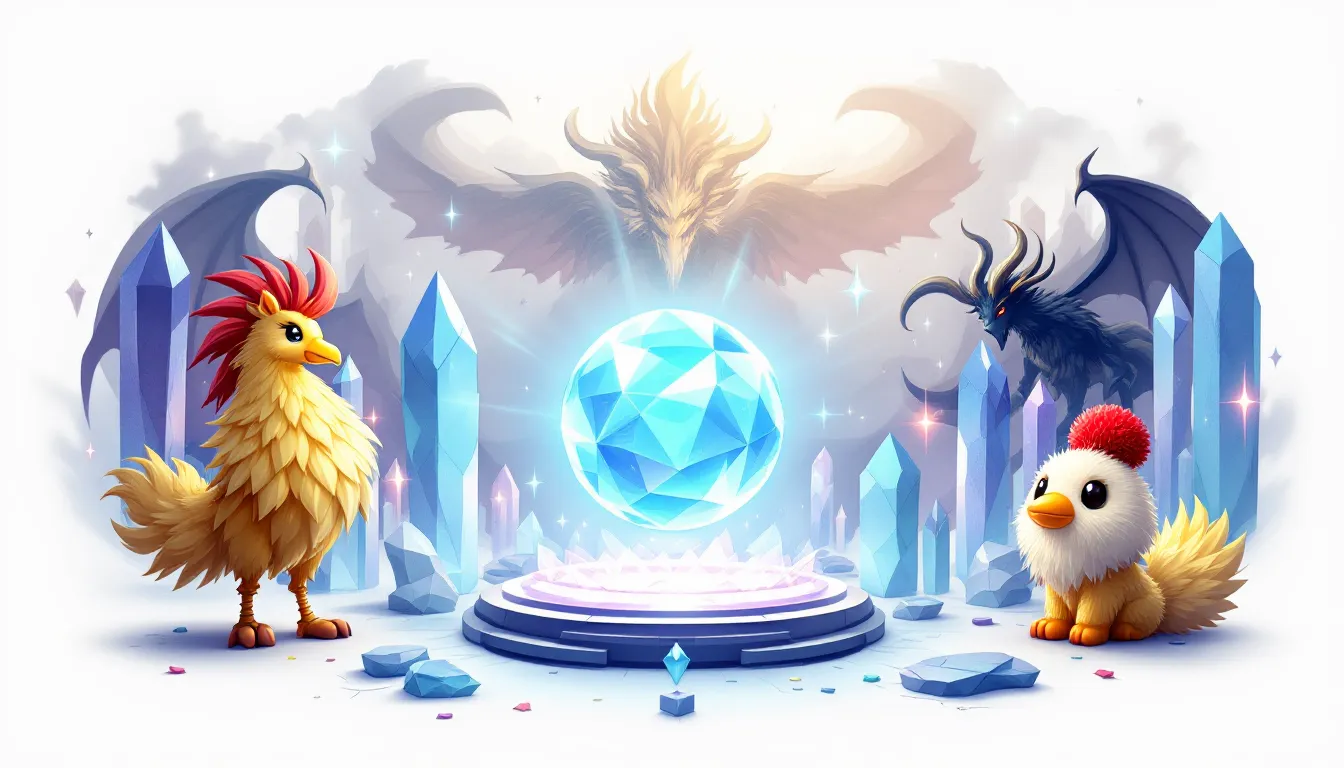
Final Fantasy has been synonymous with iconic imagery for decades. Walk into any gaming café, and you’ll spot Chocobo plushies, Materia pendants, and artwork of summons that instantly transport fans back to their favorite moments in the franchise. But these aren’t just pretty decorations, Final Fantasy symbols are the visual language through which the series communicates its themes, mechanics, and world-building. From the humble Materia orbs that define how magic works to the majestic Crystals that anchor entire narratives, every symbol carries weight and meaning. For newcomers and veterans alike, understanding these icons unlocks a deeper appreciation for why Final Fantasy resonates so powerfully across gaming culture. This guide breaks down the most significant Final Fantasy symbols, what they represent, and how they’ve become cornerstones of gaming identity.
Table of Contents
ToggleKey Takeaways
- Final Fantasy symbols such as Materia, Chocobos, and Crystals serve as both mechanical systems and emotional storytelling devices that define the franchise’s identity across decades.
- Materia’s color-coded system (Green for spells, Red for summons, Blue for support) creates intuitive visual communication that lets players understand power customization without explanation.
- The Chocobo mascot represents freedom and adventure, functioning as a mechanical and emotional milestone that players remember as distinctly as major narrative moments.
- Crystals appear across virtually every Final Fantasy game as symbolic representations of destiny, order, and the conflict between stasis and necessary change.
- Final Fantasy symbols transcend gameplay, becoming tribal markers in gaming culture through merchandise, cosplay, tattoos, and cross-media appearances that unite a global community.
The Significance Of Symbols In Final Fantasy Storytelling
Symbols in Final Fantasy serve a dual purpose: they communicate mechanically within the game while also embedding themselves into the franchise’s DNA. A player doesn’t need an instruction manual to understand that a blue Materia represents magic or that a Phoenix Down will resurrect a fallen ally. Visual shorthand isn’t just convenient, it’s essential for a series that spans multiple generations, platforms, and continents.
When Tetsuya Nomura designs a character, every detail matters. The iconic spiky hair, the oversized sword, the clothing colors, these are all symbols that tell a story before dialogue ever does. Similarly, the recurring motifs of crystals, towers, and celestial bodies aren’t random artistic choices. They reflect Final Fantasy’s core themes: the struggle against fate, the balance between order and chaos, and humanity’s connection to something greater than itself.
The franchise’s symbolism also serves as a bridge between installments. Final Fantasy VII and Final Fantasy X are vastly different games, but both feature a protagonist marked by an otherworldly force, a crystal-like substance that corrupts the world, and summons tied to ancient beings. These narrative parallels, reinforced through visual symbolism, create a sense of thematic continuity even when the settings and gameplay differ wildly. Fans recognize these patterns instinctively, which is why symbols become shorthand for complex storytelling.
Chocobo: The Franchise’s Most Recognizable Mascot
If any creature defines Final Fantasy’s identity beyond humans, it’s the Chocobo. This yellow, ostrich-like bird has appeared in virtually every mainline game since Final Fantasy II, and it’s become the franchise’s closest thing to a mascot. The Chocobo symbolizes freedom, adventure, and a touch of whimsy, you mount one, you’re exploring, and exploration is what Final Fantasy is fundamentally about.
The Chocobo’s design is instantly recognizable: that distinctive yellow plumage, the expressive eyes, and that iconic “kweh” cry. In early games, finding a Chocobo meant you could finally bypass the random encounter grind and traverse the world map on your terms. That mechanical freedom translated into emotional resonance. Players remember the moment they first rode a Chocobo the way they remember their first character death or their first summon, it’s a milestone.
Across the series, Chocobos come in different varieties, each with distinct colors and abilities. Black Chocobos fly over mountains, green Chocobos swim across rivers, and gold Chocobos do both. These variants aren’t just mechanical distinctions: they’re visual representations of progression. You’re not just getting a faster horse: you’re unlocking new possibilities, quite literally broadening your horizons. The Chocobo sidequest lines in Final Fantasy VII and Final Fantasy X became legendary precisely because they felt rewarding beyond the mechanical benefits.
Mog And The Moogle Family
Moogles represent the softer, more fantastical side of Final Fantasy’s world-building. These small, pom-pom-topped creatures first appeared in Final Fantasy III and have since become crucial NPCs, comic relief, and sometimes playable characters. Mog, the most prominent Moogle, became a symbol of loyalty and light-heartedness. Where Chocobos embody adventure, Moogles embody companionship.
The Moogle’s distinctive design, with their red pom-pom, large ears, and pudgy frame, makes them instantly cute and memorable. In Final Fantasy VI, Mog the dancer joined the party as a full member, complete with unique dance abilities that let him execute multiple abilities per turn. This move made Moogles feel like legitimate fighters even though their diminutive size, which reinforced Final Fantasy’s recurring theme that strength comes in unexpected packages.
Moogles have also become symbols of the franchise’s humor and lightness. Contrast Mog’s innocent “kupo” with the existential dread of Sephiroth’s monologues, and you see how Final Fantasy balances darkness with whimsy. This tonal variety, anchored by these contrasting symbolic creatures, is part of why the series appeals to such a broad audience.
Materia: The Core Symbol Of Magic And Power
If one symbol encapsulates what makes Final Fantasy tick mechanically and thematically, it’s Materia. Introduced in Final Fantasy VII, Materia orbs are glowing crystalline objects that contain spells, summons, and passive abilities. You slot them into weapons and armor to customize your party’s capabilities. But Materia is more than just a menu interface, it’s a visual representation of the game’s magic system.
The genius of Materia as a symbol lies in its accessibility. Even a player who’s never played Final Fantasy VII understands that a glowing orb probably contains some kind of power. The act of equipping Materia feels tangible in a way that traditional magic menus don’t. You’re physically inserting crystalline power into your gear, and that simple visual metaphor makes the abstract concept of character growth feel concrete.
Materia also symbolizes flexibility and experimentation. Unlike most RPGs where your character class locks in their abilities, Materia lets you turn a melee-focused Warrior into a mage by swapping their equipped orbs. This freedom to customize reflects Final Fantasy’s broader design philosophy: there are many valid ways to approach any challenge, and the game respects player agency.
Materia Colors And Their Associated Abilities
The color-coding of Materia isn’t arbitrary, it’s a visual language that communicates function instantly:
- Green Materia holds spell magic (offensive, defensive, healing, and utility spells like Fire, Cure, and Haste)
- Red Materia contains summons, powerful creatures or entities you call into battle
- Blue Materia grants support and enhancement abilities that modify stats or status
- Yellow Materia provides abilities tied to items or special effects
- Purple Materia offers independent abilities tied to specific mechanics
- Gold Materia (rare) combines aspects of other colors or provides unique endgame abilities
- Black Materia (plot-specific) represents destructive, world-altering magic
- White Materia (plot-specific) represents protective, restorative magic
This color system is so intuitive that Final Fantasy 14 Mods and other spinoffs reference it constantly. Players understand the language without explanation. When a guide says “equip Green Materia for damage,” everyone knows what that means.
How Materia Shapes Gameplay And Character Development
Materia transforms character development from a linear progression into a puzzle that players solve repeatedly. A character’s effectiveness depends entirely on which Materia you’ve equipped, creating meaningful optimization challenges. Do you stack all offensive Green Materia on your physical damage dealer, or do you ensure everyone can heal?
This system also creates a natural progression loop: you defeat enemies, earn Materia XP, level up your Materia, unlock new ability tiers, and suddenly your party feels noticeably stronger. Unlike experience points that are mostly invisible, Materia progression feels visible and rewarding. You’re literally upgrading glowing orbs, watching them transform from rookie-tier Green Materia to powered-up versions that unlock additional spell slots.
Materia also symbolizes the game’s core narrative conflicts. The planet’s energy crystallizes into Materia, making it a literal representation of the world’s lifeblood. Harvesting it fuels civilization but also slowly drains the planet, this creates thematic resonance between the mechanical system and the story’s environmental themes. You’re not just equipping objects: you’re participating in a world-spanning conflict about resource extraction and survival.
The Summon Icons: Manifestations Of Divine Power
Summons in Final Fantasy represent raw, otherworldly power. Unlike the customizable versatility of Materia, summoning an Ifrit or Leviathan calls forth a pre-designed entity with its own devastating move set. Visually, summons are Final Fantasy’s most spectacular moments, the camera pans, the screen explodes with particle effects, and ancient beings materialize to obliterate your enemies.
Summons function as status symbols within the game’s fiction. You can’t just learn how to summon them: you must prove yourself worthy by encountering them, defeating them, or earning their favor. This creates a sense of progression beyond numerical stat growth. Obtaining a new summon feels like earning a badge of honor.
Different summons also symbolize different aspects of the natural and supernatural world. Odin represents primal force, Typhon embodies chaos, and Kujata bridges elemental worlds. Each summon carries its own mythology, and in later games like Final Fantasy X, summons become central to the plot, representing not just power but ideology and sacrifice.
Major Summons Across The Series
Ifrit and Leviathan are the two summons that appear across virtually every Final Fantasy game. Ifrit, the fire-elemental demon, symbolizes rage and unbridled power. Leviathan, the water-elemental serpent, represents the world’s oceans and destructive tides. Their recurring presence creates continuity across disparate games.
Other iconic summons include:
- Bahamut: The ultimate dragon, often serving as one of the most powerful summons. Bahamut symbolizes superiority and often appears at the climax of a game’s summon progression.
- Neo Bahamut (or variations): Enhanced versions that appear in certain games, representing the next tier of power.
- Phoenix: The mythical bird of rebirth, symbolizing resurrection and second chances. Particularly significant in games dealing with themes of renewal.
- Typhon: The chaotic force, embodying catastrophe and uncontrollable destruction. Often associated with final boss encounters or moment-defining cutscenes.
- Anima: A creature born from human suffering, symbolizing the cost of power and internal anguish. Central to Final Fantasy X’s narrative.
- Maduin and other elemental summons: Representing specific magical properties and natural forces.
Summon design also reflects each game’s visual style. Final Fantasy VII’s summons have a steampunk industrial quality, while Final Fantasy X’s summons feel more organic and sacred. This visual variety across summons mirrors the diversity of Final Fantasy’s settings.
Job Symbols And Character Class Identities
Character classes in Final Fantasy have always been represented through visual symbolism before mechanical description. A Knight wears armor and carries a shield. A Black Mage dons a cone hat and wields a staff. These designs are so consistent that players instantly recognize a character’s capabilities from their appearance alone.
Jobs function as symbols of identity within Final Fantasy’s worlds. When a character changes their job, especially visually, with costume changes, it represents a fundamental shift in who they are and what they’re capable of. This happens literally in games like Final Fantasy III and Final Fantasy V, where job-switching is core to the narrative and customization.
The symbolism of jobs also extends to the broader Final Fantasy canon. The Samurai class, explored in depth across Final Fantasy Samurai: Unleashing, represents discipline, honor, and precise combat, values that define the character archetypes who equip the Samurai job. Similarly, the Thief class symbolizes cunning and risk-taking, which Rikku perfectly embodies in Final Fantasy X.
Each job’s visual identity, the weapons they carry, the colors they wear, the effects they produce, communicates their role instantly. A Summoner glows with magical energy and summons otherworldly creatures. A Dragoon wields lances and performs aerial attacks. These visual cues aren’t just flavor: they’re the primary way players understand and remember job identities across games they might not have played in years.
Logos And Emblems Across Game Titles
Every mainline Final Fantasy game carries its own logo and thematic emblem, yet they’re all instantly recognizable as part of the same franchise. Final Fantasy VII’s logo, with its distinctive angular design and teal-blue coloring, is so iconic that it’s become synonymous with the franchise itself. Nomura’s character designs, the specific font style, the Chocobo and Materia imagery: these combine to create a visual identity that persists across Final Fantasy VII Remake and its successors.
Final Fantasy X introduced a different visual language entirely, more spherical, more Asian-influenced, incorporating elements like water and the aeon symbols. Yet the franchise recognition remains instant. Players see that logo and know exactly what they’re getting: a JRPG with strategic turn-based combat, a world-spanning narrative, and character-driven storytelling.
These logos also function as tribal markers within gaming culture. Displaying a Final Fantasy logo, whether through a tattoo, a t-shirt, or a Final Fantasy 7 Remake Collector’s Edition figure, signals membership in a global community of fans. The logo becomes an emblem of identity.
Subseries also have their own emblems. Final Fantasy XIV’s logo carries different symbolism than Final Fantasy XVI’s, reflecting their different tones and narratives. Yet both are immediately recognized as Final Fantasy products. This balance, maintaining franchise identity while allowing individual games to develop their own visual language, is a masterclass in branding.
The Crystal Symbol: Representation Of Hope And Destiny
Crystals are arguably the most spiritually significant symbol in Final Fantasy lore. They appear in nearly every game, often as the narrative’s centerpiece. Crystals represent order, destiny, and the world’s fundamental structure. In Final Fantasy I, the Four Crystals become corrupted, and restoring them is the entire premise. In Final Fantasy X, the Farplane and crystal elements anchor the world’s spiritual system.
The visual representation of crystals, geometric, luminous, often blue or multi-colored, communicates purity and otherworldliness. They’re not part of the natural world: they’re supernatural anchors that hold reality together. When a crystal shatters, the world enters chaos. When it’s restored, order returns. This symbolism persists across games because it resonates thematically: structures crumble, heroes must rebuild them, and in the process, they uncover truths about destiny and free will.
Crystals also symbolize the conflict between stasis and change. Maintaining the crystals means preserving the established order. Destroying them means destroying everything. Yet destruction is sometimes necessary for renewal, as Final Fantasy X explicitly explores. The crystal becomes a symbol of this tension, beautiful and terrible simultaneously, representing both salvation and stagnation depending on perspective.
The crystal symbol extends beyond plot devices into world-building. Crystal towers, crystal formations, and crystal-infused magic appear throughout Final Fantasy games, creating visual continuity. When you see crystalline structures in a new Final Fantasy game, you immediately understand that something significant, something world-shaping, is at stake. The symbol communicates stakes without exposition.
How Symbols Connect Fans To The Final Fantasy Universe
Final Fantasy symbols have become the visual language through which millions of fans connect to the franchise emotionally. A Chocobo plushie isn’t just merchandise: it’s a tangible reminder of countless hours exploring worlds, solving puzzles, and forming attachments to digital characters. The symbol condenses those experiences into a single, shareable object.
This connection manifests in fandom in countless ways. Cosplayers recreate jobs and character designs with meticulous attention to detail because the visual symbolism matters, a perfectly replicated Black Mage cone hat communicates competence and dedication. Fan art obsesses over Materia colors, summon designs, and crystal iconography because these symbols carry meaning. When fans commission tattoos of Final Fantasy imagery, they’re not just decorating their bodies: they’re permanently marking themselves as part of a community defined by shared symbols.
The franchise also leverages this symbolic connection commercially. Final Fantasy Archives – Coinqueststream and gaming outlets frequently publish merchandise roundups featuring Chocobo plushies, Materia replicas, and crystal jewelry. These items sell precisely because the symbols are already embedded in fans’ hearts. The merchandise transforms abstract fan attachment into tangible ownership.
Esports and competitive Final Fantasy content also relies on symbolic shorthand. When a Final Fantasy XIV Raid speedrunning team optimizes their DPS rotation, they’re not just chasing numbers: they’re engaging with the franchise’s mechanical symbolism. The job system, the ability names, the familiar interface, these symbols create a sense of homecoming even as players push the game’s limits.
Cross-game and cross-media appearances amplify this symbolic connection. When Cloud Strife appears in Super Smash Bros., he brings his Materia system and iconic Buster Sword with him, visually translating Final Fantasy’s core symbols into a new context. Fans recognize him instantly because the symbols, the weapon, the clothing, the hairstyle, communicate his identity across franchises. This portability of symbols makes Final Fantasy one of gaming‘s most recognizable universes.
Conclusion
Final Fantasy symbols transcend mere aesthetics. The Chocobo that ferries you across the world map, the Materia you slot into your weapons, the Crystal that anchors the narrative, the Jobs that define character identity, these are the building blocks of one of gaming’s most enduring franchises. They communicate mechanically, emotionally, and narratively simultaneously.
Understanding these symbols deepens every Final Fantasy experience. You see a blue Materia and immediately grasp its function. You encounter a summon and recognize the spiritual weight it carries. You approach a crystal dungeon and sense the story’s importance escalating. This visual literacy doesn’t require explanation because the franchise has spent decades teaching it through consistent, intelligent design.
For newcomers entering Final Fantasy for the first time, whether through the World of Final Fantasy spinoff, the Final Fantasy VII Remake, or a classic entry point, these symbols provide an instant framework for understanding the world. For veterans revisiting games across decades, the symbols trigger memories and emotional resonances that transcend the mechanical improvements between generations.
The brilliance of Final Fantasy’s symbolism is that it works on multiple levels. A casual player enjoys the Chocobo ride without thinking deeply about what it represents. A lore enthusiast sees the Crystal and contemplates the franchise’s recurring themes of destiny and free will. Competitive players optimize their Materia builds while appreciating how the system reflects the game’s design philosophy. The symbols are rich enough to support all these interpretations simultaneously, which is precisely why they’ve become iconic across gaming culture.