
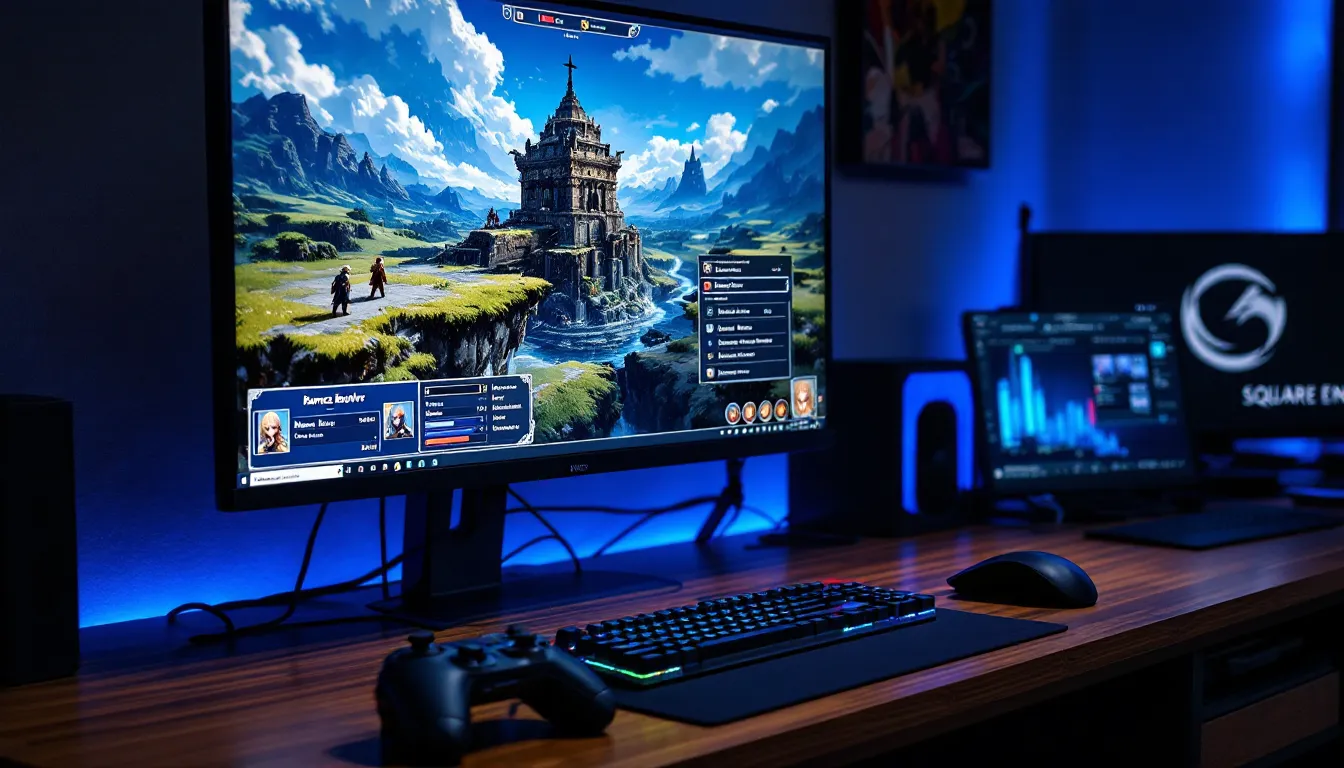
Final Fantasy Tactics stands as one of gaming’s most compelling strategy RPGs, and the ISO version remains the definitive way to experience it on modern hardware. Whether you’re revisiting Ivalice after decades or discovering the Zodiac Braves saga for the first time, running Final Fantasy Tactics through emulation on your PC or preferred system opens up a world of enhancements, customization options, and unparalleled control over how you play. The tactical depth, intricate job system, and genuinely unsettling narrative about war, manipulation, and the ruthlessness of power make this 1997 classic (and its 2007 PSP sequel War of the Lions) endlessly rewarding. This guide covers everything you need to get FFT running flawlessly in 2026, from choosing the right emulator and understanding the legal landscape, to optimizing graphics, mastering job mechanics, and troubleshooting common pitfalls that trip up newcomers.
Table of Contents
ToggleKey Takeaways
- Final Fantasy Tactics ISO emulation on PC or modern systems offers superior graphics upscaling (1080p and beyond) and enhanced control compared to original hardware, making it the definitive way to experience this 1997 classic in 2026.
- Owning the original FFT disc gives you the legal right to extract your own ISO for backup purposes; downloading ISOs from online sources without ownership constitutes copyright infringement regardless of nostalgia.
- PCSX2 and DuckStation are the top PS1 emulators for running Final Fantasy Tactics, with PCSX2 offering better documentation and DuckStation providing faster performance on modest hardware.
- FFT’s job system is central to mastery: units learn abilities permanently through job progression, encouraging experimentation with diverse team builds and strategic positioning over brute-force combat.
- New players must avoid common softlocks by ensuring access to resurrection magic (Raise), rotating all units for balanced leveling, and understanding that defensive gear and elevation bonuses are critical to avoiding unwinnable scenarios.
- The game’s tactical depth demands careful preparation and understanding of mechanics rather than rapid reflexes, rewarding players who read the narrative between story beats and accept the consequences of their battlefield decisions.
What Is Final Fantasy Tactics and Why Play the ISO Version?
Final Fantasy Tactics isn’t your typical turn-based RPG. It strips away random encounters and character-driven storylines in favor of a gritty, chess-like battlefield system where positioning, terrain, and unit composition matter enormously. You’re not following a destined hero, you’re orchestrating the rise of Ramza Beoulve through the War of the Lions, a civil conflict wrapped in church intrigue, genocide, and the systematic gaslighting of an entire population.
The ISO version (derived from the original PlayStation disc) offers distinct advantages over playing on original hardware or even the PSP port. Emulation grants you save-state flexibility, speed controls for grinding, and, most importantly, the ability to upscale graphics beyond the native resolution. On PS1 hardware, FFT ran at 320×224: emulated, you can push it to 1080p or beyond with proper upscaling filters. The ISO format itself is a disc image: a complete, bit-perfect copy of the original game data. Unlike streaming or compressed digital versions, an ISO preserves the exact data structure, making it ideal for archival and emulation accuracy.
Why not play the PSP version (War of the Lions) instead? That port introduced new abilities, expanded classes, and re-translated dialogue that purists argue misses the original’s tone. Both are excellent, but the PS1 ISO remains the gold standard for players seeking the unaltered experience with modern conveniences.
Contrary to what newcomers assume, FFT isn’t brutally difficult, it’s brutally honest. Combat demands you understand game mechanics: job progression, ability acquisition, equipment synergies, and threat assessment. Miss those lessons early, and you’ll face softlock scenarios where victory becomes mathematically impossible. Master them, and you’ll orchestrate battles with surgical precision.
Understanding ISO Files and Legal Considerations
What Are ISO Files?
An ISO file is a disc image, essentially a complete, byte-for-byte copy of a CD, DVD, or Blu-ray. When you mount an ISO in emulation software, the emulator reads it as if you’d inserted the original disc into a drive. ISO files are not inherently illegal or immoral: software developers, operating systems, and enterprises use ISOs for archival, distribution, and installation. The .iso extension simply indicates the file format follows the ISO 9660 standard (a filesystem specification for optical media).
For Final Fantasy Tactics, an ISO extracted from your own purchased PS1 disc is a backup. Legally and ethically, that’s your right in most jurisdictions. Distributing or downloading copyrighted ISOs you don’t own? That’s copyright infringement, plain and simple.
Ownership, Emulation, and Legal Gray Areas
Here’s the uncomfortable truth: emulation itself is legal. Emulators like PCSX2, Mednafen, and DuckStation are legitimate software tools. Circumventing copy protection (like breaking the PS1’s disc encryption) exists in a gray area that varies by country. In the US, the DMCA technically prohibits circumventing copy protection, but preservation advocates argue that dumping discs you own should fall under fair use, a position not yet definitively settled in court.
The practical reality: if you own the original FFT disc, extracting your own ISO is defensible. Downloading an ISO from sketchy ROM sites because you don’t own the game? That’s piracy, and no amount of nostalgia makes it legal.
Square Enix hasn’t prosecuted emulation communities aggressively, they’ve largely tolerated it. But, they have released official remakes (Final Fantasy Tactics Advance on GBA, War of the Lions on PSP), digital versions, and recently announced Final Fantasy VII Remake titles. The franchise isn’t abandoned: the original PS1 version simply isn’t being sold as a new product, which opens the preservation argument.
Getting Started: Emulators and System Requirements
Choosing the Right Emulator
You have three solid options for PS1 emulation in 2026, each with tradeoffs:
PCSX2 (PS2 Emulator) – The most widely used and actively developed. PCSX2 handles both PS1 and PS2 games beautifully. It’s available on Windows, Linux, and macOS, supports high-res upscaling, controller mapping is straightforward, and community support is massive. Minor caveat: it’s heavier on system resources than dedicated PS1 emulators.
DuckStation – Purpose-built for PS1, DuckStation delivers speed and accuracy with a lighter footprint. It supports upscaling, shader chains, and achievement systems (RetroAchievements integration). The interface is cleaner than PCSX2’s, and startup times are faster. The trade-off: fewer plugin options for advanced users.
Mednafen – The purist’s choice. Mednafen is command-line based, offers cycle-accurate emulation, and doesn’t hold your hand. If you want raw accuracy and don’t mind tinkering with config files, it’s unbeatable. Steep learning curve otherwise.
For most players, PCSX2 or DuckStation are ideal. PCSX2 has better documentation for FFT specifically, while DuckStation is faster if your hardware is modest.
Computer Specifications You’ll Need
FFT is old, but emulation adds overhead. Here’s what you genuinely need:
Minimum (DuckStation, 1080p, moderate upscaling):
- CPU: Intel i5-8400 or AMD Ryzen 5 2600 (quad-core, 3.0+ GHz)
- RAM: 8 GB
- GPU: GTX 960 or RX 470
- Storage: 500 MB free (ISO + emulator)
Recommended (PCSX2, 4K upscaling, enhanced filters):
- CPU: Intel i7-10700K or AMD Ryzen 7 3700X (six+ cores, 3.6+ GHz)
- RAM: 16 GB
- GPU: RTX 2070 or RX 5700 XT
- Storage: 1 TB SSD (for ISO and additional settings)
The honest take: even a mid-range laptop from 2022 will run FFT beautifully. PCSX2 can struggle with other PS2 games, but FFT’s modest graphics make it one of the easiest titles to emulate.
Linux and macOS users have solid options via Vulkan and Metal rendering backends, respectively. Windows dominates emulation development, but other platforms are well-supported.
How to Download and Configure Your ISO File
Finding a Reliable Source
If you own the original FFT disc, the best approach is extracting your own ISO using a disc drive and free tools like ImgBurn (Windows) or ddrescue (Linux/macOS). This guarantees legality and accuracy.
If you’re sourcing an ISO online, you’re entering legally risky territory. ROM distribution sites proliferate, but they’re often infected with malware, serve you corrupted files, and generate revenue from copyright infringement. Common red flags: ads promising “free downloads for every game ever,” aggressive pop-ups, requests for login credentials, or sketchy domain names.
The preservation community has moved toward private trackers and trusted archives that verify file integrity via checksums. Organizations like the Video Game History Foundation and the Internet Archive work toward legal preservation, but access is restricted. Your responsibility: verify legitimacy. Ask communities like r/emulation or emulation forums whether a source is trustworthy.
Installation and Configuration Steps
Assuming you have your ISO and PCSX2 installed (the guide assumes PCSX2: DuckStation is similar):
-
Create a Game Directory: On your drive, create a folder (e.g.,
D:PS1_Games). Organization matters as your library grows. -
Place the ISO: Copy your FFT ISO into that folder. Acceptable formats for PCSX2 include .iso, .bin/.cue, .img, and compressed variants (.7z, .zip). Uncompressed ISO files are recommended, they load slightly faster and require no decompression overhead.
-
Configure PCSX2: Launch PCSX2, navigate to Config → Folders, and set your game directory. PCSX2 will scan for playable images automatically.
-
BIOS Setup: PCSX2 requires PS1 and PS2 BIOS files (firmware dumps from real consoles). BIOS files aren’t provided with the emulator, you must source them legally. If you own a PS1/PS2, you can dump the BIOS yourself. Alternatively, trusted communities can direct you to verified sources, though this sits in a gray area.
-
Controller Configuration: Go to Config → Controllers → Plugin Settings. Bind your controller. For keyboards, assign directional inputs and action buttons intuitively (arrow keys for movement, standard gaming keys for abilities).
-
Test Launch: Right-click the FFT ISO in the game library and select “Run.” The game should boot. You’ll see the Square logo, then the opening cinematic.
If you encounter crashes here, verify your BIOS files are valid. PCSX2 will report errors clearly, listen to them.
Optimizing Graphics and Performance Settings
Graphics Enhancements and Upscaling
This is where emulation shines. FFT’s sprite-based graphics scale beautifully.
Graphics Settings in PCSX2:
- Navigate to Config → Graphics (GS) to access the rendering backend. Select “Vulkan” for highest performance and compatibility, or “Direct3D 12” on Windows.
Upscaling: PCSX2’s internal resolution scaling is adjustable. PS1 games render at 320×224 (or 368×240 depending on region). You can multiply this by 2x, 3x, or 4x the native resolution. 3x upscaling (960×704) or 4x (1280×896) balances visual fidelity with system load.
Shader Chains: PCSX2 supports shader presets that enhance visuals. Popular options include:
- CRT shaders – Emulate cathode-ray-tube monitors (nostalgic, softens harsh pixels)
- Lanczos upscaling – Cleaner, sharper image than bilinear filtering
- Anime-style filters – Enhance sprite aesthetics, reduce blurriness
Navigate to Config → Graphics → Custom Resolution and Upscaling Filter. Experiment: what looks good is subjective.
Aspect Ratio: FFT was designed for 4:3 displays. Modern monitors are 16:9. PCSX2 allows you to stretch (not ideal, looks warped), maintain aspect ratio with black bars (clean), or force 16:9 (stretches character sprites awkwardly). Maintain the original aspect ratio: black bars aren’t a problem.
Texture Filtering: Set to “Linear” for a softer look, or experiment with “Anisotropic Filtering” if your GPU supports it. Sprite games don’t benefit dramatically from anisotropic filtering, but the option exists.
Controller Configuration and Input Mapping
FFT’s tactical, menu-heavy gameplay benefits enormously from responsive controls.
Recommended Bindings (DualShock 4 / Xbox Controller):
- D-Pad: Menu navigation, unit selection on the field
- X / A: Confirm selections (consistent across most games)
- Circle / B: Cancel / go back
- Triangle / Y: Open items or abilities menu
- Square / X: Secondary action (context-dependent)
- L1/L2: Cycle between party members or scroll lists
- R1/R2: Cycle in opposite direction
- Start: Pause / open main menu
- Select: Status menu or character info
FFT doesn’t require rapid reflexes, so you can customize extensively without penalty. Some players prefer analog sticks for movement (when in towns), but D-Pad is traditional and more responsive.
Deadzone: If using analog sticks, set deadzone to 15–20% to prevent unintended drift. Tactical games are unforgiving of jitter.
Rumble: Enable controller vibration for feedback on critical hits and level-ups. It’s a small immersion boost.
After configuring controls, test them extensively in-game before committing to a playthrough. It’s frustrating to discover three hours in that you can’t comfortably navigate menus.
Once your graphics and controls feel right, save a configuration profile specific to FFT. If you add more PS1 games to your library, you’ll appreciate having role-based presets.
Essential Tips for New and Returning Players
Early Game Strategy and Class Selection
FFT’s early hours are deceptive. The game doesn’t coddle you with tutorials, and bad decisions compound.
Hiring and Team Composition: Around Chapter 2, you can hire mercenaries. Your initial recruits should include a Monk (physically tanky, solid damage), a Priest (healing), and a Wizard (magic damage). Squire (your starting class) is versatile but underwhelming long-term. Branch out quickly.
Job Progression Strategy: FFT uses a job system where abilities unlock through “Job Points” earned in battle. Prioritize Priest or White Mage early (healing is critical), then invest in your primary damage dealer. Don’t spread yourself thin learning every job at once, you’ll lack depth in any single role.
Dominate key early battles:
- Windurst Cellar: Position your units on high ground. FFT rewards elevation, units attacking from above deal bonus damage.
- Besrode: Scout beforehand with Chemist job’s Steal command. Learning enemy item drops helps you prep.
- Lenalia Plateau: This is a turning point. Bring Raise (resurrection magic) or risk permadeath for your units.
Each fallen unit in FFT has consequences. They’re not mere temporary losses, if a unit dies mid-battle and you can’t raise them, they become “erased” permanently (unless you reload a save). This is by design. The game wants you to feel the weight of battlefield decisions.
Equipment Progression: Early on, prioritize Shields and Hats over weapons. Defensive gear reduces incoming damage dramatically. Weapons scale only with your attack stat: defense is multiplicative across all sources.
Avoiding Common Mistakes and Softlock Scenarios
Newcomers frequently stumble into unwinnable situations. Here’s how to avoid them:
Softlock #1: Underleveled Unit in Mandatory Story Battle
If you neglect a mandatory unit (like Ramza), they fall behind in experience. Later story battles force them into combat unprepared. Solution: rotate all units into battles to spread experience evenly.
Softlock #2: No Healing Ability
If you don’t have Raise, Cure, or Healing abilities available, and a critical unit dies, you’re finished. Always have resurrection magic. The game doesn’t warn you this is essential, it expects you to figure it out.
Softlock #3: Mathematicians and Stat Checks
Don’t ask. Mathematicians are an advanced secret job: early players shouldn’t touch them. Their broken abilities trivialize battles, making the game unwinnable through different mechanics (you’ll understand once you see one). Ignore them until a second playthrough.
Softlock #4: Inadequate Elemental Coverage
Enemies exploit elemental weaknesses ruthlessly. If you lack Ice spells and encounter Fire-heavy enemies, you’re at a disadvantage. Diversify your offensive abilities.
Save Smartly: Create hard saves (separate slots) before major story battles, not just relying on the auto-save. FFT’s permadeath mechanics make this critical.
The players who struggle are those who treat FFT like a typical JRPG. It’s not. It’s a tactics game that demands you understand mechanics, prepare properly, and accept consequences.
Advanced Gameplay: Jobs, Abilities, and Optimization
Mastering Job System Mechanics
FFT’s job system is its backbone. Every unit can transition between jobs, and mastering this progression unlocks hundreds of abilities.
Job Tree Structure:
Jobs branch into advancement chains. Starting with Squire and Chemist, you unlock intermediate jobs (Priest, Monk, Wizard). These enable advanced jobs (Holy Knight, Mystic Knight, Time Mage). The progression isn’t linear, many jobs gate each other, meaning you must master prerequisites to access endgame options.
Ability Acquisition:
When you select a job, your unit gains “Job Attributes”, primary and secondary abilities. For instance, Priest has primary ability “White Magic” and secondary ability “Healing Staff.” Abilities are learned permanently: once you’ve used a Cure spell 20 times, it stays in your ability repertoire even if you switch jobs. This is intentional, the game rewards experimentation and incentivizes diverse team builds.
JP (Job Points) Mechanics:
Each action in battle earns Job Points toward your current job. Physical attacks earn JP toward physical jobs (Squire, Monk), magic spells toward magic jobs (Priest, Wizard). You can accelerate JP gains using the Archer’s “Training” ability, which costs gil but inflates JP acquisition. Late-game, this becomes essential for ability grinding.
Recommended Mid-Game Build: “Hybrid Damage Dealer”
- Start as Thief (mobility, steal ability)
- Transition to Knight (heavy armor, counterattack)
- Master Geomancer (terrain-based abilities, passive bonuses)
This unit becomes flexible: physical damage in close range, passive damage reaction when attacked. By late-game, if you’ve collected enough abilities, a single unit can perform multiple roles depending on equipped abilities.
Building Powerful Team Compositions
A well-optimized team of five units covers offense, defense, healing, and utility.
Offensive Core:
- Dragoon (Jump ability deals massive damage, ignores row-based penalties)
- Ninja (dual-wield weapons, high critical rate, can steal mid-battle)
Support Backbone:
- White Mage (healing, resurrection, buffs like “Shell” and “Protect”)
- Time Mage (Slow enemies, Haste allies, Reraise creates pseudo-invincibility)
Flex Slot:
- Holy Knight (tank role: high HP, Cure ability for self-healing, Auto-Protect)
- Mystic Knight (elemental weapon enchants, can add “Holy” or “Fire” damage to physical attacks)
- Geomancer (environmental ability usage breaks terrain, deals massive AoE damage)
Endgame Synergy Example:
A Holy Knight carrying an Ice Blade and Mystic Knight secondary abilities can dual-wield ice-enchanted weapons (if you’ve farmed the recipe). They gain massive damage boosts against Fire-weak enemies. Equip the “Blade Grasp” reaction ability to block incoming attacks 20% of the time. That unit becomes self-sufficient: deals damage, tanks, and heals themselves.
The meta varies by playthrough. Some players optimize for pure DPS (Dragoons and Ninjas dominating), others prefer defensive strategies (stacking Protects and Shells). FFT allows both, it’s why the job system is brilliant.
Critical Stat: Speed (SPD)
Speed determines turn order. A unit with high SPD acts before enemies, securing first-turn advantage. Boots and hats with SPD bonuses are worth equipping even if they sacrifice other stats. Speed breaks the game more than any ability, have it, and you control the battle’s pace.
Troubleshooting Common Issues
Crashes, Graphical Glitches, and Audio Problems
Immediate Crash on Launch:
VERIFY: BIOS files exist and are valid. PCSX2’s log file (usually in AppData) reports the issue. Common culprit: missing or corrupted PS1 BIOS. Solutions:
- Re-dump BIOS from a real console if possible.
- Ensure PCSX2 is configured to use the correct BIOS directory.
- Try the PS2 BIOS instead (some emulators can use either).
Mid-Battle Crashes:
FFT is stable, so mid-battle crashes usually indicate emulator instability, not the game. This happens with aggressive graphics settings.
- Lower upscaling: Try 2x instead of 4x resolution.
- Disable CRT shaders: Some filter combinations destabilize PCSX2. Test with shaders disabled.
- Update PCSX2: The development branch (updated weekly) fixes issues the stable release doesn’t address. As of March 2026, the latest builds are robust.
Alternatively, switch emulators. DuckStation handles FFT flawlessly for most users and may sidestep PCSX2-specific bugs.
Graphical Glitches: Flickering Sprites or Stretched Menus
- Flickering: Adjust Graphics Rendering Backend. Try Vulkan, then Direct3D 12 if Vulkan fails.
- Stretched UI: Verify aspect ratio is set to 4:3 (not auto-detect). Set custom resolution manually if needed.
- Z-Fighting (overlapping geometry): Enable “Depth Bias Adjustment” in advanced graphics settings.
Audio Issues: No Sound, Crackling, or Sync Loss
- No Audio: Ensure audio plugin is enabled. In PCSX2, Config → Audio → Plugin must point to a valid backend (XAudio2 on Windows, PulseAudio on Linux).
- Crackling: Increase audio buffer size (Advanced Settings → Output Latency). Higher buffer = less crackling but more delay. 100-200ms is typical.
- Sync Loss (audio desynchronizes from video): Disable “Speedhack” frame skipping. It helps performance but breaks audio timing on some systems.
Save File Issues and Compatibility Fixes
Save File Format Compatibility:
PCSX2 stores saves in a specific directory (usually memcards folder). If you generated saves on a real PS1 memory card and want to import them into emulation:
- Convert the memory card image using MemCARDuino or similar tools (PC → .ps1/.mem format).
- Place the converted file in PCSX2’s memcards directory.
- Ensure filename matches what PCSX2 expects (follows the naming convention).
Alternatively, just start fresh. Emulation saves are separate from hardware saves: don’t expect automatic transfers.
Corrupted Save File:
If PCSX2 reports a save as corrupted:
- Check the memory card’s free space. PCSX2 allocates 128 MB per card (PS1 standard). If full, creates can’t happen.
- Try defragmenting the memory card: right-click in PCSX2’s memory card manager and select “Defragment.”
- As a last resort, delete the corrupted save and restart from your last backup save.
Cross-Emulator Save Compatibility:
DuckStation and PCSX2 use different memory card formats. If you switch emulators, you can’t directly port saves, they’re not compatible. A workaround exists: use save-state files (different from memory card saves) instead. Save-states are emulator-independent binary snapshots. But, switching from PCSX2 to DuckStation using save-states is risky: data corruption is possible.
Recommendation: Stick with one emulator for a playthrough. If you must switch, plan ahead and accept that you may need to restart.
FFT is remarkably stable on modern emulators. Most troubleshooting boils down to configuration errors or BIOS problems, both solvable with patience and forum research. Communities on GameSpot and IGN have extensive emulation threads: don’t hesitate to ask for help if issues persist.
Conclusion
Running Final Fantasy Tactics via ISO emulation in 2026 isn’t just viable, it’s the most accessible, feature-rich way to play. The setup requires minimal technical knowledge: choose an emulator, configure controls, source or extract an ISO, and launch. Graphics enhancements transform a 29-year-old sprite game into something visually engaging on modern displays. Performance is rock-solid on modest hardware.
More importantly, FFT deserves revisitation. It’s a game about war crimes, institutional corruption, and the manipulation of history by those in power, themes that resonate across eras. The Zodiac Braves’ story unfolds not through cutscenes but through careful reading between the lines. The tactical combat demands mastery: brute force fails. The job system encourages experimentation: there’s no single “correct” way to build units.
Whether you’re exploring the broader Final Fantasy franchise (worth doing, the series spans wildly different genres and themes), hopping into World of Final Fantasy Tips for lighter fare, or diving deep into competitive FFT strategies, understanding how to run it via emulation removes barriers. Legal questions around emulation exist, but they’re increasingly moot for preservation-focused play of older titles like FFT.
Start a playthrough. Hire your first mercenaries. Accept a softlock or two, they’re learning moments. Master the job system. Unlock Dragoons and Holy Knights. Discover the conspiracy beneath the War of the Lions. FFT rewards patience and lateral thinking. The emulation layer is just the vehicle: the game itself remains, decades later, one of tactics gaming’s finest achievements.
Happy battling.