
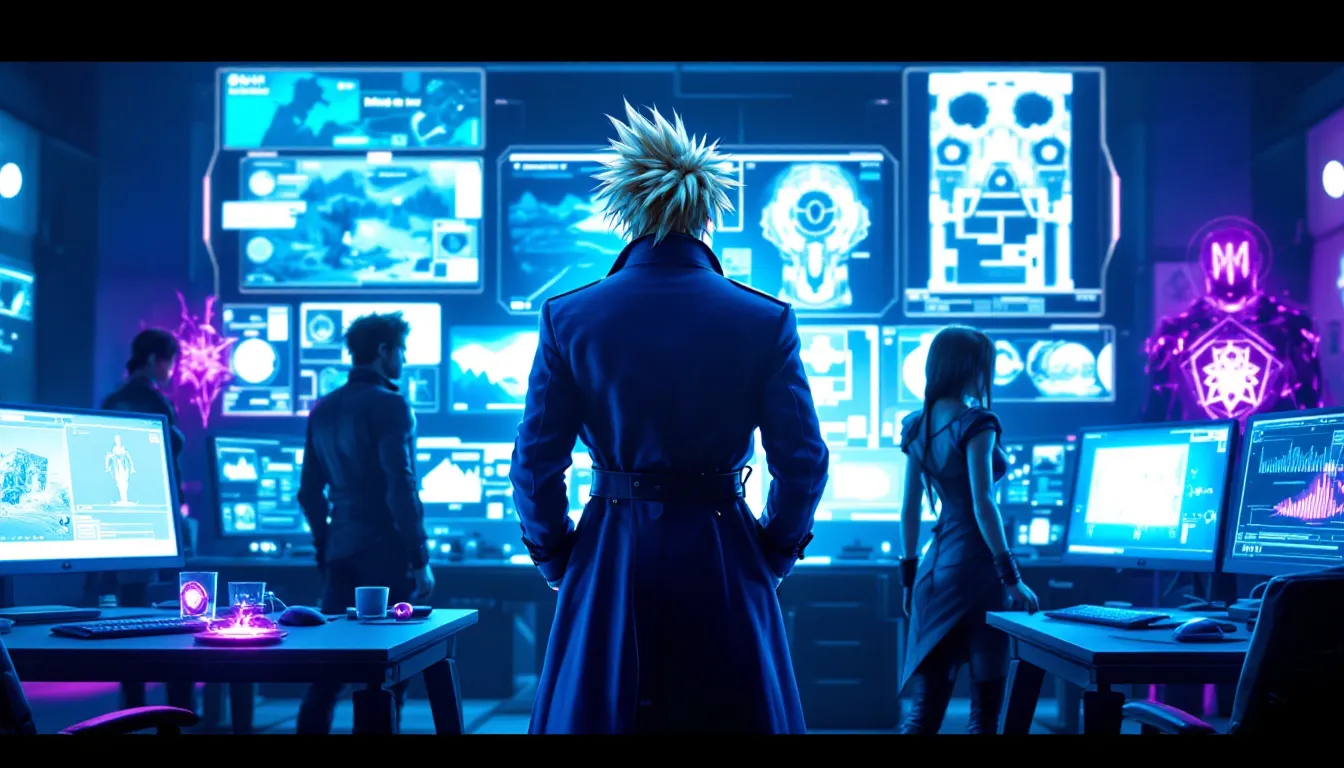
The Final Fantasy VII remake saga has become one of gaming’s most ambitious undertakings. After the massive success of the original Final Fantasy VII Rebirth, the gaming community is hungry for answers about what comes next. Speculation, leaks, and official hints have built into a fever pitch as we head into 2026. This article digs into everything confirmed, rumored, and theorized about Final Fantasy VII remake part 3, from release timelines and gameplay features to story predictions and technical specs. Whether you’re a die-hard FFVII fan or just curious about one of gaming’s biggest franchises, here’s the comprehensive breakdown on where the remake trilogy is headed next.
Table of Contents
ToggleKey Takeaways
- Final Fantasy VII Remake Part 3 is officially in active development at Square Enix with a realistic release window of late 2027, prioritizing quality over rushing to meet deadlines.
- The Final Fantasy 7 part 3 story will synthesize elements from the original game while introducing earned new narrative beats, including deviations that serve character development and thematic depth.
- Combat enhancements in Final Fantasy VII Remake Part 3 will refine the stagger system with dynamic boss phases, expanded materia synergies, and likely introduce New Game+ mode for increased replay value.
- Playable character roster will remain consistent with Cloud, Barret, Tifa, Aerith, Red XIII, and Yuffie, though new party members or surprise additions may emerge before the final battle.
- Technical specifications target PS5 as the primary platform with performance goals of 60 FPS in performance mode and 30 FPS in quality mode, with PC ports virtually guaranteed given Steam’s success with Rebirth.
- Community expectations balance respectful adaptation of the original with bold reimagining, with most fans anticipating final answers to Whisper mysteries, Sephiroth’s plan, and Zack’s fate in the opening half of the game.
What We Know About Final Fantasy VII Remake Part 3
Official Announcements and Release Timeline
Square Enix has been measured in its official statements about Final Fantasy VII remake part 3. While the studio hasn’t locked in a hard release date as of early 2026, they’ve confirmed that the project is in active development. Producer Tetsuya Nomura and his team have indicated the game is a priority, but they’re taking time to ensure the quality matches the bar set by the first two entries.
The Final Fantasy 7 part 3 release date remains unconfirmed by Square Enix, though numerous industry sources tracking the game’s progress suggest a potential 2027 window. That timeline gives developers roughly 18 months to polish the final installment, which aligns with how long the previous remake took to craft. VGC and other industry outlets have been tracking development updates, and most reporting points to mid-to-late 2027 as the most realistic estimate, though that’s not set in stone.
The Final Fantasy 7 part 3 release date is particularly crucial because Square Enix wants to stick the landing on this trilogy. Marketing materials suggest they’re aiming for a simultaneous global launch, which means localization work is already underway across multiple languages and regions.
Developer Insights and Studio Updates
Square Enix’s development team has been vocal about their approach to the final part. During recent interviews, Nomura emphasized that part 3 will bring closure to the remake’s narrative while respecting the legacy of the original game. The studio is balancing fan expectations with their creative vision, no small task given how invested the community has become.
Key team members have rotated between projects, but the core creative leads remain committed to the trilogy’s completion. The studio is reportedly working with enhanced tools and pipelines developed during the creation of the first two remakes, which should streamline production. This doesn’t guarantee a faster development cycle, but it does mean the team isn’t starting from scratch on technical foundations.
One piece of confirmation from developer interviews: Final Fantasy VII remake part 3 won’t be a direct 1:1 adaptation of the original game’s final act. Instead, it’ll synthesize elements from the original while introducing new story beats that feel earned by the narrative journey the remake has established. This approach respects longtime fans while keeping things fresh for newcomers.
Expected Story and Narrative Direction
Where Part 2 Left Off
Final Fantasy VII Rebirth concluded on several major narrative beats that set up the third installment perfectly. Cloud and the party are deeper into their mission against Shinra Electric Power Company, and the geopolitical landscape of the world has shifted dramatically. Key character relationships have evolved, some fractured, others strengthened, and the mystery around the planet’s fate has only deepened.
The ending left numerous threads deliberately unresolved. Zack’s apparent return, the true nature of the planet’s consciousness, and what “Sephiroth’s true plan” actually entails all remain open questions. Part 2 also introduced new factions and conflicting ideologies, which suggests part 3 will spend significant time navigating political intrigue alongside direct combat against Shinra.
Certain character arcs reached pivotal moments, particularly around Aerith, Tifa, and Cloud’s relationships with one another. Part 3 will almost certainly explore the emotional fallout and growth that emerges from these developments, which is a hallmark of what makes the Final Fantasy vii remake part 3 so compelling to fans invested in character-driven storytelling.
Predictions for Part 3’s Plot
Based on narrative structure and what players know from the original game, Final Fantasy vii part 3 is expected to tackle the most pivotal moments of the story. This includes the infamous scene that defines the original FFVII’s emotional weight, major confrontations with Shinra’s leadership, and the endgame push toward the true final battles.
Many fans speculate that the remake won’t shy away from controversial or devastating plot points. But, the story team has indicated they’re comfortable deviating from the original when it serves character development or thematic resonance. This means part 3 might feature genuinely unexpected narrative twists that couldn’t happen in the original 1997 game.
Theory crafting around the multiverse and time elements has exploded across communities. Part 2’s ending suggested there might be multiple timelines at play, which could allow the remake to honor the original while also subverting player expectations. Whether that’s actually the direction remains to be seen, but gaming communities have dissected every line of dialogue for clues.
One strong prediction: part 3 will open with consequences. No time skip, no “everyone’s recovered and ready to go” narrative shortcut. The game will force players to sit with the emotional reality of where things ended, then gradually escalate from there.
Gameplay Improvements and New Features
Combat System Enhancements
The combat in the first two remakes was generally praised for blending real-time action with tactical depth. Part 3 is expected to refine this formula further rather than overhaul it completely. Developers have suggested that enemy variety will increase significantly, particularly against human foes with tactical abilities rather than purely biological creatures.
Materia customization is likely to expand. The depth of the materia system in part 2 was solid, but there’s room to introduce more synergies and build variety. Expect new materia types that reward creative loadouts and punish pure optimization-focused builds. This keeps veteran players engaged while remaining accessible to newcomers.
Stagger mechanics, the core of FFVII remake’s difficulty curve, may see tweaks to keep combat from feeling rote. Instead of every major enemy fight following the same stagger-burst-repeat rhythm, boss encounters will likely feature phases with different mechanical priorities. This keeps strategy dynamic across a long game.
One rumored feature gaining traction: expanded team composition options. While the original allowed choosing four party members from six total, speculation suggests part 3 might feature larger squad pools or rotating character availability that prevents players from settling into one “optimal” group for the entire game. This would mirror how the original FFVII forced strategic adaptation.
Rumored Mechanics and Quality-of-Life Changes
A few frequently rumored additions keep surfacing in leaks and fan discussions. First, a harder difficulty mode that goes beyond the current “Hard” difficulty, something that scales not just enemy stats but attack patterns and AI behavior. The difficulty community has been vocal about wanting a genuine challenge option for veteran players.
Second, a New Game+ mode feels almost inevitable. Given the story-heavy nature of the remake, allowing players to experience it again with various mechanical advantages (carrying over materia, unlocking alternate weapons, bonus story scenes) would add significant replay value. Most Triple-A story games include this now, and FFVII’s branching narrative design would support it well.
Third, enhanced accessibility options. The first two remakes made improvements here, and part 3 is expected to push further, more colorblind modes, customizable HUD elements, adjustable difficulty sliders for specific mechanics rather than global settings, and expanded control remapping. These aren’t flashy features but they meaningfully expand who can enjoy the game.
Quality-of-life features like mission tracking improvements, faster travel (or expanded fast travel), and streamlined menu navigation seem likely given player feedback across two games. These small touches compound into a better experience over a 40+ hour campaign.
Character Development and Roster Expectations
Fan Theories About Character Arcs
Climate speculation around character arcs centers on a few key figures. Cloud’s psychological journey has been central to both remakes, and many fans believe part 3 will force him to truly reconcile his identity in a way that carries permanent consequences, not just narrative revelation but mechanical or gameplay impact.
Barrett’s arc as a father, a revolutionary, and a man struggling with violent methods versus peaceful change is ripe for explosive drama in part 3. Fans theorize he’ll face a genuine moral crossroads that forces him to either commit fully to Avalanche’s methods or fundamentally reconsider his approach.
Aerith’s connection to the planet and her prophetic abilities are expected to deepen dramatically. Part 3 will likely place her in situations where her knowledge creates a burden, she knows something that could change everything, but revealing it carries costs. This mirrors some of the original game’s most powerful Aerith moments, but with the remake’s character depth.
Tifa’s role has evolved from supporting character to genuine co-protagonist. Her fight choreography, her martial arts training subplot, and her emotional connection to Cloud suggest part 3 will give her agency in major story decisions rather than leaving her in a supporting position.
Playable Characters and New Additions
The playable roster for Final Fantasy 7 remake part 3 is expected to remain largely consistent with parts 1 and 2, Cloud, Barret, Tifa, Aerith, Red XIII, and Yuffie. But, some fan theories suggest a surprise playable character might emerge, perhaps even Sephiroth in specific segments or alternate routes.
The likelihood of new party members joining before the final battle is high. The original game featured a surprisingly large cast, and the remake’s world-building suggests room for characters players haven’t yet encountered or only encountered in limited capacity. A returning character from the original might also join the party in a way that reshapes team dynamics.
Red XIII’s character arc deserves specific mention. By part 3, players know his tragic history and his connection to Cosmo Canyon. Fans expect his personal story will culminate in meaningful ways, possibly even giving him a unique role in the final confrontations based on his origin and abilities.
Equipment variety and customization are expected to expand. Rather than adding new characters, the remake might introduce more weapon variants, armor options, and accessory combinations that feel meaningfully different in gameplay terms. This keeps content fresh without diluting focus from the core cast.
Technical Specifications and Platform Release
Console Compatibility and Performance Targets
Final Fantasy VII Remake Part 3 is confirmed for PlayStation 5. Given the technical demands of modern AAA games and the PS5’s current generation status, the game will likely be optimized for that platform first and foremost. Square Enix hasn’t officially confirmed Xbox versions, which has become a source of ongoing debate in communities.
The Final Fantasy 7 part 3 release date announcement will almost certainly clarify platform availability. If history is any guide, a PlayStation exclusive window of 12 months seems possible based on how the first two remakes rolled out. But, industry trends toward multiplatform releases suggest an Xbox version might come within a year of launch.
PC ports are virtually guaranteed given the success of Final Fantasy VII Rebirth on Steam and the broader industry shift toward day-one or near-launch PC availability. The technical work from bringing part 2 to PC will significantly streamline the port process for part 3.
Performance targets are expected to mirror current-gen standards: 60 FPS in performance mode (standard graphics), 30 FPS in quality mode (maxed visuals), with potential for unlocked framerates on high-end PC hardware. Visual Ray-tracing likely features prominently, particularly for outdoor environments and large open areas.
Graphics and Visual Upgrades
The visual engine will benefit from continued refinement. Midgar and other environments introduced in parts 1 and 2 established visual baselines that part 3 should maintain while introducing new locations with equal quality. Expect environments to be more detailed, with denser vegetation, more complex weather systems, and improved character animation quality.
Character models have been a focus for improvement across the remake trilogy. Part 3 is expected to feature the most detailed versions of the core cast yet, with more nuanced facial animation, improved hair simulation, and clothing physics that feel responsive to movement. Recent Final Fantasy technical showcases hint at significant strides in animation fidelity.
Cinematic presentation will almost certainly advance. The line between in-engine cutscenes and pre-rendered sequences has blurred impressively in parts 1 and 2, and part 3 should push that even further. Expect emotionally heavy scenes to feature some of the most impressive character animation and lighting work the industry has produced.
Loading times should be negligible on PS5 by part 3’s release, allowing for more seamless exploration and fewer transitions that pull players out of the experience. This was already solid in part 2, but further optimization is always possible.
Community Expectations and Fan Theories
The Final Fantasy community has invested enormous emotional energy into the remake trilogy. Expectations for Final Fantasy vii remake part 3 range from “respectful conclusion that honors the original” to “bold reimagining that surprises everyone.” Finding the balance between those poles is the remake team’s real challenge.
Fan theories have splintered into several camps. The “timeline theory” contingent believes the remake is playing with multiple realities or timelines, with part 3 potentially merging them or resolving the paradox. The “faithful adaptation” camp expects part 3 to eventually align with the original game’s major beats, even if the journey differs. A third group wants the remake to forge its own path entirely, unconcerned with fidelity to the 1997 source material.
One widely held expectation: part 3 will finally answer the cryptic questions raised across parts 1 and 2. Who is the Whisper? What exactly is Sephiroth’s plan? Is Zack actually alive? These threads need resolution, and most players expect answers within the first half of part 3, leaving the second half for the final conflicts and emotional payoff.
Community concerns also exist. Some worry the game will be too long (30+ hours minimum, likely 40+), others fear story bloat, and many are anxious about whether character relationships will feel earned or rushed in the final installment. The remake has had nearly two full games to develop these dynamics, which should theoretically provide enough foundation for satisfying conclusions.
Speculation around post-launch content is also prevalent. Will there be DLC episodes featuring side characters, as was done for parts 1 and 2? Will New Game+ unlock alternative story routes? These questions will likely be answered closer to launch, but the community expects more expansions given the commercial success of the previous entries.
One sentiment unites most players: cautious optimism. The Final Fantasy vii remake part 3 has enormous shoes to fill, but the foundation laid by the first two games is genuinely strong. If the team sticks the narrative landing and refines the gameplay as expected, this could be the defining conclusion to one of gaming’s most ambitious remake projects.
Conclusion
Final Fantasy VII Remake Part 3 stands as one of gaming’s most anticipated releases, and for good reason. The first two installments have established a foundation of strong storytelling, compelling character work, and solid gameplay mechanics that part 3 needs to synthesize into a satisfying conclusion.
What we know so far points to a game that will push technical boundaries on PS5, deliver emotionally resonant character arcs, and hopefully answer the narrative mysteries introduced across two games. The Final Fantasy 7 remake part 3 release date hasn’t been locked down officially, but late 2027 remains the most credible estimate based on developer statements and industry tracking.
While Final Fantasy 7 part 3 release date confirmation will likely come within the next 12 months, the real question for fans is whether Square Enix can deliver a conclusion that respects the original while forging its own path. The remake team has earned goodwill through the first two entries, and that trust matters. Whether it pays off depends on execution.
For now, the wait continues. Keep an eye on official Square Enix announcements and major gaming news outlets for updates. In the meantime, replaying the first two entries or exploring the broader Final Fantasy franchise offers plenty of reasons to stay engaged with this legendary series. The Final Fantasy vii remake part 3 is coming, and based on everything we know, it’s worth the wait.