
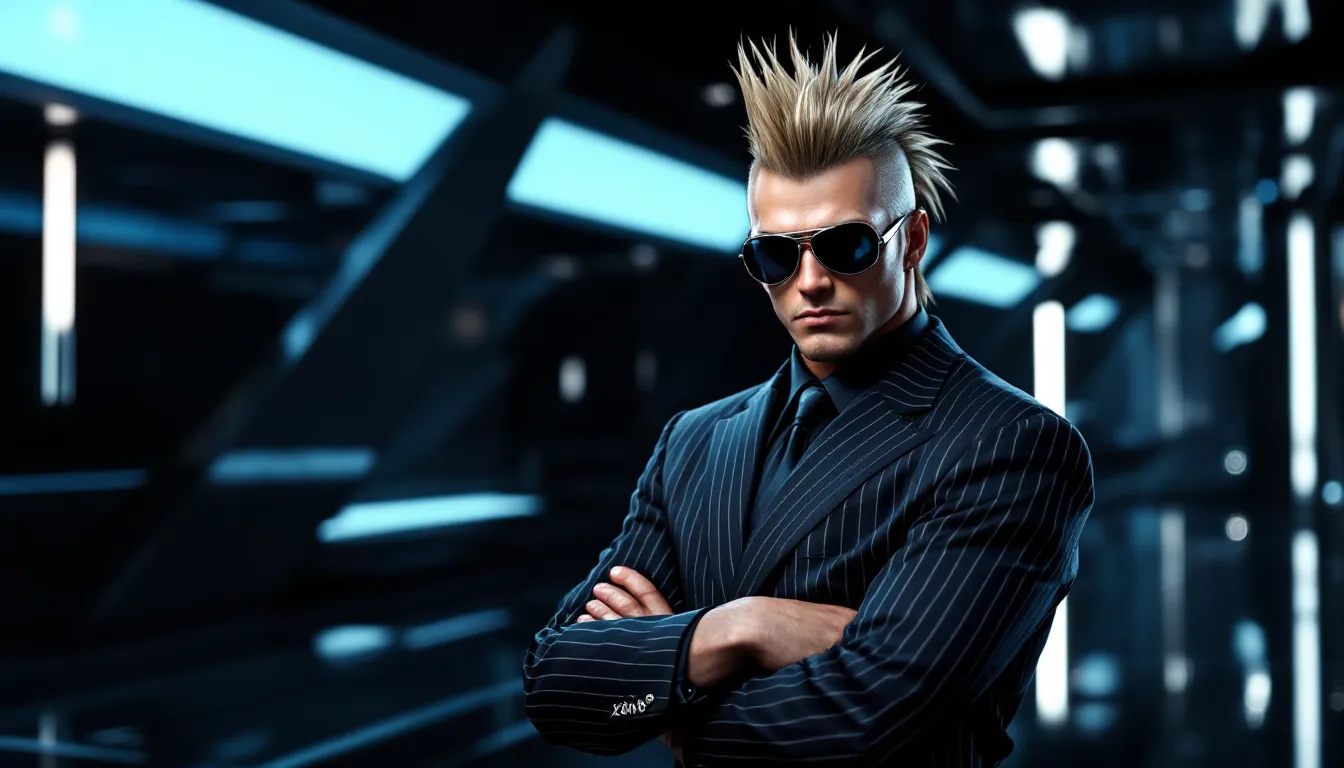
Reno isn’t your typical Final Fantasy villain. Sure, he works for the megacorporation Shinra, sure he’s tasked with causing mayhem across Midgar, but there’s something magnetic about the guy that keeps fans talking decades after his debut. Whether you’re revisiting the original Final Fantasy VII, diving into the Remake series, or exploring the expanded Compilation universe, Reno’s arc is one of gaming’s most compelling character studies. He’s the antagonist you’re supposed to hate but end up rooting for, the comedic relief in a catastrophic story, and, in the Remake era, a fully fleshed-out character who proves that secondary characters can steal the show. This guide breaks down everything you need to know about Reno across every major appearance, from his combat mechanics to his growing role in the FF7 Remake series, and why he’s become such a cultural fixture in gaming.
Table of Contents
ToggleKey Takeaways
- Reno Final Fantasy evolved from a witty secondary antagonist in the 1997 original to a fully developed character with internal conflict in the Remake series, proving that style, humor, and authenticity resonate with players more than screen time.
- His combat identity centers on electric attacks and stun mechanics, making lightning resistance materia and tactical team composition essential for players facing him across different FF7 games.
- The Remake and Rebirth entries dramatically expanded Reno’s narrative role, showing his struggle between loyalty to the Turks and moral uncertainty about serving Shinra’s corrupt system.
- Reno’s design influenced how modern games approach secondary antagonists and anti-heroes, establishing that compelling characters don’t require redemption arcs to be interesting or memorable.
- Across Crisis Core, Dirge of Cerberus, and the modern Remake trilogy, Reno gained layers of complexity that transformed him from a simple boss encounter into gaming’s most compelling Turk.
Who Is Reno? Character Overview and Role
First Appearance and Initial Characterization
Reno burst onto the scene in Final Fantasy VII (1997) as a Turk, one of Shinra Electric Power Company’s elite operatives. His initial role was straightforward: pursue Cloud and his group, retrieve Materia, and keep them from interfering with Shinra’s plans. But from his very first encounter at the Sector 7 Slum reactor, it became clear Reno was different from typical video game henchmen.
He’s got style, irreverent humor, and genuine competence wrapped in a mohawk and pinstripe suit. Unlike other Turks who treat their mission with cold professionalism, Reno treated it like a game, dangerous, sure, but never without a smirk. His weapon of choice, the Electric Rod and later Pyramid equipment, telegraphed his fighting style: hit fast, hit hard, and don’t overthink it.
What separated Reno from being forgettable was his personality. He wasn’t brooding about Shinra’s morality or pretending to be invincible. He was just… Reno. A guy doing his job, cracking jokes, and somehow becoming someone players didn’t want to hate. The developers realized this and leaned into it.
Development Across the Final Fantasy VII Universe
Reno’s character wasn’t static across the Compilation of Final Fantasy VII. In Crisis Core (2007), developed by Square Enix for PSP, Reno appeared earlier in the timeline, establishing his roots as a younger Turk working under the same command structure that would eventually send him after Cloud.
Then came Dirge of Cerberus (2006), where Reno appeared briefly but showed signs of questioning Shinra’s authority, a hint that his loyalty wasn’t unconditional. By the time the FF7 Remake rolled around in 2020, Reno had evolved from a fun-but-secondary antagonist into something far more complex. The Remake team gave him genuine depth, expanding his character arc while keeping what made him special in the first place.
Each appearance added layers. He went from “Turk who fights you” to “character with agency and internal conflict.” That trajectory, from comic relief to morally conflicted operative, is what elevated Reno from likable side character to cultural icon.
Reno’s Personality and Defining Traits
Reno’s defining characteristic is his irreverent confidence. He operates under a code of professional loyalty to the Turks, his squad is his family, but that doesn’t mean he takes himself seriously. He cracks jokes mid-mission, flirts shamelessly with Elena (his fellow Turk), and treats deadly situations like he’s got nothing to lose.
His cocky streak is balanced by genuine skill. He’s not overestimating his abilities: he’s just refusing to let pressure get to him. In conversations and cutscenes, Reno comes across as the guy who’d light a cigarette and chat with you right before trying to kill you. That contradiction, professional but sarcastic, dangerous but personable, is what makes him work as a character.
Reno also shows surprising depth beneath the surface charm. He’s loyal to his crew, particularly protective of Elena even though their banter. He questions orders when they cross lines, especially about civilian casualties. This hint of conscience, subtle in the original game and much more developed in the Remake, transforms him from simple antagonist into someone genuinely struggling with serving a corrupt system.
His appearance reinforces his personality: the Mohawk says “I don’t care what you think,” the suit and sunglasses say “I’m professional,” and the Electric Rod says “I’m dangerous.” Everything about Reno’s design screams a man comfortable in his own skin, which is rarer in Final Fantasy than you’d think. Most FF characters are dealing with existential crises. Reno? He’s just trying to get through the day with a quip and a lightning bolt.
Reno in Final Fantasy VII: The Original Game
Combat Role and Abilities
In the original FF7, Reno is a recurring boss encounter with a specific combat strategy. His Electric Rod grants him access to lightning-based attacks, making him particularly dangerous to characters without lightning materia or proper defensive setup. Players facing him for the first time often underestimate him, classic JRPG bait-and-switch.
His signature moves include:
- Pyramid Attack: A powerful strike that hits your entire party
- Electro Rod: Single-target lightning damage with moderate potency
- Sample Attack/Guard: Defensive abilities allowing him to mitigate incoming damage
Reno’s AI during boss fights is aggressive but not reckless. He’ll heal himself with items if health drops dangerously low, switch between offensive and defensive stances, and coordinate attacks with Rude or other allies depending on the encounter. His materia loadout gives him Magic damage output and utility abilities, nothing flashy, but effective.
The original game limits Reno’s combat depth compared to playable characters, but that’s intentional. He’s a skill check: if you’re not prepared for lightning damage and can’t manage his aggression, he’ll punish you. Experienced players learn to exploit his patterns and equipment vulnerabilities.
Story Significance and Character Arc
Reno’s narrative role in FF7 evolves from standard opposition to something more complex. Early encounters see him as comic relief, the antagonist who’s dangerous but also kinda funny. He pursues Cloud’s party with missions to retrieve Materia, which pits him directly against the protagonists but doesn’t make him their nemesis.
The turning point comes during the Sector 7 destruction sequence. Reno’s role shifts from pursuing the party to witnessing the full scale of Shinra’s cruelty. While he doesn’t have a dramatic moral awakening on-screen, the implication is there: he’s starting to see cracks in the system he serves. By the time players encounter him in subsequent chapters, there’s a sense that Reno knows something’s wrong but isn’t quite ready to defect.
In the original game’s final act, Reno is largely absent from the narrative, suggesting he may have stepped back from active duty. This absence speaks volumes, he’s making a quiet choice without announcing it. The game’s ending doesn’t give Reno a dramatic redemption arc, but it leaves enough space for players to imagine one. That ambiguity is part of what makes his character work. He’s not a clear good guy or bad guy: he’s someone caught between professional loyalty and personal conscience.
Final Fantasy VII presents Reno as a character worth paying attention to, even if he doesn’t dominate the story.
Reno in Crisis Core and Compilation Titles
Crisis Core: Zack’s Perspective
Crisis Core: Final Fantasy VII (2007) recontextualizes Reno within a prequel framework. Players encounter Reno as a younger operative, before the events of the original FF7, working under the same Shinra hierarchy. Crisis Core is technically more canon-accurate than the original game’s portrayal, it establishes the Turks’ organizational structure and shows how Reno operated before his encounters with Cloud.
In Crisis Core, Reno’s role is smaller but significant. He represents the Turks’ competence and the weight of Shinra’s reach during Zack Fair’s military career. Rather than a boss encounter, he’s more of an atmospheric presence, proof that Shinra’s operatives are everywhere, watching everything. This framing makes him more menacing than in FF7, because you see him as part of a vast, coordinated system.
The PSP title doesn’t give Reno major story beats, but it establishes that his character predates Zack’s SOLDIER enhancements. He’s been doing this job longer than players might realize, which adds credibility to his competence in the original game.
Dirge of Cerberus and Beyond Crisis
Dirge of Cerberus: Final Fantasy VII (2006) placed Reno in the post-Meteor narrative, where the world was dealing with Geostigma and the remnants of Shinra. His appearance in DC was brief but meaningful, he showed up as a surviving Turk, still connected to the organization but no longer serving them blindly.
Beyond Crisis, the mobile game published between DC and the modern Remake era, further developed Reno’s character. In BC, Reno and the Turks took on new roles as the world rebuilt. The game suggested that Reno was beginning to work toward redemption, moving away from pure Shinra service toward something more morally defensible.
These Compilation titles, Crisis Core and Dirge of Cerberus, don’t dramatically change Reno’s fundamental character, but they add texture and history. They show him as a man aware of consequences, grappling with loyalty in an increasingly unstable system. By the time the Remake era arrived, these titles had already primed audiences to see Reno as someone worth caring about beyond the jokes.
Reno in Final Fantasy VII Remake Series
Remake Changes and Enhanced Character Development
Final Fantasy VII Remake (2020) took Reno and gave him something the original game couldn’t: screen time and genuine character development. The Remake team recognized that Reno resonated with fans and decided to invest in that relationship. The result is a version of Reno who’s still confident and sarcastic but carrying visible weight from his choices.
In the Remake, Reno has more substantial encounters with the party. He’s still pursuing them, still working for Shinra, but the game shows his internal struggle. He cracks jokes to mask discomfort with what he’s being asked to do. He shows genuine affection for Elena and the Turks, suggesting his loyalty is more about his crew than Shinra’s vision.
The Remake also upgraded Reno’s combat encounters. His boss fights are mechanically more demanding, with varied attack patterns and phases. His Electric Rod attacks are visually more impactful, lightning effects more pronounced, and his tactics more intelligent. Modern hardware allowed the developers to make Reno feel like a genuine threat rather than a puzzle to solve.
What’s most significant is Reno’s visible internal conflict. He questions orders about civilian safety. He shows reluctance about certain assignments. The Remake doesn’t force a redemption arc, Reno remains loyal to the Turks, but it shows cracks forming. The version of Reno in the Remake is someone who’s starting to understand that loyalty and morality aren’t always aligned.
The Final Fantasy 7 Remake Collector’s Edition includes extras that further develop the Remake’s interpretation of Reno’s character, giving deeper insight into how the story has evolved.
Reno’s Expanded Role in Rebirth
Final Fantasy VII Rebirth (2024) dramatically expands Reno’s presence in the story. As players progress through the second major entry in the Remake trilogy, Reno shifts from recurring antagonist to something more complex: a character whose presence and allegiances matter significantly to the plot.
In Rebirth, Reno has more agency. He’s not just executing orders: he’s making choices about how to execute them. His scenes with the party are longer, more conversational. There’s genuine chemistry between him and the protagonists even though him being on the opposite side. The game uses this dynamic to explore themes of loyalty, morality, and the possibility of change.
Reno’s combat role in Rebirth is similarly expanded. Boss encounters feel more personal, with unique mechanics tied to his character arc. His Electro Rod attacks are more varied, his tactical options broader. Fighting Reno in Rebirth feels like fighting someone you’ve come to know, which adds emotional weight to what should be a simple boss encounter.
The Final Fantasy 7 Rebirth represents the culmination of the Remake’s vision for Reno: a secondary character elevated to genuine importance through consistent development and player investment. Whether Reno follows a redemption arc or makes a tragic final choice depends partly on player actions and partly on narrative design, but either way, his role in Rebirth matters in ways the original game couldn’t achieve.
Rebirth positions Reno as someone whose decision, whether to continue serving Shinra or to break free, has real consequences. That’s character development earned through storytelling and player engagement rather than simply given.
Reno’s Combat Abilities and Playstyle Guide
Electric Arsenal and Signature Moves
Reno’s combat identity revolves entirely around electricity. His Electric Rod isn’t just flavor, it defines his damage output and strategic role. In FF7 Remake, his moveset includes:
- Electro Rod Attack: Standard melee strikes infused with lightning
- Pyramid Attack: Heavy AoE lightning damage hitting the entire party
- Stun Strike: Can inflict stun status on targets, interrupting their actions
- Charged Pyramid: Enhanced version of Pyramid with increased potency, used when Reno’s stun gauge builds
Reno’s stun mechanic is crucial to understanding his combat role. Unlike standard elemental weaknesses, stun represents his ability to paralyze opponents through electrical overload. Players fighting Reno should stack lightning resistance materia and use grounded equipment when available.
His secondary abilities vary slightly across encounters and games, but generally include defensive options like Guard and item usage. In Rebirth, Reno has access to additional moves that scale with his character development and the story’s progression. His combat AI uses these abilities intelligently, he won’t spam Pyramid if the party has lightning resistance active: he’ll switch tactics to stun strikes or standard attacks.
Team Composition and Strategic Effectiveness
Reno doesn’t fight alone in most encounters. He typically partners with Rude and sometimes Elena, creating dynamic team scenarios. When facing Reno with allies, players need to manage threat levels across multiple targets. Prioritizing which Turk to attack matters, Reno himself is dangerous, but he’s also the one coordinating his team’s strategy.
To effectively counter Reno’s tactics:
- Stack Lightning Materia: Equip fire-based materia or use Elemency abilities to turn his lightning damage against him
- Stun Prevention: Use items or abilities that grant stun immunity
- Ranged Attacks: Reno’s mobility means melee-heavy parties struggle: bring characters with ranged options
- Interrupt Stuns: If Reno goes into a charge-up animation for Pyramid, interrupt with status effects or attacks
In team-based story sequences (particularly in Rebirth), Reno’s combat support varies. He’ll heal allies when necessary, cover wounded teammates, and coordinate attacks. This AI behavior suggests he’s not purely selfish, he cares about his squad’s survival, which impacts how he prioritizes targets when fighting the party.
For players using Ranking Final Fantasy Games as reference, Reno’s combat design across entries shows clear evolution. Early FF7 Reno is relatively basic: Remake Reno is mechanically complex: Rebirth Reno is full-featured with multiple attack chains and tactical options. This progression mirrors the character’s own development, early encounters feel like sparring with a competent operative, later encounters feel like genuine battles against a threat.
Fan Reception and Cultural Impact
Why Reno Became a Fan Favorite
Reno’s popularity is a textbook example of secondary character elevation. In the original FF7, he had limited screen time and straightforward antagonism, yet players latched onto him immediately. The combination of style, humor, and underlying competence created something magnetic.
Fans appreciated that Reno didn’t fit the typical villain archetype. He wasn’t brooding, conflicted about evil, or struggling with internal darkness. He was just a guy doing a job, aware of its moral implications but not paralyzed by them. That relatability, the idea that good people can end up on the wrong side of history, resonated deeply.
Social media and gaming communities amplified Reno’s popularity across decades. Fan art, fan fiction, and community discussions treated him as more central to FF7’s narrative than the original game suggested. When the Remake finally gave him the screen time fans felt he deserved, it felt like validation. The developers had been listening. That investment paid off: Reno became arguably the most popular Turk, overshadowing even Sephiroth’s executive guard.
His humor also helped. In a series known for dramatic, sometimes overwrought storytelling, Reno’s irreverent quips provided relief without undercutting tension. He could acknowledge absurdity while still being dangerous. That balance, being likable without being weak, is rarer than it should be in gaming.
Reno’s Influence on Villain and Anti-Hero Design
Reno’s success influenced how developers approach secondary antagonists. He proved that antagonists don’t need redemption arcs to be interesting. They don’t need tragic backstories or sympathy-generating moments. They just need to be competent, distinct, and honest about their choices.
Post-FF7, you see echoes of Reno’s archetype in other games: the antagonist who’s fun to fight, stylish, and doesn’t require thematic redemption to feel complete. Characters who exist in moral gray zones, loyal to flawed systems but aware of the flaws. The template Reno established, competent operative with personality, became a template for creating memorable secondary cast members.
Reno also influenced how games handle anti-heroes. He’s not a hero forced into antagonist roles. He’s someone actively choosing to serve a corrupt system, but for reasons that make sense to him (loyalty, employment, lack of alternatives). Modern games that feature characters navigating similar moral compromises owe something to how FF7 handled Reno’s existence.
The Remake’s expansion of Reno’s character further influenced modern game design. It showed that players cared about secondary characters’ internal development, that time invested in peripheral figures paid dividends in emotional engagement. Studios took note: invest in your side characters, and players will invest in your story.
Recent coverage on Siliconera and Gematsu frequently references Reno when discussing FF7 Remake’s character work, suggesting he’s become a benchmark for how secondary characters should be handled in narrative-heavy games. That’s genuine cultural impact, a character from 1997 still shaping how games approach characterization in 2026.
Conclusion
Reno’s journey from secondary antagonist to gaming icon is proof that character matters more than screen time. He started as a relatively minor obstacle in the original Final Fantasy VII, a Turk with jokes and lightning attacks. Three decades later, he’s central to fan discussions about the Remake series, receiving expanded storylines and deeper characterization.
What makes Reno work, across every version, every platform, is his authenticity. He’s not pretending to be something he’s not. He’s competent without being arrogant, dangerous without being evil, funny without being a joke. In a series full of characters with world-ending crises and existential questions, Reno’s acceptance of complexity is refreshing. He serves a corrupt system, knows it’s corrupt, and hasn’t yet made peace with that tension. That’s human. That’s relatable.
The Remake series has only deepened Reno’s appeal by giving him the narrative space to actually wrestle with his choices. Rebirth positions him as someone whose decisions matter, whose loyalty is tested, whose future is genuinely uncertain. Players invested in Reno’s arc are invested in whether he’ll find a path toward something more meaningful than Shinra service.
If you’re jumping into the Final Fantasy VII universe, whether the original, Crisis Core, or the modern Remake trilogy, pay attention to Reno. He’s the character who grows with you, who challenges your assumptions about antagonists, and who proves that the best gaming experiences come from caring about all the characters, not just the leads. Resources like guides on World of Final Fantasy show how secondary characters shape player experience, and Reno is evidence of exactly that principle in action.
Reno isn’t just a memorable Final Fantasy character. He’s proof that in games, it’s not about how much time you spend on screen, it’s about what you do with it.