
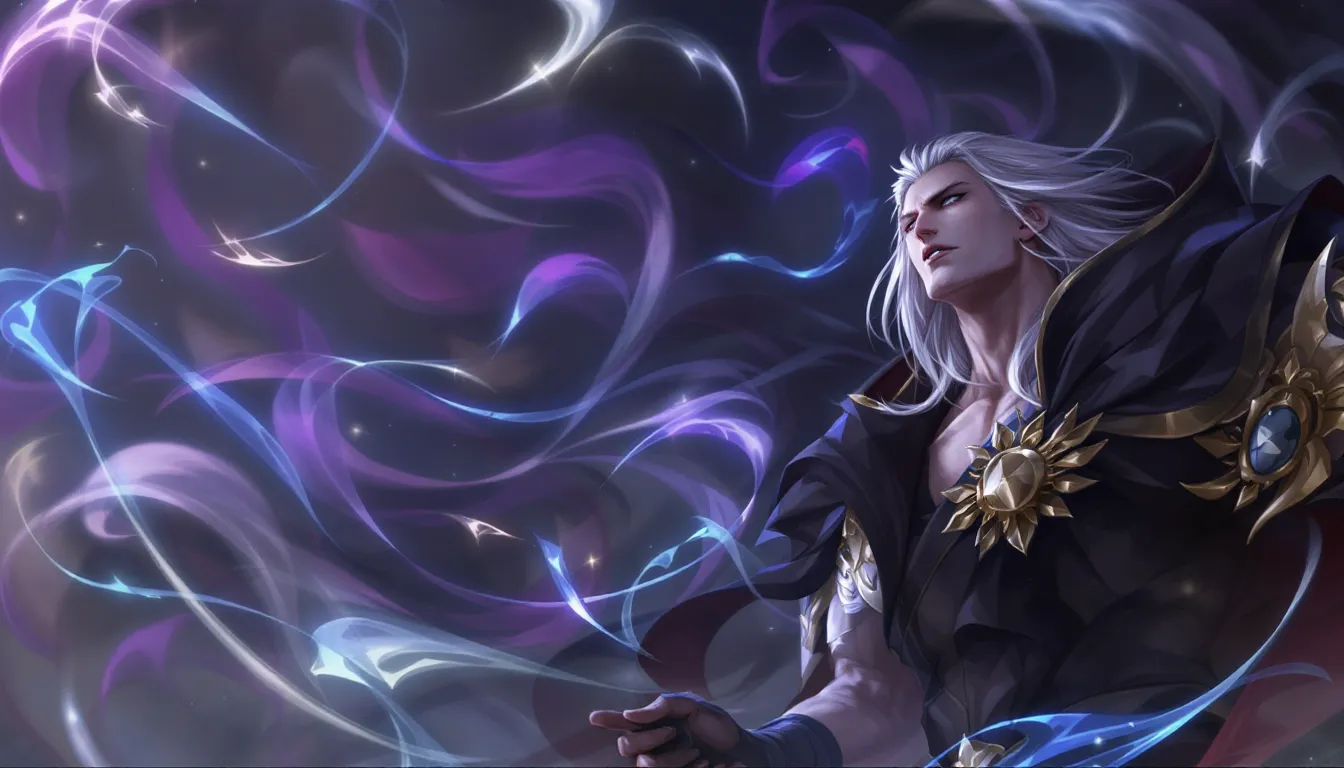
Final Fantasy XIV’s narrative has always been defined by its complex antagonists, but few rival the sheer intensity and psychological depth of Zenos Yae Galvus. Since his debut in Stormblood and through his evolution across Shadowbringers and Endwalker, Zenos has transformed from a seemingly one-dimensional villain into one of gaming’s most fascinating explorations of obsession, power, and the nature of combat itself. What makes the FFXIV Zenos character so compelling isn’t just his raw strength or his role as a Garlean prince, it’s his singular, unsettling fixation on the Warrior of Light that drives the narrative forward in ways few other antagonists achieve. Whether you’ve followed his story from the beginning or you’re newer to FFXIV’s complex lore, understanding Zenos’s evolution reveals how Square Enix crafted a villain whose impact transcends traditional storytelling, challenging players’ expectations and redefining what we expect from a Final Fantasy antagonist.
Table of Contents
ToggleKey Takeaways
- Zenos Yae Galvus evolves from a seemingly one-dimensional villain in Stormblood into one of gaming’s most psychologically complex antagonists by Endwalker, driven by obsession rather than traditional villain motivations.
- Unlike typical Final Fantasy antagonists, Zenos wasn’t corrupted by power but born into privilege, creating a fundamental disconnect from conventional morality that defines his entire worldview.
- Zenos’s obsession with the Warrior of Light functions as a dark mirror to the player’s own power-accumulation journey, forcing uncomfortable introspection about whether the player character’s heroism fundamentally differs from Zenos’s pursuit of dominance.
- Zenos achieves near-complete aetheric transcendence by Endwalker, existing as a being of pure aether sustained by willpower and obsession, which transforms him from a rogue antagonist into an existential threat.
- Zenos remains divisive within the FFXIV community—supporters praise his psychological depth and narrative innovation, while detractors find his single-minded focus repetitive and disruptive to broader storytelling themes.
- Zenos’s legacy fundamentally altered FFXIV’s narrative landscape, establishing that future antagonists must match his psychological complexity and ensuring that the Warrior of Light’s power can never again be viewed as purely heroic.
Who Is Zenos Yae Galvus?
Background and Origins
Zenos Yae Galvus isn’t your typical villain born from tragedy or betrayal. He’s the adopted son of Emperor Varis zos Galvus and a prince of the Garlean Empire, raised within one of the most technologically advanced and militaristically dominant civilizations in Eorzea. His origins lie in the royal courts of Garlemald, where he was groomed to embody the perfect soldier and leader. Unlike many antagonists defined by hardship, Zenos’s worldview stems from privilege, access to the finest education, combat training, and magical instruction that Garlean resources could provide.
What sets Zenos apart from birth is his fundamental disconnect from conventional morality. He wasn’t corrupted by power: he was born into it. This distinction matters because it shapes how he views everything: people, nations, and even the concept of good and evil. To Zenos, these are irrelevant abstractions. What matters is sensation, dominance, and the thrill of true combat against a worthy opponent.
Role in the Garlean Empire
Within the Garlean hierarchy, Zenos held the title of Crown Prince and served as a military commander of exceptional capability. His role wasn’t merely ceremonial, he led legions, conquered territories, and represented Garlemald’s strength abroad. But, his ambitions extended beyond simple territorial expansion. Zenos sought validation through combat, through testing himself against increasingly powerful foes. This obsession gradually eclipsed his duties as a political figure.
Zenos’s relationship with his adopted father, Emperor Varis, was complicated by this fundamental difference in priorities. While Varis saw the Garlean Empire as a legacy to expand and control through strategy and manipulation, Zenos saw it as a stage for his personal pursuit of the perfect battle. This ideological rift created tension within the empire’s upper echelon, hinting at the psychological complexity that would later define his character arc. His role was never simply to conquer: it was to find meaning through opposition, to push himself against the strongest enemies imaginable.
Zenos’s Character Arc Across Expansions
Stormblood: Introduction and Ambitions
Zenos’s introduction in Stormblood (Patch 4.0, June 2017) positioned him as the Garlean Empire’s military spearhead against the alliance’s resistance movements. Players first encountered him as a formidable antagonist seeking to suppress uprisings in the Far Eastern regions. His initial characterization seemed straightforward: a powerful general, loyal to the empire, committed to expanding Garlean dominion.
But, even in Stormblood, cracks appeared in this facade. Zenos displayed an unusual intensity when confronting the Warrior of Light, a recognition of kinship that neither the player nor the narrative initially explained. His obsession wasn’t presented as a long-standing vendetta or ideological conflict, it was immediate, visceral, and personal in a way that suggested something deeper. Throughout Stormblood’s story, Zenos pursued the player with almost romantic fervor, seeing in the Warrior of Light a mirror to his own desire for meaningful combat. By expansion’s end, his character transcended the role of “evil general” and became something far more psychologically intricate.
Shadowbringers: Obsession and Transformation
Shadowbringers (Patch 5.0, July 2019) fundamentally altered Zenos’s narrative trajectory. The expansion shifted focus away from the Garlean Empire’s direct military threat, yet Zenos remained a lurking presence, a wound that hadn’t fully healed. During this expansion, players learned the devastating truth: Zenos had orchestrated his own apparent death at the end of Stormblood, a calculated psychological move designed to haunt the Warrior of Light. His obsession had evolved beyond simple rivalry into something approaching madness.
Zenos’s storyline in Shadowbringers revealed his abandonment of empire, duty, and even basic sanity in pursuit of reuniting with the Warrior of Light. He clawed his way back to life, rejected his very humanity, and eventually embodied a fusion of aetheric power and pure will. This expansion’s narrative arc didn’t just develop Zenos, it transformed him into a reflection of the player’s own power and potential, raising uncomfortable questions about the nature of the Warrior’s journey. His obsession became a dark mirror to the player’s own accumulation of strength.
Endwalker: Climactic Confrontations
Endwalker (Patch 6.0, November 2021) delivered Zenos’s ultimate arc, positioning him as a significant antagonist in the expansion’s climactic moments. By this point, Zenos had transcended mortality itself, existing as a being of pure aether sustained by willpower and obsession. The expansion’s story confirmed what had been hinted since Stormblood: Zenos wasn’t driven by power-seeking, conquest, or even vengeance. He was driven by the singular need to test himself against the Warrior of Light in absolute, ultimate combat.
Zenos’s final encounters in Endwalker stripped away all pretense. He faced the player not as a villain with a master plan, but as a man (or thing, given his transcendent state) seeking the only meaningful experience available to him, a fight against an equal. This culmination raised the emotional stakes beyond typical Final Fantasy narrative beats. It forced players to confront whether Zenos was a tragic figure, a monster, or something far more ambiguous. His final moments became a meditation on obsession, purpose, and what happens when someone dedicates their entire existence to a single, consuming goal.
Zenos’s Combat Encounters and Boss Fights
Notable Battle Mechanics
Zenos’s boss encounters evolved significantly across FFXIV’s expansions, with each fight reflecting his narrative growth. His Stormblood encounter introduced mechanics centered on aggression and overwhelming offense, mechanics that reflected his role as a confident military commander. The fight tested player DPS and reactive positioning but didn’t venture into extreme mechanical complexity.
Shadowbringers transformed Zenos’s encounters into psychological warfare masquerading as mechanics. His fights introduced predictable phases that disrupted player expectations, reflecting his newfound mastery over aether and his unstable mental state. The most memorable encounter featured mechanics designed to feel almost personal, attacks that seemed targeted, vindictive, and driven by emotion rather than pure combat formula.
Endwalker’s Zenos fights, particularly the final Ultimate-tier encounter for hardcore raiders, represented the absolute pinnacle of his combat evolution. These encounters featured intricate damage patterns, raid-wide mechanics that demanded perfect coordination, and solo mechanic sequences that tested individual player skill. The final phase stripped away environmental assistance and forced a pure test of mechanical execution. These fights didn’t just test DPS rotations: they tested player mastery of their entire class toolkit.
Difficulty Scaling and Strategy
Zenos encounters scale across Normal, Savage, and Ultimate difficulties, each presenting distinct strategic challenges. Normal difficulty encounters introduce his mechanics in digestible chunks, allowing casual players to experience the narrative without excessive mechanical barriers. These fights emphasize understanding phase transitions and basic positioning.
Savage difficulty encounters demand precise execution, optimized gear (typically Item Level 620+ for current content), and coordinated team strategies. Players need to understand attack patterns deeply, optimize their cooldown usage, and execute rotations while maintaining positional awareness. Survivability becomes dependent on active mitigation and proper healing coordination.
Ultimate difficulty encounters represent some of FFXIV’s most challenging content. These fights demand near-perfect execution across 10-15 minute encounters with minimal margin for error. Top-tier raiders and speedrunners frequently reference Zenos’s Ultimate fight as defining moments in their FFXIV careers. The strategy involves phase-specific rotations, careful raid composition planning, and hundreds of hours of practice to perfect execution.
Zenos’s Obsession with the Warrior of Light
Psychological Dynamics of Their Rivalry
Zenos’s fixation on the Warrior of Light isn’t a typical antagonistic rivalry rooted in conflicting ideologies or power struggles. It’s fundamentally psychological, operating on a level that transcends conventional narrative conflict. Zenos recognizes in the player a reflection of himself, someone whose entire existence becomes defined by pursuit of ever-greater challenges, by the accumulation of power, by the seductive allure of dominance. His obsession suggests a twisted kinship, as though he’s encountered his own dark mirror.
What makes this dynamic so unsettling is its asymmetry. The player doesn’t choose this connection: it’s imposed upon them. Zenos pursues the Warrior of Light with an intensity that borders on predatory, yet he frames it as romance, as recognition of a kindred spirit. He doesn’t hate the player, he idolizes them, fixates on them, wants to possess them through combat. This transforms every encounter into something far more personal than a simple boss fight.
This psychological warfare manifests throughout Zenos’s narrative. He orchestrates situations specifically to confront the player, abandons political power to pursue personal vendetta, and eventually transcends mortality itself in service to reunion with his obsession. He represents the toxic culmination of pure competitive drive unchecked by empathy, morality, or self-awareness. Yet Square Enix crafted him with enough complexity that players struggle to dismiss him as simply evil, he’s broken, yes, but in ways that illuminate darker aspects of the player’s own power fantasy.
Impact on the Player’s Journey
Zenos’s obsession reframes the entire Warrior of Light’s narrative. Throughout FFXIV, players accumulate power, overcome adversaries, and become increasingly central to the world’s fate. This power fantasy feels earned and righteous, you’re saving the world, protecting people you care about, and growing stronger to face greater threats. Zenos emerges as a challenge to this narrative, suggesting that power accumulation itself might be corrupting, that the player’s journey mirrors a darker path.
His presence forces uncomfortable introspection. Is the Warrior of Light fundamentally different from Zenos, or merely earlier in the same trajectory? Both pursue ever-greater challenges. Both accumulate world-changing power. Both seem compelled toward conflict. The primary difference appears to be that the player directs their strength toward protecting others, while Zenos directs it toward pure self-gratification. Yet Zenos suggests this distinction might be illusory, that the Warrior’s protectiveness masks a deeper hunger for dominance and recognition.
Zenos’s final confrontation forces this reckoning to its absolute conclusion. The player must defeat him, but the victory feels hollow because his very existence has undermined the moral clarity of the Warrior’s journey. Gaming narratives rarely explore, making Zenos’s impact on the player’s psychological experience genuinely significant.
Powers, Abilities, and the Resonance
Aether Manipulation and Combat Skills
Zenos’s combat capabilities operate on multiple levels, blending conventional swordsmanship with aetheric manipulation. His signature weapon, the Zenos Sword, functions as both physical and magical carry out, channeling aether through its blade to deliver devastating attacks. His baseline combat prowess exceeds most warriors, he’s trained since birth in Garlean military techniques and possesses innate magical talent that allowed him to advance rapidly through their ranks.
But, Zenos’s true power emerges through aether control. He doesn’t simply cast spells or channel magic: he consciously manipulates aetheric flows to augment his physical abilities. His attacks generate aetheric explosions, he phases through space using aetheric distortion, and he strengthens his body beyond normal limitations through pure willpower and aether saturation. This hybrid approach makes him extraordinarily difficult to combat through traditional means.
Zenos also demonstrates mastery over Resonance, a mysterious aetheric phenomenon that doesn’t correspond to standard magic schools. Resonance appears to involve sympathetic attunement between aetheric signatures, essentially, he can synchronize his aetheric frequency with his opponents to predict and counter their actions. This ability transforms combat into an almost telepathic exchange where physical movement becomes secondary to aetheric alignment.
Connection to the Ascians and Ancient Magic
Zenos’s power connects directly to the Ascians, the ancient beings who’ve manipulated FFXIV’s narrative from its inception. While Zenos isn’t an Ascian himself, he develops a parasitic relationship with Ascian power, particularly through his connection to an Ascian entity that recognizes his potential. This relationship grants him access to aetheric techniques beyond normal human capability, specifically Resurrection and Transcendence, allowing him to reconstitute his body after death through sheer aetheric will.
The Ascian connection explains Zenos’s obsession on a cosmological level. Ascians operate beyond conventional morality because they’ve transcended mortality itself, viewing individual lives and civilizations as fleeting. Zenos, through Ascian influence, develops similar detachment, he stops viewing empire, politics, and ethics as meaningful constraints. All that matters is personal sensation, the pursuit of the perfect opponent. This philosophical alignment transforms him from a rogue antagonist into a genuine existential threat.
Zenos’s final form in Endwalker reveals the ultimate extent of Ascian influence. He achieves near-complete aetheric transcendence, becoming a being of pure aether sustained by obsession and willpower rather than physical form. In this state, he operates according to logic that transcends normal causality, he simply exists because his will demands existence. Defeating him required not just mechanical skill but acceptance of his narrative inevitability.
Fan Perspectives and Community Reception
Why Zenos Divides the Fanbase
Zenos remains one of FFXIV’s most divisive characters, with community opinion ranging from “phenomenal antagonist” to “irritating edgelord.” This division reveals fundamental differences in what players value in antagonists and storytelling.
Zenos’s supporters praise his psychological complexity and the ways he challenges narrative conventions. They appreciate that he lacks traditional villain motivation, he’s not seeking revenge, doesn’t have a tragic backstory, and isn’t motivated by power hunger in conventional terms. Instead, he represents pure obsession, making him unpredictable and unsettling in ways that feel fresh compared to typical Final Fantasy antagonists. His fans point to how effectively he forces player introspection and how his arc transforms from individual threat to existential question about the player’s own journey.
Detractors argue that Zenos’s obsession reads as creepy rather than complex, that his single-minded focus on the Warrior of Light feels repetitive across expansions, and that his narrative arc eventually undermines FFXIV’s grander themes about teamwork and collective struggle. Some players feel that Endwalker’s focus on Zenos overshadowed other narrative threads, and that dedicating so much narrative real estate to one character’s personal vendetta felt self-indulgent compared to the broader apocalyptic stakes.
The divide likely stems from differing philosophical perspectives on what constitutes meaningful storytelling. Players who value psychological realism and psychological depth find Zenos compelling. Players who prefer clear moral frameworks and traditional heroic narratives find him frustrating. Both perspectives contain validity, making Zenos genuinely divisive rather than universally acclaimed or condemned.
Memorable Quotes and Cultural Moments
Zenos’s dialogue has generated numerous memorable quotes that resonate throughout the FFXIV community. His statement, “You are the exception to my rule. You alone… live.” encapsulates his obsession while simultaneously complimenting the player. Another famous moment comes from his declaration that he cares nothing for empire or duty, only for the singular pursuit of matching blades with a worthy opponent. These quotes became memes and discussion points, spreading through community forums and social media.
Cultural moments around Zenos have become defining FFXIV experiences. His Shadowbringers arrival shocked players expecting a dead antagonist to remain dead, reframing expectations about narrative permanence. His final Endwalker confrontation created widespread community discussion about character agency, destiny, and whether the player’s victory actually meant victory when Zenos achieved everything he wanted through the confrontation itself.
Gaming communities frequently reference Zenos when discussing complex antagonist design, particularly when analyzing how games can challenge player power fantasies through narrative. Fan communities created extensive lore compilations analyzing his psychology, produced fan art exploring his character complexity, and engaged in lengthy discussions about his nature and motivations. He’s transcended the role of simple antagonist to become a cultural touchstone within FFXIV’s community.
Zenos’s Legacy in FFXIV Lore
Post-Endwalker Implications
Zenos’s fate at the conclusion of Endwalker raises fascinating questions about his ultimate status. Unlike traditional defeated villains who simply die, Zenos achieves a kind of narrative immortality. Whether he’s truly defeated, merely dormant, or existing in some transcendent state remains deliberately ambiguous. This ambiguity ensures his legacy extends beyond his literal presence.
The post-Endwalker narrative landscape reveals Zenos’s impact on the world even though his apparent defeat. His existence challenged fundamental assumptions about power, agency, and the Warrior of Light’s role in Eorzean fate. Other characters now grapple with questions his obsession raised: Does the Warrior of Light possess true agency, or are they bound by destiny? Does their increasing power represent genuine growth or corruption? Can they trust their own motivations when someone as perceptive as Zenos identified their potential for darkness?
Zenos’s legacy also impacts how future antagonists function narratively. He raised the bar for psychological complexity and challenged players’ expectations about what villains should be. Any antagonist introduced post-Endwalker exists in his shadow, must justify their motivations with similar depth, and must grapple with the possibility that simple opposition isn’t sufficient, they need personal connection to the narrative to feel meaningful.
Influence on Future Story Directions
Zenos’s arc established template approaches for FFXIV’s ongoing narrative. His obsession with individual conflict over collective struggle subtly shifted the expansion’s thematic focus. Where previous expansions emphasized alliance-building and collective resistance, Zenos’s arc increasingly centered on personal confrontation and individual power. This shift influences how Square Enix constructs antagonists and conflicts going forward.
His existence as a being beyond conventional mortality also opened narrative possibilities previously unavailable. If individuals can transcend death through willpower and obsession, what prevents others from achieving similar transcendence? This question looms over FFXIV’s future, suggesting that previous antagonists might not remain permanently defeated or that new threats might emerge from unexpected aetheric sources.
Future expansions must contend with Zenos’s psychological legacy. The Warrior of Light can never again view their power-accumulation as purely heroic, Zenos ensured that possibility closed forever. This transformation impacts player agency in FFXIV’s narrative, creating deeper complexity in choices and character development. The games that came after Endwalker now operate in a post-Zenos landscape where antagonists must acknowledge that the Warrior of Light possesses capacity for darkness, where victory feels less clear-cut, and where individual obsession can challenge broader political narratives with surprising effectiveness. His influence shapes not just future antagonists but the entire trajectory of FFXIV’s storytelling.
Conclusion
Zenos Yae Galvus represents something rare in gaming narratives: an antagonist whose existence challenges the player experience fundamentally. From his introduction as the Garlean Crown Prince through his transformation into an obsession-driven being of pure aether, Zenos forced FFXIV’s community to confront uncomfortable truths about power, agency, and the nature of meaningful opposition.
What distinguishes Zenos from conventional Final Fantasy villains is precisely that he doesn’t want to destroy the Warrior of Light or dominate the world through their defeat. He wants something far more unsettling: recognition, resonance, and the singular experience of perfect combat against an equal. This obsession transcends political motivation, making him simultaneously ridiculous and genuinely threatening.
His legacy extends beyond questlines and boss encounters. Zenos redefined what FFXIV’s narrative could explore, established that antagonists could be psychologically complex without tragic backstories, and demonstrated that player power fantasies benefit from being challenged and questioned. Whether players adore him, despise him, or love to hate him, they cannot deny his impact.
As FFXIV continues its narrative journey into 2026 and beyond, Zenos’s shadow looms large. Future antagonists must match his psychological complexity. Future conflicts must grapple with whether individual obsession can supersede collective struggle. Future expansions must acknowledge that the Warrior of Light’s path isn’t inherently righteous, it’s complicated, potentially corrupting, and forever altered by someone willing to sacrifice everything for a single, consuming connection. Zenos ensured that FFXIV’s storytelling would never be as simple again.